

China Marketing Insights for International Brands
Categories

Rednote Consumers Are Choosing What Fits
A Qiangua report on Rednote content from the first half of 2026 describes a shift towards choices that fit individual bodies, routines and preferences. Home design, travel, beauty and fashion provide different expressions of the same idea: relevance matters more than following a single aesthetic template. For international brands, the opportunity is to explain who a product suits and how it fits everyday life in China. We explore how to turn this insight into useful Chinese social media content, clearer product demonstrations and more focused audience research, while keeping topic views and engagement distinct from sales or market share.

KeaBabies and the Power of Everyday Trust
KeaBabies grew from a focused baby-wrap offer into a broader parenting brand by connecting practical products with guidance and community. Founded by a Singaporean couple and initially focused on the US market, the business provides a useful reference for international brands considering China, rather than proof of an established China strategy. We examine its product expansion, accessible positioning and trust-building approach, then explore how those principles could inform Chinese marketing. Clear product demonstrations, carefully explained evidence and relevant Chinese social media content can help brands support parents before and after purchase while avoiding unsupported safety or performance promises.

What Alo Teaches International Brands About China
Alo’s Tmall launch illustrates how established demand can become sales when consumers finally have a trusted official channel. Its reported results should not be treated as a cold-start benchmark for every international brand. Other cases in the account show different routes: concentrating limited resources on proven products, explaining unfamiliar technology, or addressing a narrowly defined customer need. We explore what these approaches mean for China marketing, from connecting Chinese social media with commerce to choosing creators and measuring repeat purchases. The practical priority is to identify the customer’s biggest obstacle and build a launch around removing it.

Michael Kors China Strategy: Turning Fashion Into Experience
Michael Kors is using character IP, city-specific experiences and modern interpretations of Jet Set to reconnect with younger Chinese consumers. From the Miki Miki charm and Hamilton bag to MK Jet Set Lounge activations in Suzhou, Beijing and other cities, the brand is turning a product visit into a playful local journey. For international brands, the case shows how China marketing can combine global brand DNA with local culture, social participation and product-led experiences.
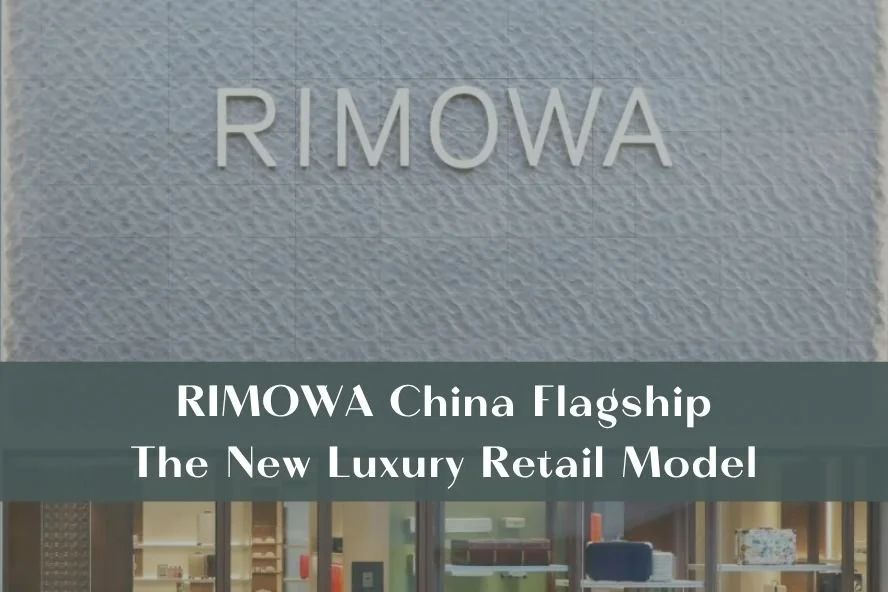
RIMOWA China Flagship: The New Luxury Retail Model
RIMOWA's new Shanghai flagship shows how luxury retail in China is moving beyond product display. The store combines repair, re-crafting, personalization, lifetime service and a city-specific cultural program around Shanghai's historic architecture. For international luxury brands, the case demonstrates how a flagship can become a long-term relationship platform, connecting global brand heritage with local culture, high-value service and post-purchase engagement.

Douyin's New Rules Are Here: What Overseas Brands Need to Know
Douyin's September 2026 rule changes place more weight on overall completion, saves, repeat visits, loyal-fan interaction, content quality and long-term account health. The platform is also tightening rules around AI-generated low-quality content, off-platform diversion, minors-related content, livestream health scores and merchant logistics. For international brands, the direction is clear: sustainable Chinese social media growth now depends on real value, compliance, stable operations and customer experience rather than one-off traffic spikes.

How Creator Marketing Made a Cat Water Fountain a Bestseller
BISSELL's HydrateWell cat water fountain generated more than 2 million dollars in weekly video-driven GMV by addressing a specific pet-owner problem and using different creator formats to demonstrate the product in real home situations. The case offers lessons for international brands: start with a concrete pain point, design product details around small daily frustrations, and match each creator's storytelling style to the way consumers actually make decisions.

Wechat Video Channel Strategy for International Brands
Wechat Video Channel has a distinct operating model built around public recommendation and private WeChat distribution. Its longer content life, save and revisit signals, friend and group sharing, account positioning, content consistency and private-domain conversion create a different playbook from other short-video platforms. This practical guide explains how international brands can use Wechat Video Channel as part of a Chinese social media and WeChat growth system.

Rednote Parenting Trends for International Brands
Rednote's 2026 parenting and childcare data shows that young Chinese parents are moving beyond basic product needs toward science-based parenting, everyday development, outdoor exploration and emotional connection. Core categories remain important, but growth is moving into sleep, sensory learning, self-feeding, sun protection and parent-child wellbeing. For international baby and family brands, the opportunity is to connect product value with real parenting scenes and the idea of parents growing alongside their children.

NikeSKIMS China Entry: A Test of Everyday Sportswear
NikeSKIMS is entering China through a limited Shanghai slow-pop-up at a moment when the women's sportswear market is crowded, local competition is stronger and several international brands are under pressure. The partnership combines Nike's sports technology with SKIMS' fit and fashion expertise, but it must still prove authenticity, price value and the everyday transition from training to commuting. For international brands, the case shows why controlled market testing and local consumer validation matter.

LEMAIRE China: What WeCom Private-Domain Operations Show
LEMAIRE's China case shows how a quiet luxury brand used WeCom, customer tagging, staff training, store KOS content and Rednote-to-private-domain operations to support its Chengdu flagship. The case is presented as an example of how the brand used WeCom, not as a Lotus implementation claim. For international luxury brands, it demonstrates how private-domain operations can connect store service, clienteling, customer data, KOS content and repeat purchase without weakening brand identity.

Rednote Seeding Needs Full-Funnel Operations
Rednote seeding is entering a more mature phase. For high-ticket brands with long decision cycles and private-domain repurchase, exposure and immediate in-platform conversion do not show the full value of content. A stronger model connects compliant attribution, encrypted data matching, CDP and SCRM systems, customer segmentation and private-domain nurturing. For international brands, this turns Rednote from a one-off media expense into a measurable and reusable customer asset.