

Luxury brands in China are facing a more selective market. Store strategy is moving away from simply adding locations and toward improving the quality of each location. A flagship store now needs to do more than sell products. It needs to explain the brand, provide services that justify a long-term relationship and give consumers a reason to return.
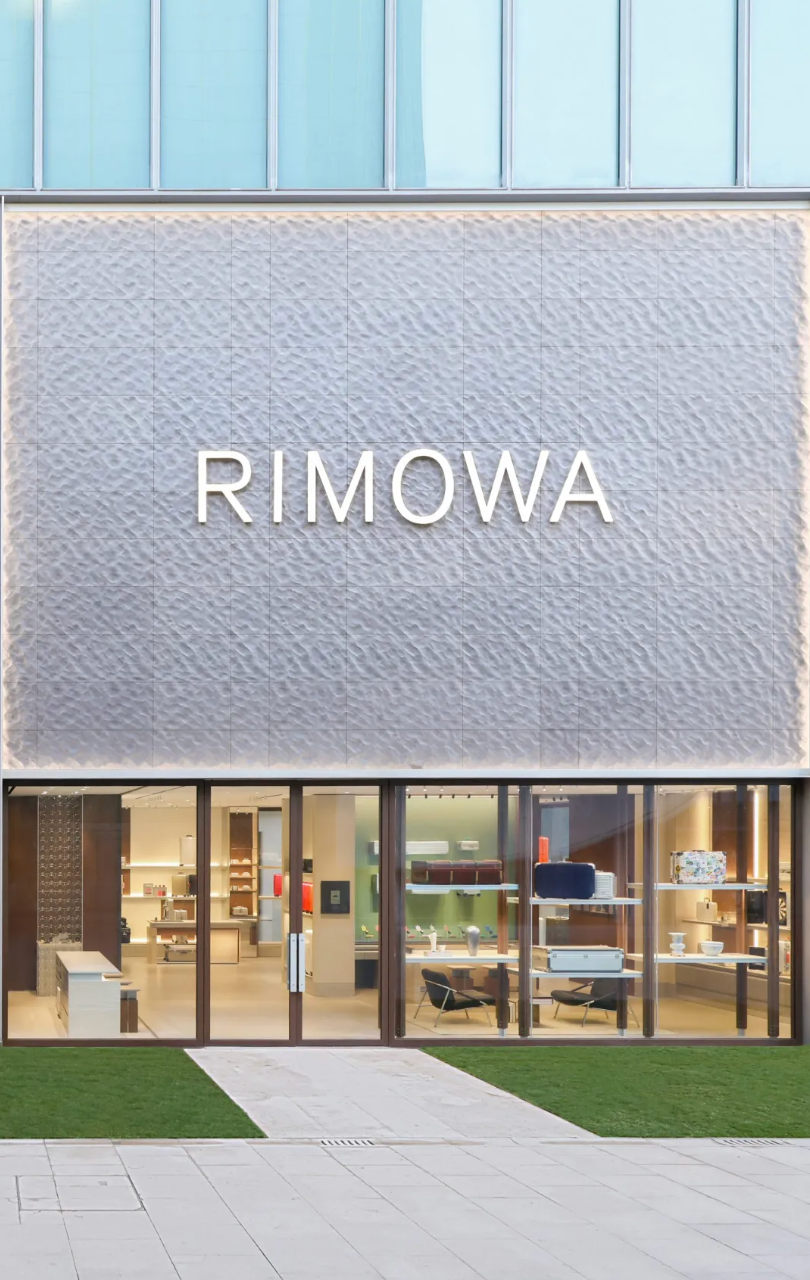
RIMOWA's new flagship at Shanghai's Kerry Centre offers a clear example. It is the brand's first mainland China store to introduce the RE-CRAFTED program and Crafted For You personalization service. The store also includes a dedicated customer service area and an on-site repair center.
For international brands, this is a useful shift in thinking. A flagship should be treated as part of the customer relationship system, not as a larger version of a standard boutique.
Post-Purchase Service Creates New Reasons to Return
RIMOWA products have long usage cycles, so the relationship cannot depend on frequent new purchases. RE-CRAFTED extends that relationship by giving eligible old suitcases a route back into the official system through assessment, repair and re-use. Customers can submit qualifying cases at the Shanghai store and receive a RIMOWA voucher under the program rules.

The service builds on the brand's lifetime guarantee. It tells consumers that the value of a suitcase does not end at checkout. Repair, maintenance and re-crafting become visible parts of the brand experience. Crafted For You adds another layer by offering more than a million combinations involving size, initials, leather, lining, color and finish for selected Classic cases.
This is particularly relevant in China's premium market, where more consumers are becoming careful about durability and value. They may be willing to pay for a product that can be maintained, personalized and kept in use for many years.
Localizing the Brand Through a City
RIMOWA did not localize only through a Shanghai color palette or a local product. It connected its global theme, For a Lifetime of Lives, with the history and architecture of Jing'an. The brand invited writer and artist Jin Yucheng to present a piece about Jing'an Temple and created a city guide covering historic buildings and their engineering stories.
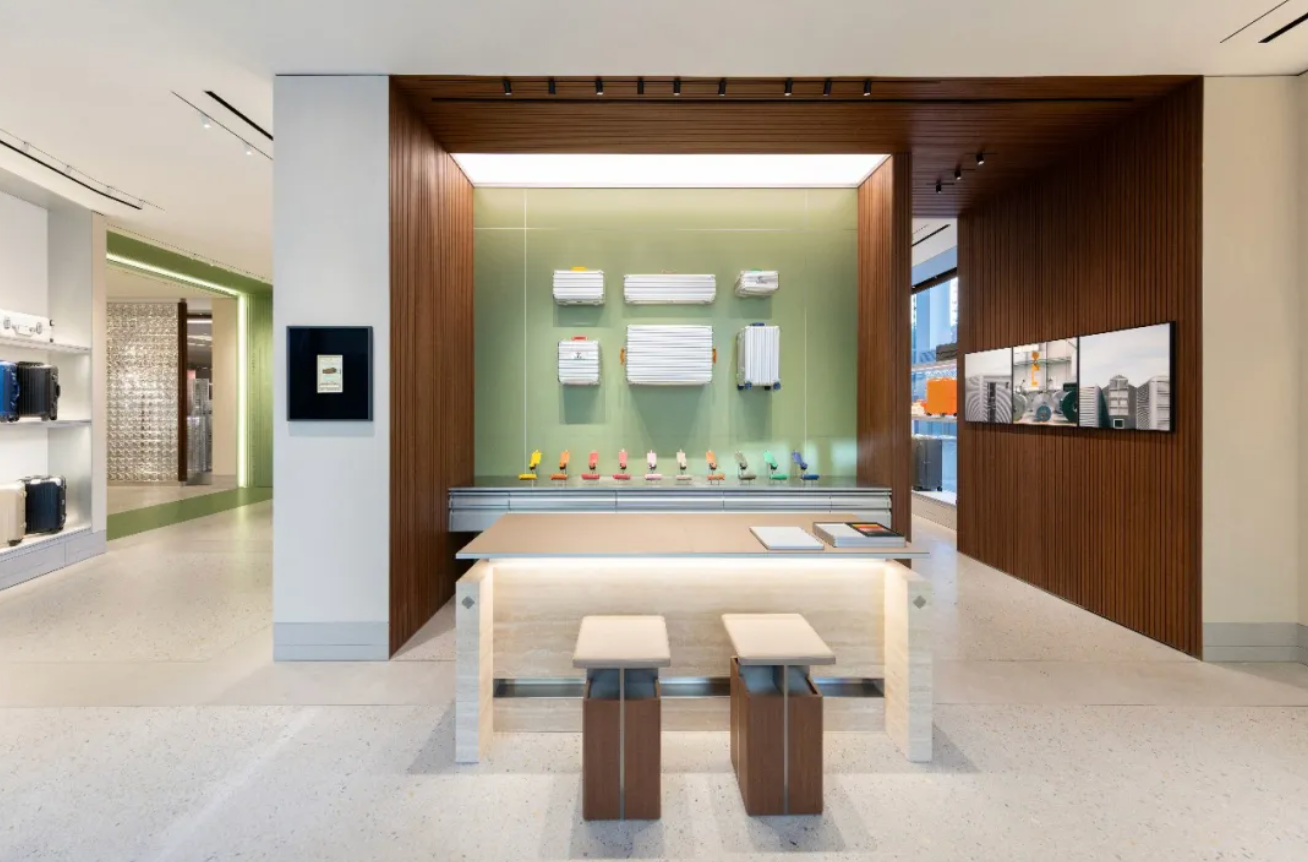
The project includes places such as Paramount, Zhang Garden, Green House, Changde Apartments and Meiqi Grand Theatre. It connects engineering details, restoration records, materials, historical context and city memory. The result gives the global theme a local cultural coordinate.
This is a more meaningful form of localization. The brand does not replace its original story with a Chinese one. It finds a Chinese place where the original story makes new sense.
Craft, Repair and Time Become One Narrative
The flagship's design also makes manufacturing visible. An aluminum installation at the entrance uses the raw aluminum roll associated with suitcase production, turning the material's journey into part of the store experience. A green display wall places Cologne and Shanghai coordinates side by side, linking the brand's origin with its new mainland China location.

Traditional repair and craft displays create another connection. Repaired ceramics and metalwork echo the ideas behind RE-CRAFTED, lifetime use and visible traces of time. These are not random cultural decorations. They support a consistent question: how can an object carry history and continue to be used?
For luxury brands, this kind of coherence matters. Consumers can recognize the product, the service, the space and the local cultural content as parts of one idea rather than separate campaign elements.
What International Luxury Brands Can Learn
A China flagship should give the local market more than a global store template. It should provide a service people cannot easily find elsewhere, create content that helps consumers understand the brand and establish a local cultural connection that feels specific to the city.
International luxury brands should also consider what happens after purchase. Repair, customization, private appointments, clienteling, community events and WeChat communication can keep a low-frequency product in the consumer's life. Chinese social media can help create discovery, but premium service and private communication often determine whether the relationship lasts.
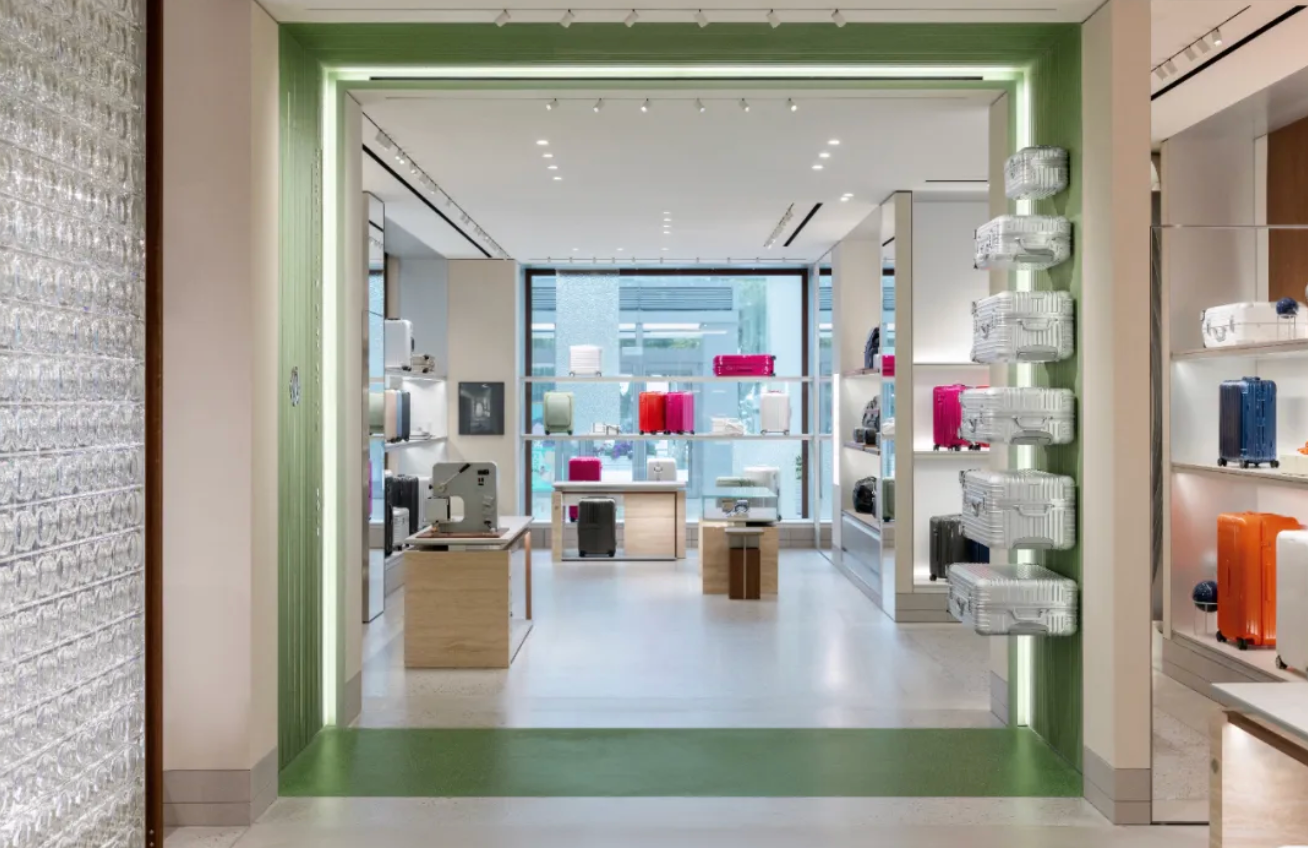
RIMOWA's Shanghai flagship shows that the next generation of luxury retail in China is less about bigger spaces and more about deeper relationships.
Interested in exploring bespoke marketing tips and localized strategies for the Chinese market? Feel free to reach out to us!
