

A parenting brand does not earn lasting trust simply by appearing in a family photograph. Parents need to understand what a product does, how to use it and whether the information behind it is credible. For international brands considering China, KeaBabies offers a useful example of how a focused product can grow into a broader relationship with customers.

The business was founded in 2017 by Singaporean couple Jane Neo and Ivan Ong and initially concentrated on the US market. Its history is a case of a brand developing for an overseas market. It offers ideas for a China entrant without establishing that the company already follows the same strategy in China.
Its relevance to Chinese marketing lies in the operating approach. KeaBabies started with a baby wrap, expanded into related parenting needs and supported the products with tutorials and community stories. We can learn from that sequence without assuming that its prices, channels or results would transfer unchanged to China.
Start With a Recognisable Difficulty
According to the account, the founders had experience in digital marketing before becoming parents in 2016. Their new circumstances changed how they viewed baby products. They wanted items that combined practical functions, credible quality and prices that ordinary families could consider. That personal experience helped define a specific starting problem.
The first product, the KeaBabies Original Baby Wrap, offered a soft, adjustable design intended for different adult body types. The account places its price at approximately US$25–35. Its appeal was connected to everyday use rather than a complicated premium narrative: parents needed a manageable way to carry their baby while moving through daily routines.

For a China entrant, the equivalent exercise is to identify one difficulty clearly enough that a parent recognises it immediately. A broad promise about making family life better is hard to evaluate. A demonstration that explains adjustment, preparation or cleaning gives the audience something concrete to assess. The product story becomes more useful when it begins with a real task.
Expand Along the Parenting Journey
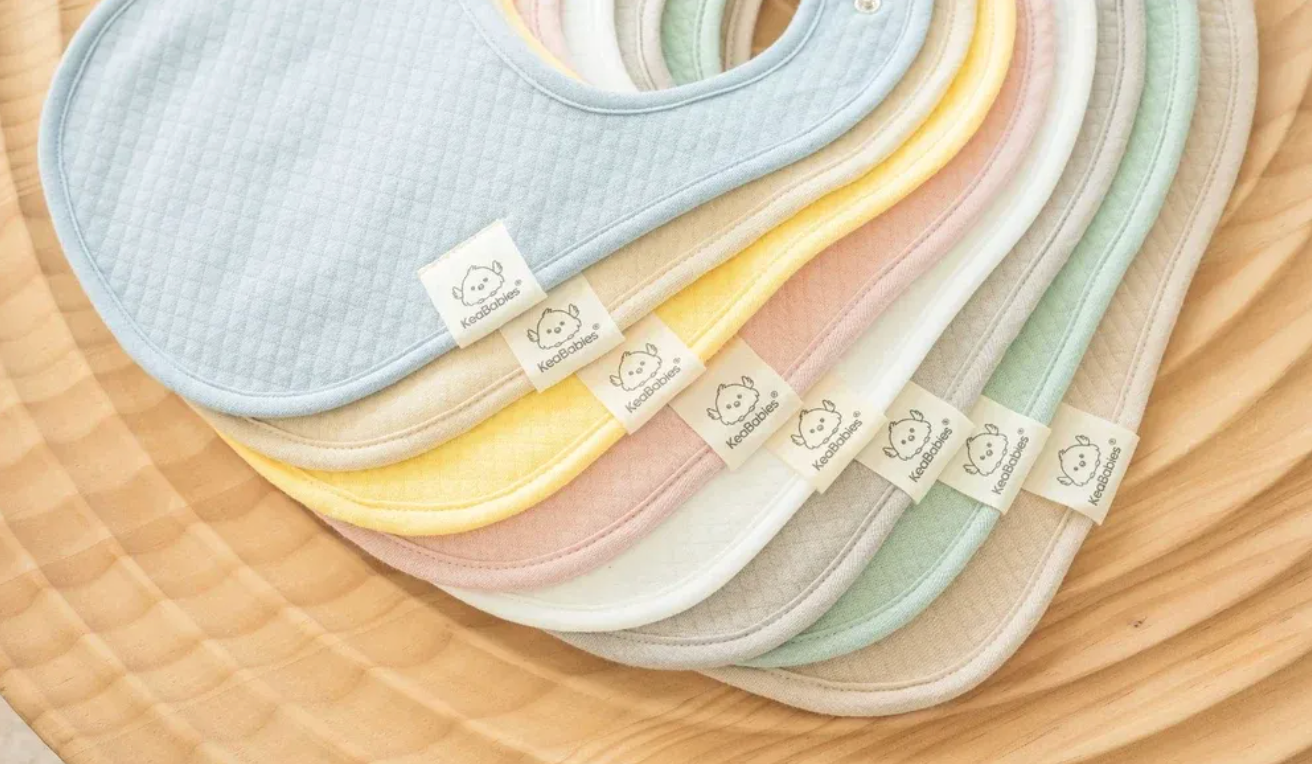
KeaBabies did not remain a single-product business. The case account describes expansion into swaddles, bibs, feeding accessories, maternity support products and sleep-related items. These categories connect to changing family routines. A parent discovering the brand through one need may encounter another relevant offer as their circumstances develop.
That provides a coherent reason for assortment growth. The relationship is organised around the customer’s life rather than the brand’s desire to add more products. A new item has a stronger role when it solves a related difficulty, meets the same quality expectations and remains consistent with the brand’s positioning.
International brands can apply this thinking in China by mapping the questions that arise after the first purchase. Which requests recur in customer service? Which tasks remain difficult? Which adjacent products would the same family genuinely consider? Those observations can guide expansion. They are more useful than importing the entire global range before understanding local priorities, household routines and buying preferences.
Accessible Pricing Is a Positioning Choice
The account presents KeaBabies as maintaining relatively accessible prices across its range. It lists swaddles around US23–27,multipacksofbibsaroundUS15–20 and several other products in a similar everyday purchase range. These figures describe the account market and period; they should not be treated as a ready-made China price list.

The broader point is consistency. Customers who first encounter the brand through an affordable wrap are not immediately asked to accept a completely different pricing philosophy in adjacent categories. A recognisable value proposition can make subsequent consideration easier, provided product quality and service remain dependable.
For Chinese marketing, the local price must still account for the actual channel, fulfilment and service model. We would explain what the customer receives rather than relying on the word affordable. Material details, pack quantities, care information and practical demonstrations help people compare products on a meaningful basis. Price works best when its relationship to the offer is clear.
Read Growth Figures Carefully
The account cites Particle estimates of approximately US42millioninecommercerevenueandmorethan1.9millionunitsforJanuary–June2026.ItalsoreportsUS5.4 million for June. These are third-party tracked figures within a stated period, rather than an audited statement of all global revenue across every channel.
That distinction does not remove the value of the case. It simply keeps the interpretation proportionate. The figures suggest substantial ecommerce activity in the tracked business, while the product and communication examples help explain the brand’s approach. They do not prove that one tutorial format or community initiative directly caused the reported sales.
We would use the case to formulate testable ideas, not guaranteed outcomes. A China launch might test whether a clearer demonstration reduces repeated support questions or whether a focused product page improves purchase confidence. The result should be measured within that launch’s own conditions, rather than judged against a revenue number from a different market and business stage.
Education Continues After Checkout
A wrap or swaddle can involve a learning process. Parents may need to revisit instructions, adjust the product or clarify how a feature works. The case account describes KeaBabies producing tutorials and guides alongside its products. This acknowledges that delivery does not automatically mean the customer is ready to use the item confidently.
For international brands, this is especially relevant when entering a market with different language needs. Translating a global product description is only part of the task. Instructions need to be understandable, demonstrations need to be easy to follow and customer service needs a consistent route for questions that cannot be answered by a short video.
In China, a brand could use Rednote for specific questions and everyday demonstrations, with Wechat Video Channel carrying longer explanations where appropriate. These would be locally adapted applications of the principle. The objective is a connected information experience in which a parent can move from discovery to useful support without encountering contradictory advice.
Community Makes Experience Visible
The case account describes KeaCommunity and a KeaParent Feature section that invite parents to share stories and situations. Such material can make a product easier to imagine in real life. It also broadens the conversation beyond polished brand images, showing the practical contexts in which customers encounter the product.
However, customer stories should remain customer stories. One family’s positive experience is not proof that a product will suit every child or household. For a parenting brand, the tone should make room for differences rather than present a single routine as the correct way to raise a child. That sensitivity is important when adapting content across cultures.
For a China programme, we would invite specific, useful contributions: what was difficult to understand, which feature was convenient and what a parent wished they had known before buying. With appropriate permission, those observations can inform content and product information. Community then becomes a listening practice as well as a way to publish more relatable material.
Evidence Needs Clear Boundaries
The account mentions awards and certifications associated with parts of the KeaBabies business and product range, including ISO 9001, GOTS and IHDI-related recognition. These references have different purposes and scopes. They should not be combined into a blanket statement that every product carries every certification or that certification guarantees an outcome.
For an international brand communicating in China, the practical lesson is to show exactly which item a claim concerns and what the supporting document actually covers. A quality management standard, a textile standard and a product-specific recognition are not interchangeable. Clear wording protects the credibility that the brand is trying to build.
We would also separate general marketing content from detailed product instructions. Social posts can introduce a feature and direct people to complete information, while important usage guidance should remain easy to find and consistent across channels. In a trust-sensitive category, a compelling message should never require leaving out information that a customer needs to evaluate the product responsibly.
Build the China Relationship Deliberately
The most useful lesson from KeaBabies is the connection between a focused product, adjacent customer needs and continuing support. A China entrant can begin with a manageable assortment, develop clear Chinese-language information and establish a reliable service process. Broader expansion can follow what customers actually ask for and what the organisation can support well.
We would measure more than initial orders. Repeated questions, return reasons, tutorial usage and subsequent purchases can reveal whether the product relationship is working. A campaign may attract the right audience but leave a usage problem unresolved. A well-received first item may also reveal demand for a related product. These signals help the brand decide what to improve next.
China marketing in this category should make parents feel informed rather than pressured. Chinese social media can introduce the brand, demonstrate its products and make real experiences visible. Lasting trust depends on the consistency of the information and service that follow. That is the part of the journey an international brand needs to design as carefully as the launch itself.
Localise the Questions as Well as the Words
An English tutorial cannot always become a useful Chinese tutorial through direct translation alone. The brand needs to check whether the sequence is clear, whether the product names match the local offer and whether the audience can find the complete instructions after seeing a short social post. The task is to preserve accurate meaning while making the information easier to follow.
A practical content review could involve local staff identifying the questions they hear most often. Some may concern product selection, while others concern preparation, cleaning or where to find further help. Those questions should remain separate when they need different levels of detail. A short discovery post should not be expected to carry every instruction required for actual use.
The brand can build a small set of connected materials around one product. An introductory post explains the purpose, a demonstration shows the relevant feature and a service page provides the fuller information. Staff can then direct a parent to the right resource instead of repeating a different improvised answer in every conversation.
This approach also helps maintain a warm tone without inventing familiarity. A brand can acknowledge that parents have different routines and preferences, while remaining clear about what the product information does and does not establish. It does not need to imply that one purchase represents better parenting or that every family should use the same solution.
For international brands, the listening process is part of localisation. Comments and service enquiries may reveal that an apparently obvious feature needs more explanation, or that a global image creates the wrong expectation. Those observations can improve the next version of the content and help the product team understand local experience.
We would keep the first cycle manageable: one product, a reviewed information set and a clear handover for unresolved questions. Once the process works, it can support adjacent products. That sequence reflects the most useful aspect of the KeaBabies example: growth is easier to understand when each addition has a clear role in the customer’s changing needs and the organisation can support it reliably.
Looking to connect your parenting brand with families in China? Contact us for a locally relevant marketing approach.
