

China Marketing Insights for International Brands
Categories
- B2B Marketing
- B2B Technology
- Brands Entering the Chinese Market
- China Market Entry
- Chinese Market Insights
- Chinese Social Media
- Consumer & Industry Insights
- Content, Creators & Campaigns
- Cross-industry
- Entertainment
- Entertainment & IP
- Lifestyle & Consumer
- Platform Strategy & Operations
- Regulation & Risk
- Travel & Hospitality
- WeCom

China Activewear Needs a Reason to Switch
China’s activewear competition is moving beyond introducing the category towards giving existing shoppers a reason to choose a different brand. The account contrasts Alo, Vuori, XEXYMIX, Sweaty Betty and Lululemon through their entry routes, local partnerships and lifestyle positioning. We examine why attention-led brands, community-led brands and partner-led operations may need different channel sequences. For international brands, the next challenge is to turn a desirable image into a relevant local routine, while assessing retail economics and the limits of premium positioning. Store openings and social visibility matter, but they do not independently establish durable customer relationships or profitable growth.
Choosing Your First China Ecommerce Channel
Choosing a first China ecommerce channel is a decision about audience, operating capability and risk, rather than a competition between headline subsidies. The account compares Tmall Global, Douyin cross-border commerce, JD Worldwide and Rednote through their reported support programmes and entry models. We translate that comparison into a practical framework for international brands: clarify the first test, calculate costs after eligibility conditions, match the channel to the product’s explanation needs and prepare the required organisation. Platform terms can change, so the commercial plan should use confirmed offers rather than assume that reported incentives apply automatically to every new store.

Premium Brands Find New Momentum on Douyin
Selected Douyin product-ranking data in the account suggest that several premium international beauty and wellness brands gained momentum while some established local leaders declined. The pattern does not support a claim that all international brands are winning: mass-market names and individual premium brands show different results. We examine what the figures can and cannot reveal, including the distinction between lower average transaction values and direct price cuts. For international brands planning Chinese marketing, the practical priorities are clear product propositions, carefully structured offers, appropriate creator partnerships and measurement that considers margin and customer quality alongside reported sales growth.

How International Universities Can Build a China Student Recruitment Journey: Search, Social and Parent Trust
Chinese students and parents rarely make an overseas-study decision in one channel. See how search, social content, official information and admissions follow-up can work as one connected recruitment journey.
Should International Brands Launch Online in China?
A discussion among retail practitioners suggests that some international brands are reconsidering the sequence of China market entry. Social discovery and official online stores can establish interest before a permanent retail location opens, while pop-ups help test experience and operations. These observations do not establish a universal formula or prove that online customer data can determine the right shopping mall. We explore how international brands can connect content, commerce and physical experience, assess local partners and maintain consistent service. The priority is to use each channel to answer a defined question before committing to a larger rollout.

Rednote Consumers Are Choosing What Fits
A Qiangua report on Rednote content from the first half of 2026 describes a shift towards choices that fit individual bodies, routines and preferences. Home design, travel, beauty and fashion provide different expressions of the same idea: relevance matters more than following a single aesthetic template. For international brands, the opportunity is to explain who a product suits and how it fits everyday life in China. We explore how to turn this insight into useful Chinese social media content, clearer product demonstrations and more focused audience research, while keeping topic views and engagement distinct from sales or market share.

KeaBabies and the Power of Everyday Trust
KeaBabies grew from a focused baby-wrap offer into a broader parenting brand by connecting practical products with guidance and community. Founded by a Singaporean couple and initially focused on the US market, the business provides a useful reference for international brands considering China, rather than proof of an established China strategy. We examine its product expansion, accessible positioning and trust-building approach, then explore how those principles could inform Chinese marketing. Clear product demonstrations, carefully explained evidence and relevant Chinese social media content can help brands support parents before and after purchase while avoiding unsupported safety or performance promises.
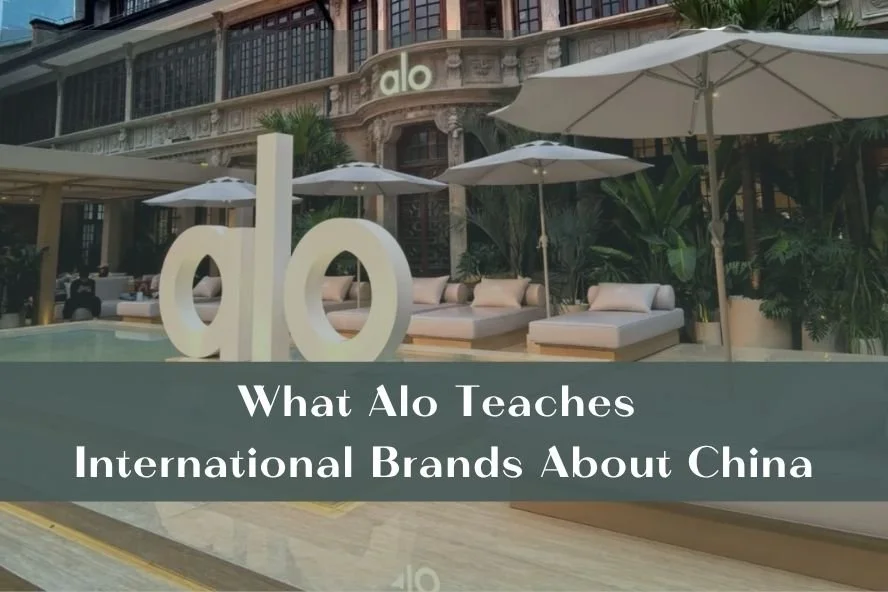
What Alo Teaches International Brands About China
Alo’s Tmall launch illustrates how established demand can become sales when consumers finally have a trusted official channel. Its reported results should not be treated as a cold-start benchmark for every international brand. Other cases in the account show different routes: concentrating limited resources on proven products, explaining unfamiliar technology, or addressing a narrowly defined customer need. We explore what these approaches mean for China marketing, from connecting Chinese social media with commerce to choosing creators and measuring repeat purchases. The practical priority is to identify the customer’s biggest obstacle and build a launch around removing it.
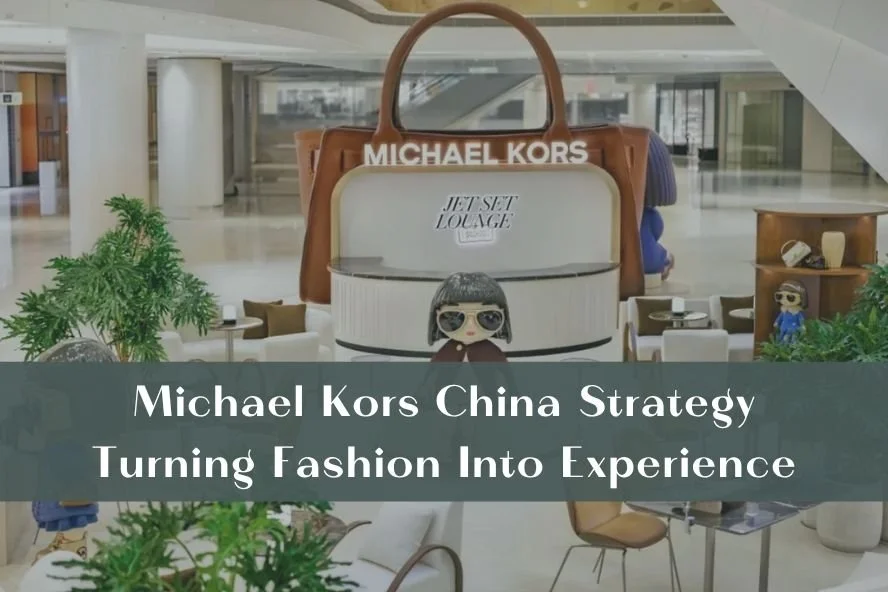
Michael Kors China Strategy: Turning Fashion Into Experience
Michael Kors is using character IP, city-specific experiences and modern interpretations of Jet Set to reconnect with younger Chinese consumers. From the Miki Miki charm and Hamilton bag to MK Jet Set Lounge activations in Suzhou, Beijing and other cities, the brand is turning a product visit into a playful local journey. For international brands, the case shows how China marketing can combine global brand DNA with local culture, social participation and product-led experiences.
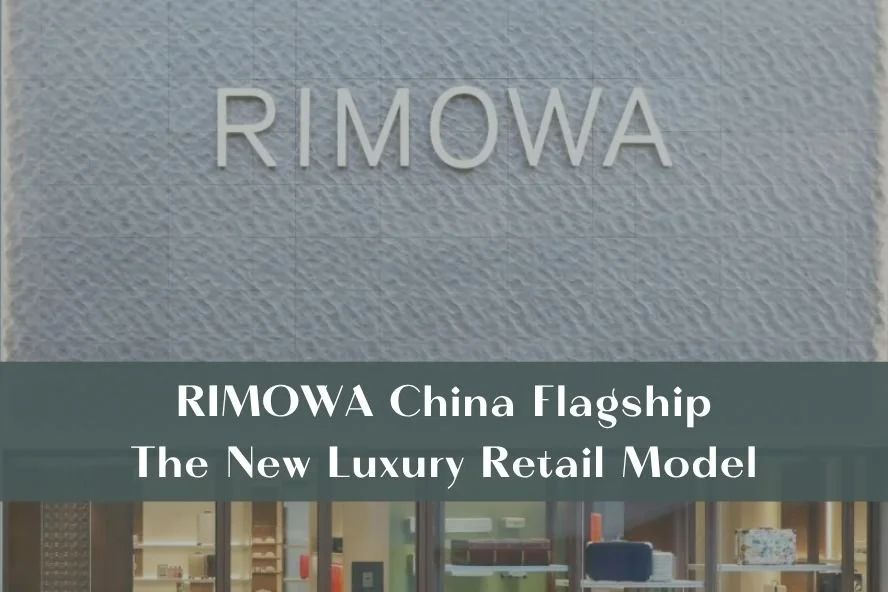
RIMOWA China Flagship: The New Luxury Retail Model
RIMOWA's new Shanghai flagship shows how luxury retail in China is moving beyond product display. The store combines repair, re-crafting, personalization, lifetime service and a city-specific cultural program around Shanghai's historic architecture. For international luxury brands, the case demonstrates how a flagship can become a long-term relationship platform, connecting global brand heritage with local culture, high-value service and post-purchase engagement.

Douyin's New Rules Are Here: What Overseas Brands Need to Know
Douyin's September 2026 rule changes place more weight on overall completion, saves, repeat visits, loyal-fan interaction, content quality and long-term account health. The platform is also tightening rules around AI-generated low-quality content, off-platform diversion, minors-related content, livestream health scores and merchant logistics. For international brands, the direction is clear: sustainable Chinese social media growth now depends on real value, compliance, stable operations and customer experience rather than one-off traffic spikes.

How Creator Marketing Made a Cat Water Fountain a Bestseller
BISSELL's HydrateWell cat water fountain generated more than 2 million dollars in weekly video-driven GMV by addressing a specific pet-owner problem and using different creator formats to demonstrate the product in real home situations. The case offers lessons for international brands: start with a concrete pain point, design product details around small daily frustrations, and match each creator's storytelling style to the way consumers actually make decisions.