

Win on Douyin with Content, Skip the Price War
When international brands first enter China's live commerce market, the instinct is often to lead with price. Find a top-tier livestreamer, offer the deepest possible discount, and use clearance inventory to test the waters. It's an understandable impulse — price cuts generate immediate visibility, and China's domestic brands have built entire business models around aggressive promotional cycles.
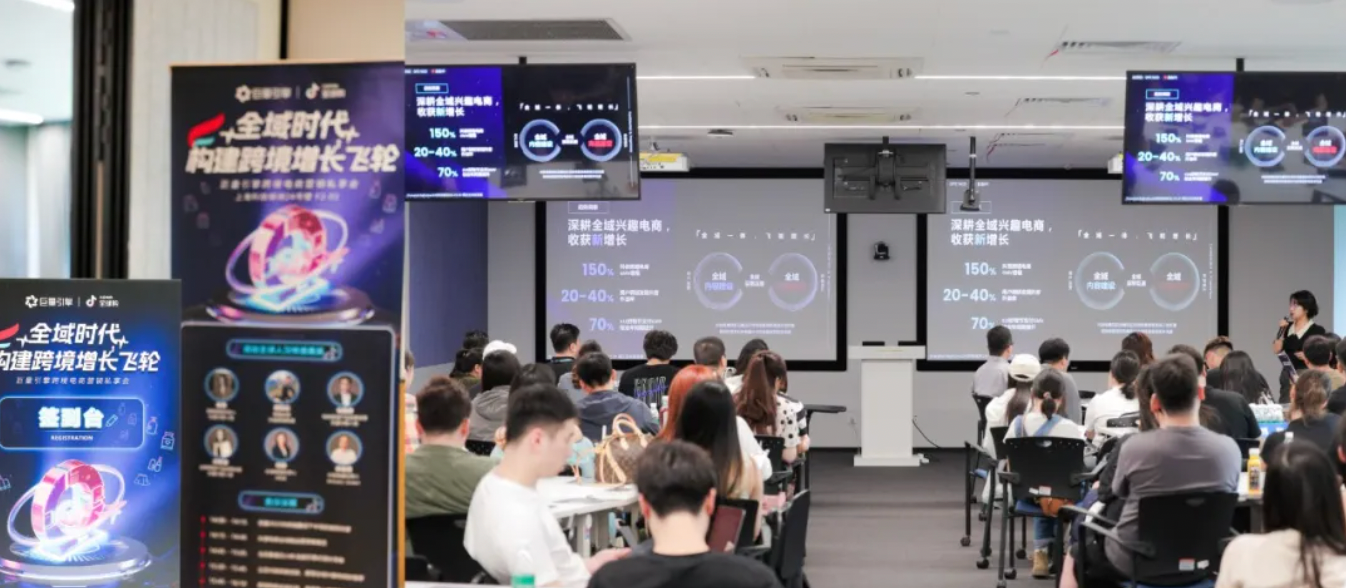
But for international brands, this approach carries real risks that domestic competitors don't face in the same way. International brands don't have manufacturing bases in China giving them structural cost advantages. They can't iterate and restock at the speed of domestic players. And perhaps most importantly, they've spent years — often decades — building brand equity and a consistent price architecture globally. Entering China by immediately discounting sends a signal that's very difficult to walk back.
The good news is that the price war isn't the only road in. A growing number of international brands are demonstrating that it's possible to build genuine sales momentum in China without compromising on price — by leading with content instead. Douyin is where this approach is working most clearly, and the results are hard to argue with.
What the Numbers Say About Douyin's Global Shopping Business
The scale of Douyin's cross-border commerce business — known as Douyin Global Shopping — has grown significantly faster than the platform's overall e-commerce operation. In the 12-month period from May 2022 to April 2023, Douyin's overall e-commerce GMV grew at 80%. Global Shopping grew faster still, with 186 international brands crossing RMB 10 million in sales over the same period.
The consumer profile of Douyin Global Shopping is worth understanding in detail, because it shapes everything about how international brands should approach the platform. Women account for over 80% of the user base, but male consumers are growing at nearly twice the rate. The core audience skews under 40, concentrated in first and second-tier Chinese cities, with above-average education levels. Within this broader group, four segments stand out as the highest-intent buyers: what the platform terms "sophisticated mothers" (urban parents with strong quality preferences), small-city younger consumers (a fast-growing affluent demographic outside the major metros), Gen Z, and established middle-class consumers.
These aren't bargain hunters. They're quality-oriented buyers with the income and the curiosity to spend on international products — which is precisely why a content-led brand-building approach works better with this audience than a discount-led one. They want to understand what they're buying and why it's worth it. Content is how you tell them.
Why Douyin's Structure Suits International Brands
Douyin's e-commerce model is built around what the platform describes as a dual-engine framework: content and shelf commerce operating in coordination. The content side is organized around four types of presence — the brand's own channel (self-run livestreams and posts), creator partnerships across a range of follower sizes, themed platform campaigns, and collaborations with top-tier KOLs. The shelf side covers search, the shopping center, and individual store pages, with product cards as the connective tissue linking content discovery to purchase completion.
This architecture matters for international brands for a specific reason: it creates a natural path from brand awareness to purchase that doesn't require a price incentive at every step. A consumer can encounter a brand through a creator's sourcing video, follow the brand's account, watch a livestream, search for the product, and buy — all without the brand ever needing to be the cheapest option in the category. The content builds the trust; the shelf completes the transaction.
This stands in direct contrast to traditional e-commerce platforms, where the relationship between a brand and a consumer is essentially transactional from the first interaction. There's no content layer creating familiarity, no accumulated sense of what the brand stands for. In Douyin's ecosystem, content influences perception, perception builds relationship, and relationship drives purchase — a sequence that is structurally better suited to international brands that have richer stories to tell but less price flexibility to offer.
Douyin also supports international brands through two platform-level trust signals worth knowing about. The "Douyin Flagship" gold badge is awarded to official brand stores that meet visual and service quality standards, and comes with access to exclusive marketing programs and training. The "Global Shopping Select" label functions as a merchant quality mark, including bonded warehouse traceability — a feature that directly addresses Chinese consumers' concerns about product authenticity for cross-border purchases.
AG: From Cold Start to Category Leader Without Discounting
New Zealand supplement brand AG (Athletic Greens) is one of the clearest examples of what a well-executed Douyin content strategy can produce for an international brand in China.
AG joined Douyin in 2022. In its early phase, the brand focused entirely on groundwork: defining its target audience with precision, testing content formats to identify what resonated, building up a library of effective creative assets, and refining its consumer profile data. Small amounts of paid traffic were used to validate content performance without committing to large spend before the fundamentals were established.
The growth phase introduced a more layered approach. Short videos and livestreams ran in parallel. Expert and celebrity endorsements added credibility. A structured network of creators — spanning both high-reach top-tier accounts and more specialist mid-tier voices — extended the brand's content footprint across different audience segments.
Once the brand had established momentum, participation in Douyin's major platform campaigns — including "Douyin Global Shopping" and the "Overseas Lifestyle" content series — unlocked premium placement and resources that accelerated reach significantly. A full-platform task campaign offering cash rewards drove consumers to follow the brand, watch livestreams, and join the membership program, while the store and product card infrastructure was continuously refined to maximize conversion from content viewers to actual buyers.
The results: brand search volume grew 20x, monthly GMV increased 10x year-on-year, and new member acquisition outpaced category competitors by 134%. AG ranked in the top three on Douyin's Global Shopping supplement category during the Chinese New Year shopping period, and reached second place in the imported beauty supplement category during the 618 festival. Notably, the brand's growth on Douyin created a halo effect across other Chinese e-commerce platforms — sales lifted on platforms where Douyin hadn't even been the primary channel.
None of this was driven by aggressive discounting. It was driven by content that made Chinese consumers genuinely curious about a product they'd never heard of, and a platform infrastructure that made it easy to go from curiosity to purchase.
Mistine and BYHEALTH: Two More Paths Through Content
Thai suncare brand Mistine took a different route to a similar destination. The brand joined Douyin in 2021 and spent two years using content to steadily build sales and reputation — a deliberate, patient approach that prioritized accumulating trust over chasing short-term spikes.
By April 2023, Mistine had built sufficient brand equity to make a major push. Timed around a new brand ambassador partnership and new product launches, the brand collaborated with Douyin on a Super Brand Day campaign that drew on everything they'd built in the preceding two years. As a Thai brand, Mistine partnered with the Tourism Authority of Thailand to create an immersive authenticity narrative — taking top creators to the brand's headquarters in Thailand for a sourcing livestream that brought viewers directly into the origin story. Seven Thai celebrity appearances in a single brand livestream attracted over 15,000 concurrent viewers. A shopping search "Easter egg" tied to celebrity names drove daily search volume up sevenfold.
The content campaign and the shelf conversion worked in tandem: creator collaboration videos hit over 30 million views in a single day, while the product page and search infrastructure converted that attention into purchases efficiently. The result was a category-topping performance across multiple Douyin rankings, achieved without the brand ever becoming the cheapest option in suncare.
Australian nutrition brand BYHEALTH used a platform campaign moment differently but just as effectively. During the "Douyin Global Shopping" event, BYHEALTH launched new products in coordination with overseas creators who provided detailed, localized explanations of product formulation and benefits — a format that worked particularly well for a supplement brand entering a market where consumers needed education, not just promotion. The brand was featured on the event's "Brand Renewal" leaderboard, with platform-produced materials amplifying key product claims. The campaign generated over RMB 1 million in incremental growth for the brand during the event window.
The Strategic Logic Behind Content-First in China
There's a clear framework underlying why this approach works specifically for international brands in Chinese marketing, and it's worth making explicit.
International brands entering China face a genuine awareness deficit. Chinese consumers may have vague familiarity with a brand's country of origin, but detailed understanding of what makes a specific brand worth buying — its formulation philosophy, its ingredient sourcing, its production standards — is rarely there at the start. This knowledge gap has to be bridged before purchase behavior follows consistently.
Content is uniquely well-suited to closing that gap. The origin stories, manufacturing processes, ingredient sourcing, and research histories that international brands have accumulated over decades are genuinely interesting to quality-oriented Chinese consumers — and they're stories that domestic competitors often can't tell in the same way. A New Zealand supplement brand explaining why it sources particular ingredients from particular regions, or a Thai suncare brand showing its actual production facility, carries a kind of credibility that a purely promotional message cannot.
This is amplified by the platform's sourcing content format — creators traveling to a brand's home country to document the production process and bring it back to Chinese audiences — which Douyin has actively invested in as a content category. Viewers of this content are not just watching; they're forming trust. And trust, once formed through content, converts more efficiently when the purchase moment arrives.
The other critical advantage of a content-first approach for international brands is price protection. Rather than using discount depth as the primary consumer incentive, these brands use samples, exclusive membership benefits, limited access, and platform currency — all of which build loyalty without training consumers to expect a lower price as the baseline. When promotional moments do arrive — a Super Brand Day, a 618 campaign, a platform-level event — the discount lands on top of established brand equity, making it feel like a genuine opportunity rather than a standard operating condition.
The Path Forward for International Brands on Douyin
The cases of AG, Mistine, and BYHEALTH point toward a consistent playbook for international brands approaching Douyin in China: invest in content depth before chasing conversion volume, build consumer understanding before asking for purchase decisions, and use platform campaign moments as amplifiers of established trust rather thansubstitutes for it.
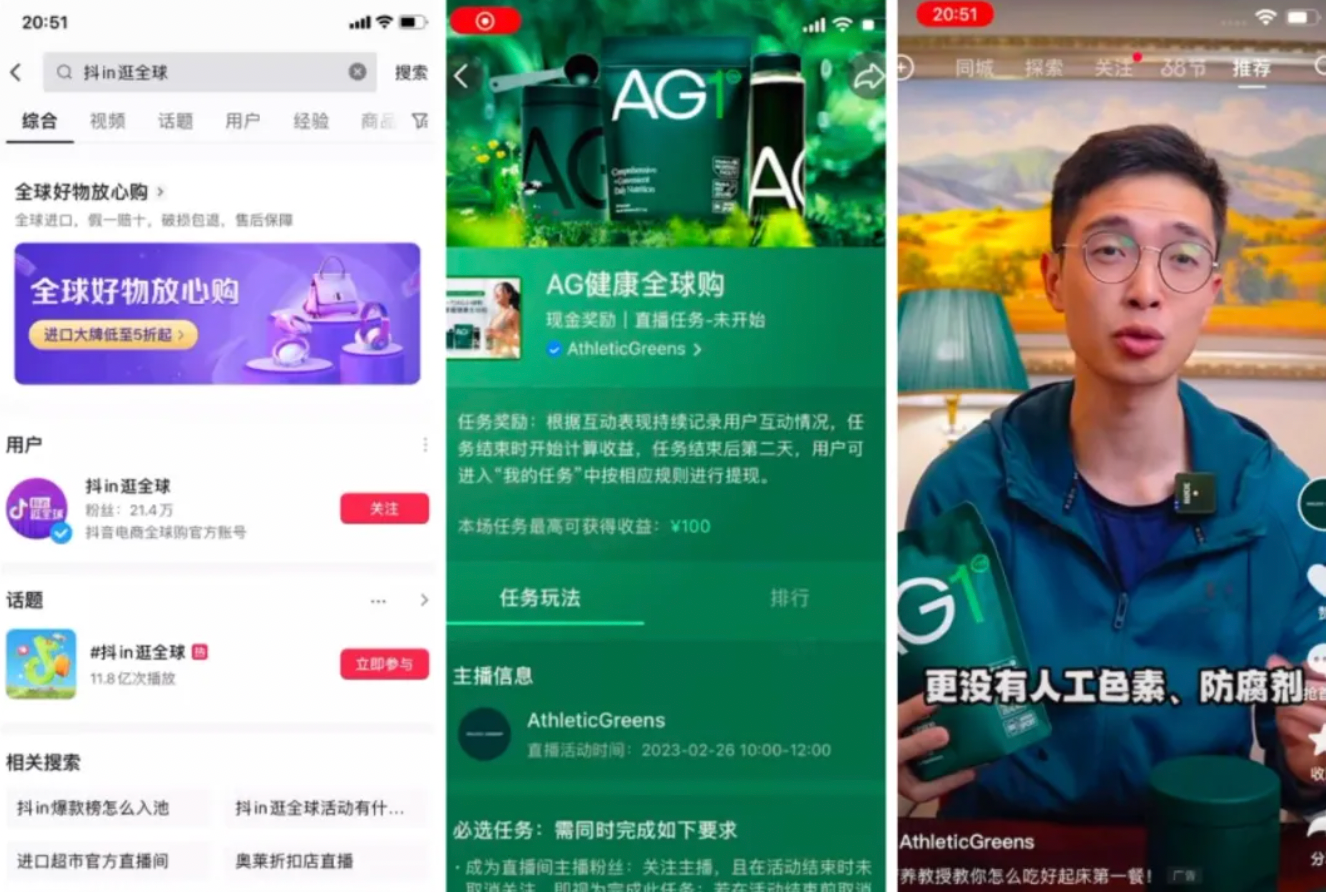
The sequence matters. Cold-start phase: define your audience precisely, test content formats systematically, and use small paid traffic investments to validate rather than to scale. Growth phase: layer in creator partnerships across reach tiers, add credibility through expert or celebrity association, and begin building the shelf infrastructure that will capture search-driven demand. Mature phase: participate in major platform campaigns to access premium resources, optimize the full conversion funnel from content discovery to purchase completion, and use membership and community mechanics to build lasting relationships with your best customers.
In Chinese marketing, this is the alternative to the price war — and for international brands with genuine stories to tell, it is the more durable path.
Interested in exploring bespoke marketing tips and localized strategies for the Chinese market? Feel free to reach out to us!
