


The Crocs Playbook: Embracing Controversy
Crocs was once voted one of the worst inventions of all time. Today, it generates over $3.2 billion in annual revenue, commands a cult following among Gen Z globally, and has become one of the most-discussed fashion brands on Chinese social media. The turnaround wasn't driven by making the product more conventional — it was driven by leaning harder into everything that made it strange. This post unpacks the brand strategy behind Crocs' remarkable revival, and distills what international brands can apply to their own Chinese marketing and global positioning.

Wechat Video Channel Playbook: From Zero to Monetization
Wechat Video Channel sits at the intersection of short video, livestream commerce, and private community — all inside the world's most powerful super-app. For international brands operating in China, it offers something no other platform can: a direct bridge between content discovery and WeChat's deeply established private domain ecosystem. Done right, it's one of the lowest-cost, highest-efficiency paths to sustainable revenue in the Chinese market. This guide breaks down the full operational logic — from account positioning and content structure, to livestream monetization and private domain conversion — so brands can build on Wechat Video Channel with a clear, repeatable strategy.

Win on Douyin with Content, Skip the Price War
Most international brands entering China assume they need to compete on price — slashing margins, chasing big-name livestreamers, and discounting their way to visibility. But a growing number of international brands are proving there's a better path. On Douyin, content-led strategies are generating sales spikes, membership growth, and lasting brand equity — without touching the price architecture. This post breaks down how brands like AG, Mistine, and BYHEALTH cracked the Chinese marketing code on Douyin, what the platform's structure actually rewards, and why international brands are uniquely positioned to win through content rather than discounting.
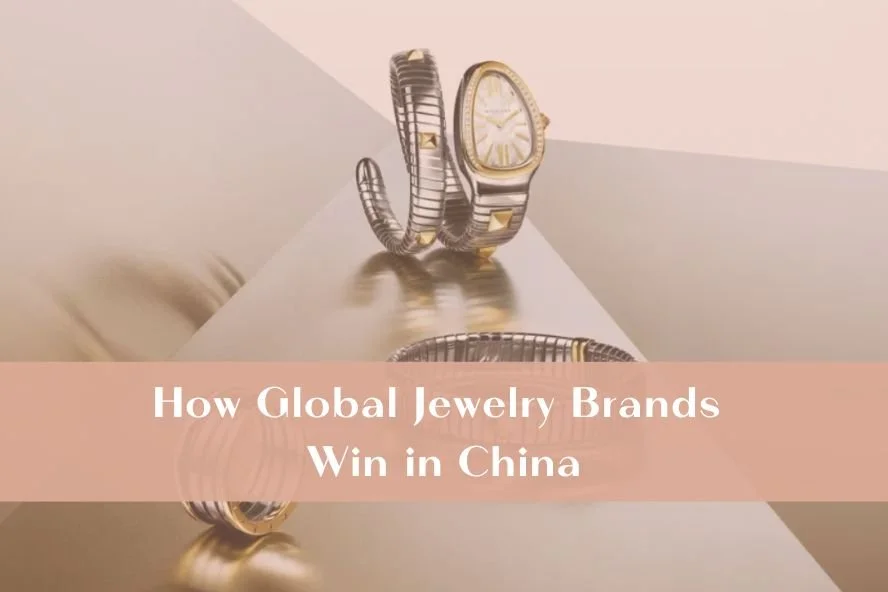
How Global Jewelry Brands Win in China
China's appetite for gold jewelry is reshaping the strategies of some of the world's most prestigious luxury brands. From Hermès quietly shifting its product mix to over two-thirds gold, to Tiffany cutting back on silver and doubling down on fine jewelry — the shift is unmistakable. But adapting to China's gold obsession isn't just about changing materials. It's about storytelling: Italian goldsmithing heritage, the creative versatility of karat gold, bold material innovation, and culturally resonant symbolism. This post explores how top international jewelry brands are rethinking their approach to Chinese marketing — and what others can learn from it.

Global Health Brands on Douyin
Trust in health supplements used to be built on pharmacy shelves and doctor recommendations. In China, that's changing fast. Haleon — parent company of Centrum and Caltrate — reported 100% year-on-year growth on Douyin in Q1 2026, not by hiring influencers, but by putting its scientists on livestream. This shift signals something bigger: in Chinese marketing, scientific credibility is becoming the most powerful form of content. For international brands with decades of research behind them, this is a wide-open opportunity — if they know how to use it.