

What International Brands Can Learn From Miu Miu's Rise in China
While LVMH and Kering have both struggled with slowing growth, and the global luxury industry has lost an estimated 50 million customers over the past few years, Miu Miu has done the opposite — nearly doubling its business and becoming one of the most talked-about brands in luxury. Named Lyst's hottest brand back in 2022, it followed up an already explosive 93.2% sales jump with another 35% growth in 2025. What was once seen as Prada's "playful little sister" line has transformed, in just a few years, into an independent cultural icon. It didn't get there by leaning on brand heritage — it got there by reading Gen Z's emotional and aesthetic language with remarkable precision, and the playbook behind it offers real lessons for any international brand thinking about Chinese marketing and youth-driven growth.

A Luxury Industry Running Out of New Customers
The broader context matters here. According to Bain & Company, the global luxury market lost roughly 50 million customers between 2022 and 2024, signaling that the old growth playbook — built around heritage and exclusivity — is hitting real limits. Many legacy luxury houses are also facing an aging customer base, struggling to attract younger buyers without diluting their premium positioning. At the same time, younger consumers have shifted what they actually want from luxury: rather than displaying a logo, they're looking for ways to express an identity that resists easy categorization. Social platforms — including Rednote and TikTok — have only accelerated this shift, since style now spreads through visual culture on social feeds rather than through traditional fashion week coverage. For any brand trying to understand Chinese social media dynamics, this is the backdrop Miu Miu was operating against.
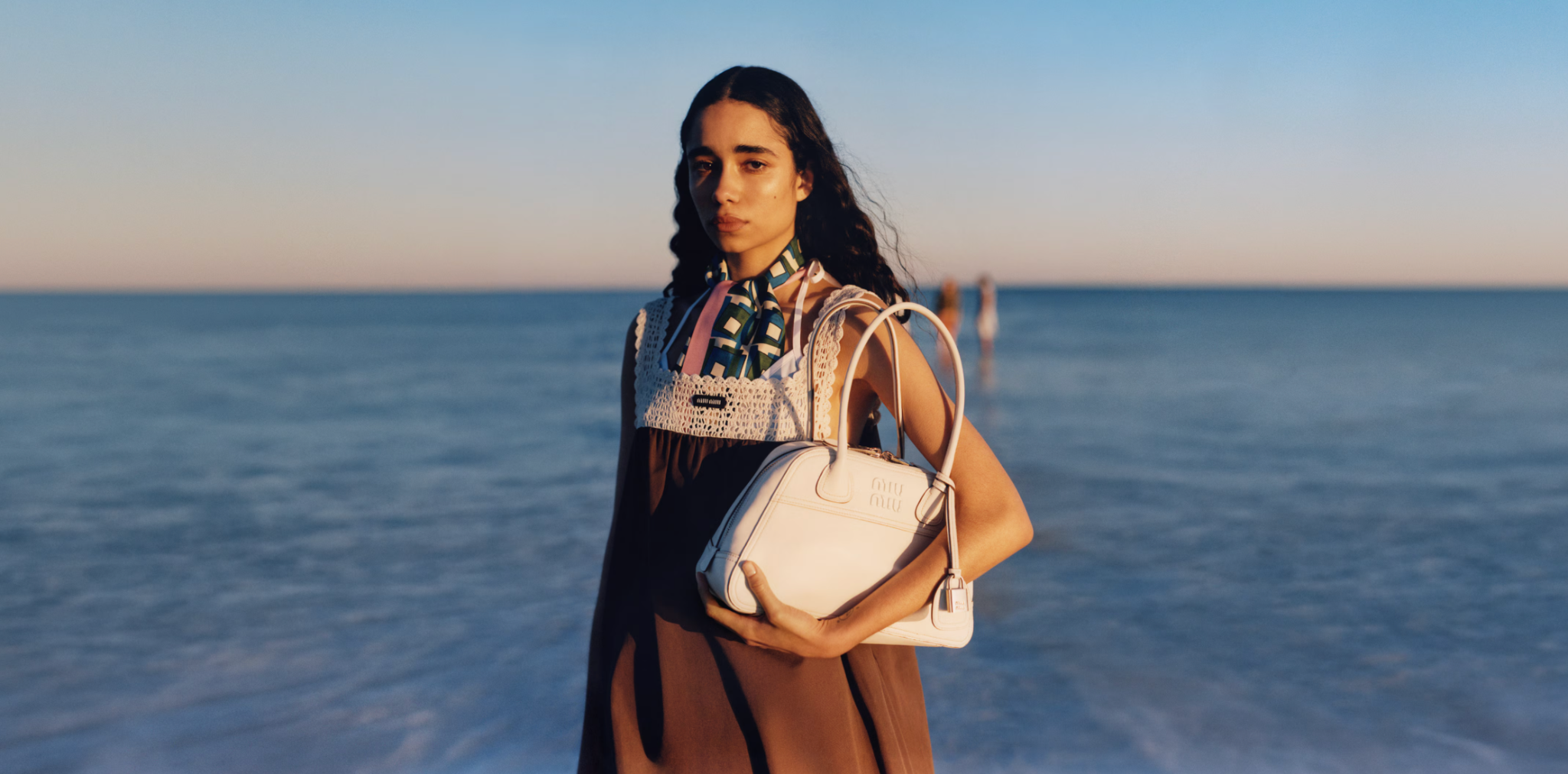
Miu Miu was founded by Miuccia Prada in 1993, originally positioned around a sweet, well-behaved "rich girl" image with limited differentiation from its parent brand. The real turning point came in 2021, when the brand brought on former Balenciaga stylist Lotta Volkova to lead a visual overhaul, introducing rebellion, rawness, and a touch of deliberate "messiness" into its identity. From that point on, Miu Miu stopped functioning as Prada's younger, more accessible sibling and instead built a fully independent aesthetic universe — one that now functions as a genuine cultural reference point in its own right. The brand's core insight was simple but precise: it bet on capturing "a smart girl with a bit of chaos," an emotional register that happened to perfectly match this cultural moment.
The Strategy: Contradiction as Aesthetic, a Roster of Faces, and Real Cultural Depth
At the product level, Miu Miu's signature is what might be called "contradictory but irresistible." Low-rise ballet flats, visible underwear styling, undone-looking hair clips — pieces that read as slightly off, deliberately imperfect — combine into a look that feels clever and a little unruly at once. This not-quite-polite, distinctly youthful image happens to align well with how quickly style fragments and reforms online, and it resonates with a broader cultural shift toward gender equity and freedom from age-based expectations. "Miu-coded" styling has become its own recognizable aesthetic, independent of the brand name itself.
On the brand and value side, two unmistakable signature colors — "Miu Miu pink" and "Miu Miu blue" — have become visual shorthand that fans constantly remix and repost. The brand also broke from the traditional single-ambassador model that most luxury houses rely on, instead building a roster of faces across markets. In China, it signed actresses born after 2000 — Liu Haocun, Zhao Jinmai, and Li Gengxi — to reflect different facets of youthful identity. In Korea, Jang Wonyoung's mix of princess-like charm and rebellious edge fit the brand perfectly. In Western markets, Kylie Jenner pushed the brand's tone toward something cooler and edgier. Miu Miu also founded a literary salon called "Tales & Tellers," bringing in respected writers and intellectuals for public conversations, weaving youth culture and artistic discourse into its storytelling — building an image where "a Miu Miu girl is also someone who reads," shifting away from pure trend-chasing toward something with longer-lasting cultural weight.
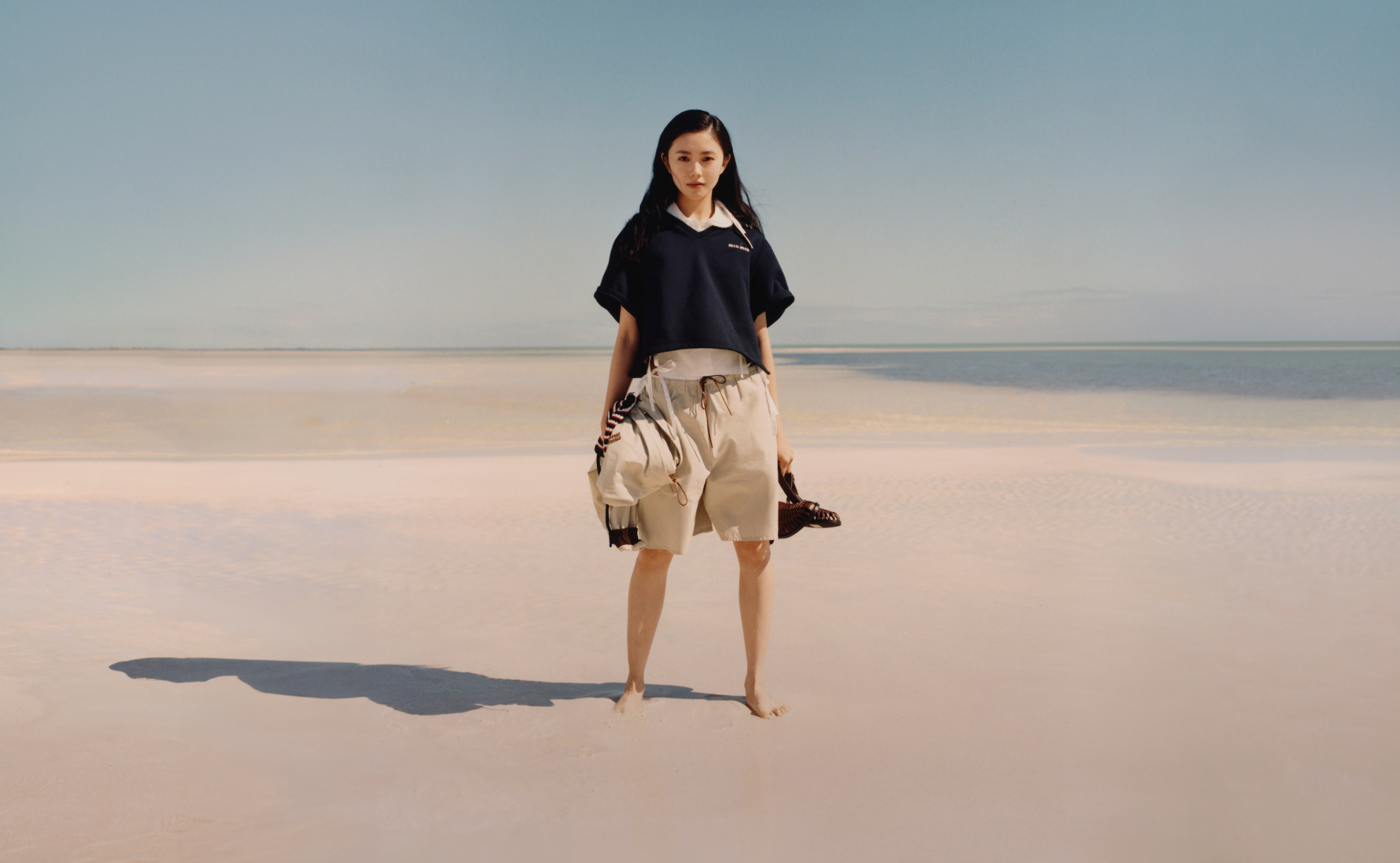
On distribution, Miu Miu has deliberately kept its retail footprint small and selective, opening boutiques rather than chasing scale — its Wuhan SKP flagship, for example, includes a private VIP salon space designed to deepen loyalty rather than maximize foot traffic. Online, Rednote has served as a key discovery platform, with creators producing bag-charm DIY content and daily "Miu-girl" outfit posts that fuel organic spread. Offline, the brand has staged limited immersive events in major cities — flower-boat experiences, ice-skating gatherings — turning online buzz into tangible cultural moments. Strong ready-to-wear visibility has also lifted accessory sales, particularly the Wander bag, while an ongoing collaboration with New Balance has successfully blurred the line between athletic wear and luxury fashion.
The Results: From €400 Million to Over €1.2 Billion in Three Years
The numbers here are genuinely striking. Miu Miu grew from roughly €400 million to more than €1.2 billion in revenue in just three years, officially joining luxury's billion-euro club. In fiscal 2025, retail sales rose 35% year-over-year to €1.595 billion — remarkable given that this followed an already exceptional 93.2% increase the year prior — and the brand now contributes nearly a third of the entire Prada Group's net retail sales. Even as most luxury conglomerates faced double-digit declines, Miu Miu posted 20% growth in Q4 2025 alone, on top of an already inflated 84% comparison base from the prior year. This growth helped offset a modest decline at the parent Prada brand caused by reduced global tourism, and contributed to keeping the broader Prada Group's market valuation in the hundreds of billions of Hong Kong dollars.
The brand's cultural reach has been just as significant. Miu Miu has been named Lyst's most in-demand luxury brand for multiple consecutive periods, outranking long-standing search leaders like Gucci and Balenciaga, with billions of views attached to its branded content on TikTok. Just as notably, the Prada Group's annual gross margin has stayed above 80.3%, meaning Miu Miu has achieved this growth without resorting to discounting — its limited collaborations and customization services have, if anything, made the brand feel more exclusive rather than more accessible.
What This Means for Brands Building a Strategy in China
There are several concrete takeaways here for international brands thinking about how to win over younger Chinese consumers. First, a "best friend" energy tends to outperform an "aspirational icon" energy — Miu Miu invites consumers to embrace their own quirks and imperfections rather than positioning itself as something to admire from a distance, and Gen Z consistently responds better to mutual understanding than to top-down authority.
Second, genuine contradiction — rather than flawless polish — is what sustains conversation. Miu Miu paired a wealthy-girl aesthetic core with a rebellious, slightly undone exterior, and that tension is precisely what keeps people talking and reposting.
Third, any aesthetic strategy needs a repeatable visual system to scale. The consistent use of its signature pink and blue across filters, street style, and packaging has built brand recognition almost passively, simply through repetition across touchpoints.
Fourth, intellectual and cultural depth can be a real counterweight to over-commercialization. By aligning with literary and intellectual circles rather than chasing pure celebrity spectacle, Miu Miu has made wearing the brand feel like a marker of taste and depth, not just spending power.
Fifth, a multi-ambassador approach can outperform betting everything on one global face — spreading visibility across different fan bases while also reducing the risk that comes with relying on a single celebrity's reputation.
Sixth, sustained scarcity matters more than constant availability. Quick sellouts on limited collaborations and upcycled collections have trained consumers to pay full price and treat repeat purchases as a kind of status marker rather than something to expect on discount.
Seventh, physical retail works best as an emotional space, not just a sales channel. Whether it's the Wuhan salon or VIP areas in flagship stores, these spaces function as destinations in their own right — generating social content and reinforcing long-term loyalty in a way a standard storefront can't.

In a luxury market that's increasingly saturated, Miu Miu's rise wasn't accidental — it came from recognizing a genuine gap in how the industry was speaking to younger consumers. Rather than leaning on heritage or chasing internet trends for their own sake, the brand built a distinct design language that spoke directly to a generational mood, and turned contradiction into its defining trait. The clearest lesson for international brands entering Chinese social media spaces may be this: right now, resisting convention is proving more compelling than convention itself.
Interested in exploring bespoke marketing tips and localized strategies for the Chinese market? Feel free to reach out to us!
