

China Marketing Insights for International Brands

Douyin E-commerce Shift: What Brands Should Know
Douyin E-commerce is shifting from paid GMV toward settled GMV, meaning completed transactions after refunds and fulfillment are becoming more important in traffic allocation. This change reduces support for inflated sales, high returns and pressure-selling tactics, while rewarding merchants with better products, service and real customer satisfaction. International brands entering Douyin E-commerce should focus on product quality, accurate content, fulfillment, after-sales service and sustainable conversion.

Beyond Followers: How Travel and Entertainment Brands Should Evaluate Chinese Content Value
Chinese travel decisions often move across social platforms, search, official content, OTAs, and partners. A useful evaluation looks beyond follower counts while remaining honest about what the evidence can—and cannot—prove.

Mid-Autumn Marketing for International Brands
See how international brands can participate in Mid-Autumn Festival through culturally grounded products, packaging, rituals and experiences—without reducing the occasion to generic seasonal promotion.

Why WeChat Video Channel Is the Growth Opportunity International Brands Are Missing in 2026
Learn how WeChat Video Channel connects public discovery with private-domain relationship building—and where international brands should focus in 2026.

From Watching to Participating: What International Brands Can Learn From China's Best Brand Experiences
Five China campaign examples show how brands can turn passive audiences into active participants through podcasts, collaborations, bespoke products, markets and sensory retail.
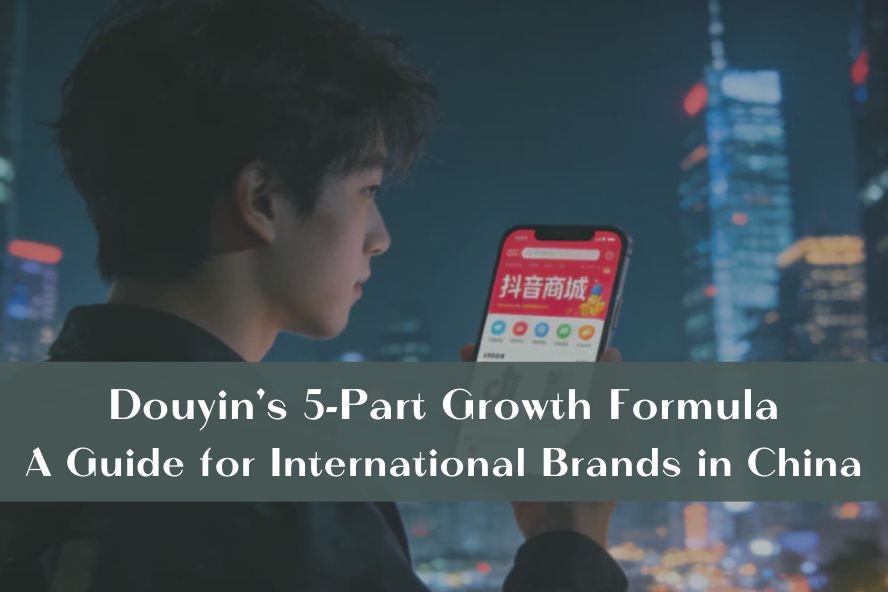
Douyin's 5-Part Growth Formula: A Guide for International Brands in China
A practical guide to Douyin's five-part growth framework: products, content, marketing, experience and efficiency—translated into priorities for international brands.

How International Hotels Can Win Chinese Travelers Through Content Marketing
Chinese outbound travel is recovering strongly, and the way Chinese travelers plan trips has fundamentally changed — discovery now starts on content platforms like Rednote, long before any hotel search begins. This piece breaks down what international hotels need to understand about Chinese traveler segments, how the browse-search-decide content journey works, what Malaysia's destination marketing approach can teach the industry, and the three concrete steps hotels need to take to turn this window into real growth.

How to Test Douyin Content Distribution in 2026
A practical framework for testing Douyin creative and distribution without treating unverified algorithm theories as platform rules.

Why International Brands Are Now Making Mini-Dramas in China's Style
P&G, Google, Sony, and Fox are now producing branded vertical mini-dramas — a format pioneered in China's marketing industry. This piece breaks down why international brands are shifting budget from ads to storytelling, what makes the model so cost-effective, and what it signals for the future of Chinese marketing as a global export. Essential reading for international brands exploring narrative-driven strategies in China and beyond.

Standing Out in China When Every Brand Has AI
As AI makes content production nearly free, true differentiation has become harder, not easier. This piece breaks down ten practical strategies — from embracing imperfection to building brand universes and ethical content standards — that help brands stand out in an AI-saturated market. Written for international brands shaping their China marketing and Chinese social media strategy, it argues that real scarcity now lies in authenticity, curation, and human connection.

From "Flop" to "Top": A Marketing Lesson for Global Brands
A mistranslated adidas product description on Rednote turned into a viral meme — and a masterclass in co-created brand storytelling. This case study unpacks how Chinese social media users transform brand mistakes into social currency, why imperfect content often outperforms polished campaigns, and how brands like Adidas and Luckin Coffee successfully joined user-driven humor without losing control of their message. A must-read for international brands shaping their China marketing strategy.

The Crocs Playbook: Embracing Controversy
Crocs was once voted one of the worst inventions of all time. Today, it generates over $3.2 billion in annual revenue, commands a cult following among Gen Z globally, and has become one of the most-discussed fashion brands on Chinese social media. The turnaround wasn't driven by making the product more conventional — it was driven by leaning harder into everything that made it strange. This post unpacks the brand strategy behind Crocs' remarkable revival, and distills what international brands can apply to their own Chinese marketing and global positioning.