

Eight Policy Signals from China’s 15th Five-Year Plan — And Where Overseas Businesses Fit In
In late 2025, China’s central government set the tone for the upcoming 15th Five-Year Plan (2026–2030). Combined with the full operational launch of Hainan Free Trade Port, this moment marks something larger than a policy update.It signals that China’s economy is entering a new phase of structural recalibration.
For international businesses and investors, this is not about short-term stimulus or GDP growth rates. It is about how value will be created, transferred, and protected in the next decade.
Rather than focusing on headline numbers, it is far more useful to understand the four underlying shifts shaping China’s next growth cycle — and where overseas players may find real, actionable opportunities.
1. The Wealth-Creation Logic Has Changed
From Selling Products to Selling Services and Systems.For decades, China’s growth engine was powered by large-scale manufacturing, cost efficiency, and price competition. That model is now approaching its limits.
The new policy direction is clear
Future growth will be driven by services, systems, and rules — not volume alone.Consumption Is Being “Repaired,” Not Stimulated.
One of the clearest signals in the new policy framework is a renewed emphasis on household income growth. This is not a short-term consumption voucher strategy, but a longer-term attempt to restore purchasing power.
What does this mean in practice?
Demand is not returning evenly.
Mass-market standardized products remain fiercely competitive.
The real opportunities lie in high-quality, experience-driven services.

Key Growth Sectors
The government has effectively repositioned certain sectors from “supplementary” to “core drivers” of domestic demand:
Elder care and wellness services (the “silver economy”)
High-end domestic services (specialized home care, private health management)
Personalized cultural and travel experiences
For overseas companies, the opportunity is not exporting finished products, but exporting service models, operational standards, and management systems that can localize within China’s regulatory environment.
2. The Innovation Logic Has Changed
From Lab Concepts to Scalable Applications.Another strong policy signal is the redefinition of innovation itself.China is no longer rewarding innovation for its conceptual novelty. Instead, it is prioritizing commercialization, deployment, and governance.
Two phrases appear repeatedly in policy documents
“Strengthening enterprises as the core innovation actors”
“AI + industry integration”
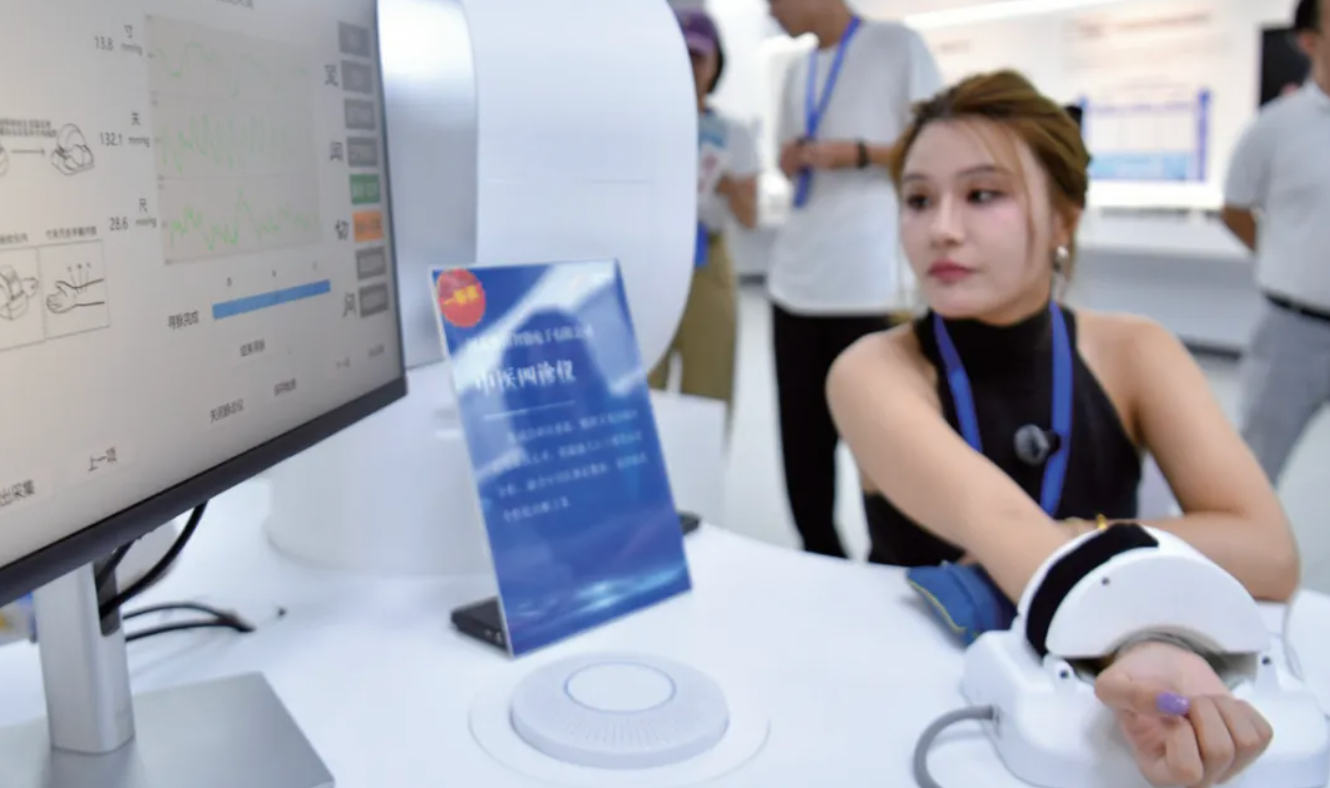
The message is straightforward:Innovation must land.
Regional Concentration Will Intensify.Resources — capital, talent, pilot projects — will continue to concentrate in three major clusters:
Beijing–Tianjin–Hebei
Yangtze River Delta
Greater Bay Area
Technology companies operating outside these ecosystems will face rising survival pressure. For overseas firms, this means partnership and entry strategies must be region-specific, not “China-wide” by default.

The Second Half of the AI Opportunity
As China moves from AI experimentation to AI governance and deployment, a familiar pattern emerges.The biggest winners are not always those building end-user applications, but those selling the tools that enable others.Key opportunity areas include:
Industrial and enterprise software
Digital transformation consulting
Data security, compliance, and governance services
For international companies with experience in regulated markets, this is a rare moment where compliance expertise becomes a growth asset, not a barrier.
3. The Business Competition Logic Has Changed
From Price Wars to Carbon and Compliance Assets.One of the most notable developments is the formal inclusion of “anti-involution” — a term used in China to describe destructive internal competition — into national reform objectives.
Combined with the elevation of carbon neutrality goals into the national energy system framework, the signal is unmistakable:Low-price, low-compliance competition is being designed out of the system.
Carbon Is Becoming a Financial Asset
China’s carbon emissions trading market is expanding steadily. This changes the fundamental economics of production:
Carbon emissions now carry explicit costs.
Emission reductions generate measurable financial returns.
In other words:
Emitting carbon is a liability
Reducing carbon is a profit center
Emerging Opportunity Fields
Carbon asset management
ESG advisory and reporting services
Energy-efficiency optimization software (SaaS)
Overseas firms with mature ESG frameworks and technical standards are well-positioned to participate, particularly through joint ventures, licensing, or advisory roles.
A Unified National Market
Another underappreciated reform is the acceleration toward a unified national market, aimed at reducing regional protectionism.As local barriers fall, businesses with standardized, replicable operating models gain a major advantage.This creates expansion opportunities for:
Chain restaurants
Retail brands
Service franchises
Especially in lower-tier cities and county-level markets, where demand exists but operational sophistication is still catching up.
4. The “Bottom Line” Logic Has Changed
Human Capital and Existing Assets Are Being Repriced
Perhaps the most structural shift lies in how China is redefining its social and economic safety net.People Are Being Treated as Assets, Not Costs
Social spending is no longer framed purely as a fiscal burden. Instead, it is increasingly described as investment in human capital.
This reframing unlocks long-tail opportunities in areas such as:
Premium childcare and early education
Elder care services with professional standards
Social security administration and skill-upgrading services for flexible workers
With over 200 million flexible or gig workers, this segment alone represents a massive, underserved market.
Real Estate: From Speculation to Infrastructure
The policy move to purchase existing housing stock for affordable housing marks the definitive end of high-leverage, high-turnover real estate development.Future opportunities are no longer about acquiring land and building fast.
They are about:
Renovating and upgrading existing properties
Deep property management and operations
Community-based lifestyle services
For overseas players, this opens doors in urban regeneration, smart property management, and community services, rather than traditional real estate investment.
Conclusion
China’s next economic cycle is not about speed — it is about structure.The biggest opportunities will not come from chasing growth numbers, but from aligning with:
Service-based value creation
Applied and governed innovation
Compliance-driven competition
Human-centered asset revaluation
For overseas businesses, the question is no longer “Is China still growing?”It is “Where is value being deliberately redirected — and how can we participate responsibly?”
Those who understand these shifts early will find that China’s new cycle is not closing doors — it is simply opening different ones.
