

How Global Jewelry Brands Win in China
In February 2026, Hermès Executive Chairman Axel Dumas said something that surprised a lot of people. On the brand's annual earnings call, he revealed a significant shift in the brand's jewelry strategy across Asia: "Previously, 95% of what we sold was silver. But I noticed in Asia that consumers tend to prefer gold over silver — also because in some countries there, it's very humid, and gold doesn't oxidize. So we introduced more gold pieces, which now account for over two-thirds of our jewelry revenue."
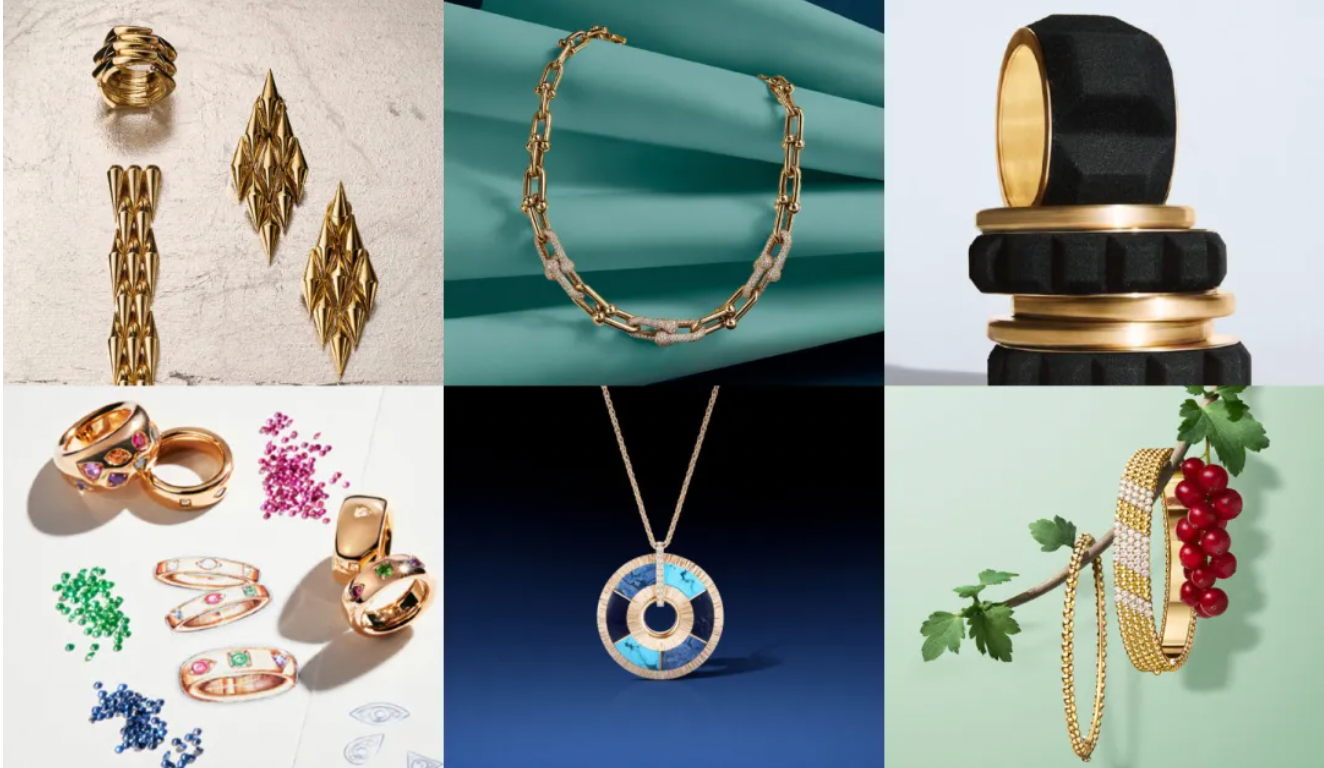
For a brand as famously uncompromising as Hermès, this kind of market-responsive adjustment is notable. It signals something important: even the most prestigious international luxury brands cannot afford to operate on brand identity alone in China. They need to read the market, respond with intention, and — particularly in categories with long development cycles like high-end jewelry — adapt without losing what makes them distinctive.
China's gold jewelry market has been on a sustained upswing for several years, driven by a combination of cultural affinity, investment thinking, and a broader consumer shift toward pieces that carry lasting value. For international jewelry brands historically built around silver, platinum, and white gold aesthetics, this trend has presented a genuine strategic challenge. But the most sophisticated brands aren't just changing their materials — they're building entirely new narratives around gold. And the way they're doing it offers a useful playbook for any international brand thinking seriously about Chinese marketing.
Telling the Gold Story Through Craft Heritage
The most credible angle available to international jewelry brands in China's gold conversation is one that domestic competitors genuinely cannot replicate: centuries of European goldsmithing tradition.
Bulgari has leaned into this with notable consistency. Open the brand's Chinese-language website and the first thing you see is an immersive showcase of its most iconic gold collections — Serpenti, B.zero1, Tubogas, and DIVAS' DREAM — all rendered in warm yellow gold. This isn't coincidental. Bulgari's identity is rooted in the goldsmithing traditions of Valenza, a region in northern Italy with an unbroken heritage of fine gold craftsmanship dating back to the early 19th century. The iconic golden serpent that defines much of the brand's visual identity isn't a stylistic choice — it's a direct expression of that heritage.
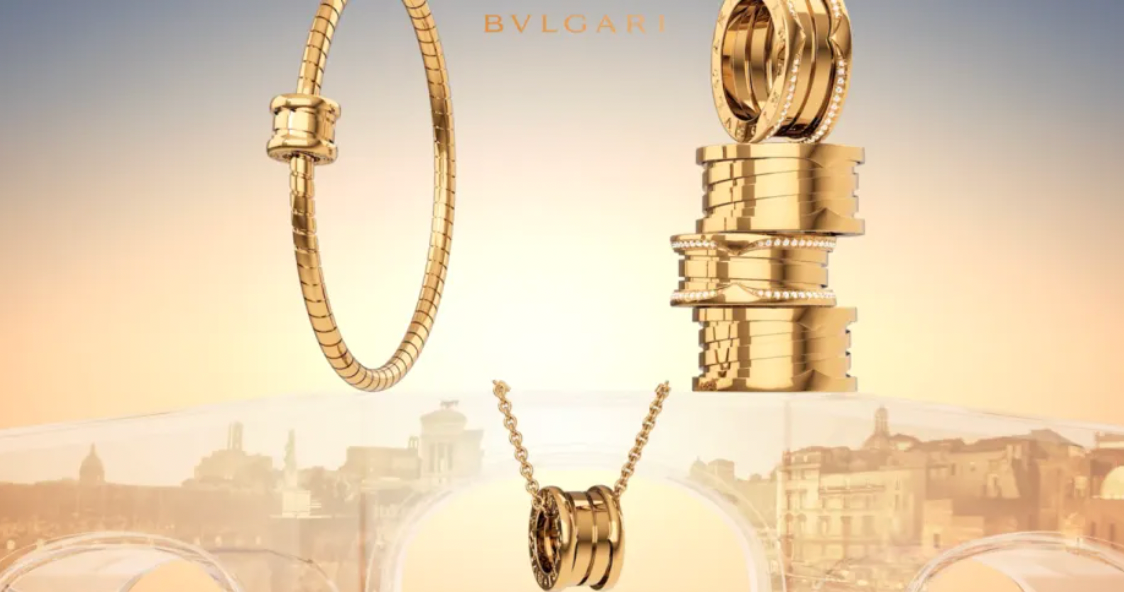
The brand's newest collection, Vimini, makes the craft connection even more explicit. Inspired by a gold antique bracelet from 1942, the collection weaves yellow gold into delicate basket-like structures that evoke traditional wicker craftsmanship. The campaign imagery for Vimini documents the full making process — from molten gold to hand-finishing — with the clear intention of centering artisanal skill, not just the finished object.
Pomellato takes a similar approach, drawing on the goldsmithing lineage of Milan. The brand's founder, Pino Rabolini, came from a family of goldsmiths, and the brand has spoken openly about its proprietary methods for working with high-quality gold. Pomellato's Chinese social media channels have featured video content taking viewers inside the brand's Milan atelier, with actor Daniel Wu appearing in one such visit — a smart choice that bridges cultural familiarity with artisanal authenticity.
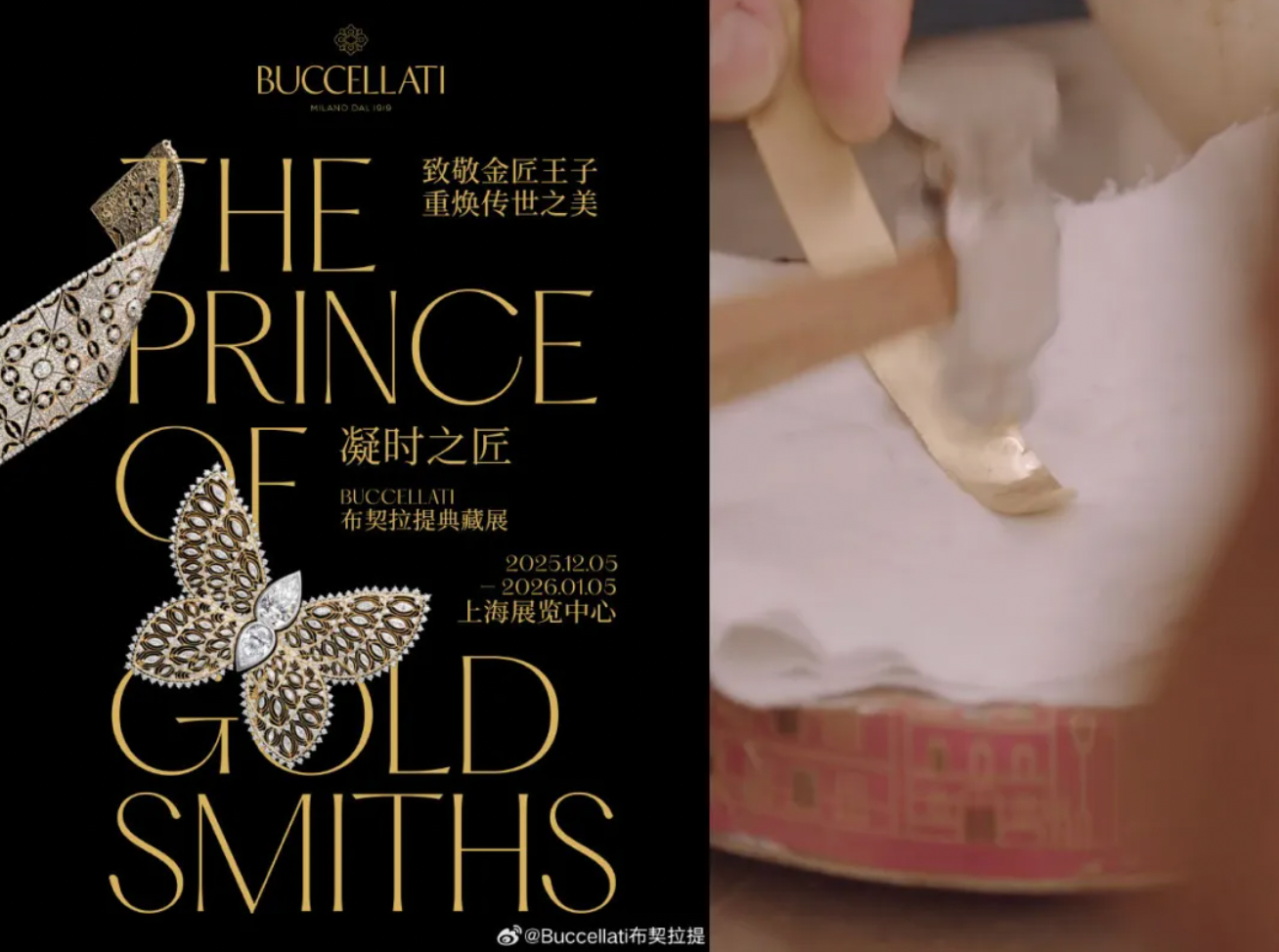
Buccellati, one of the most technically distinctive goldsmithing houses in the world, brought this narrative directly to Chinese consumers earlier this year with an archival exhibition in Shanghai titled "Mastery Beyond Time." The brand's founder, Mario Buccellati, was himself a master goldsmith, and the brand's signature lace-like engraving and honeycomb openwork techniques — developed in the early 20th century — remain essentially impossible to replicate at scale. Positioning itself as the "Prince of Goldsmiths" in its Shanghai exhibition, Buccellati made its craft credentials the centerpiece of its China market presence.
The underlying logic across all of these brands is the same: in a market where consumers have deep cultural fluency with gold, the most powerful differentiator isn't the gold itself — it's what the brand has done with gold for the past hundred years.
Making the Case for Karat Gold
One nuance that international jewelry brands need to navigate carefully in China is the difference between karat gold — typically 18K — and the pure 24K gold that dominates domestic fine jewelry and investment-oriented purchases. Chinese consumers have a long tradition of valuing high-purity gold, and domestic brands have historically built their identity around 24K craftsmanship. International brands work primarily with karat gold, which has a lower gold content but significantly greater structural versatility — it's harder, more durable, and capable of holding complex forms and gemstone settings that pure gold cannot.
The communication challenge is real, but so is the opportunity. Karat gold isn't inferior — it's different. And the brands making headway in China are those finding compelling ways to demonstrate what karat gold makes possible that pure gold simply cannot.
Van Cleef & Arpels is executing this particularly well through its Perlée collection, which the brand is actively positioning as its second major growth pillar in the Chinese market. The collection's signature element — rows of precision-crafted gold beads — is a direct expression of what 18K gold enables: consistent, perfectly spherical forms that hold their shape over time and pair beautifully with gemstone accents across a wide range of price points. As the brand's China Managing Director explained in a previous interview, Perlée's strength lies in its breadth: necklaces, earrings, bracelets, precious and semi-precious stones, accessible entry points and elevated pieces — all unified by the same gold bead vocabulary. This mix-and-match quality gives consumers a reason to build a collection over time, not just make a single purchase.
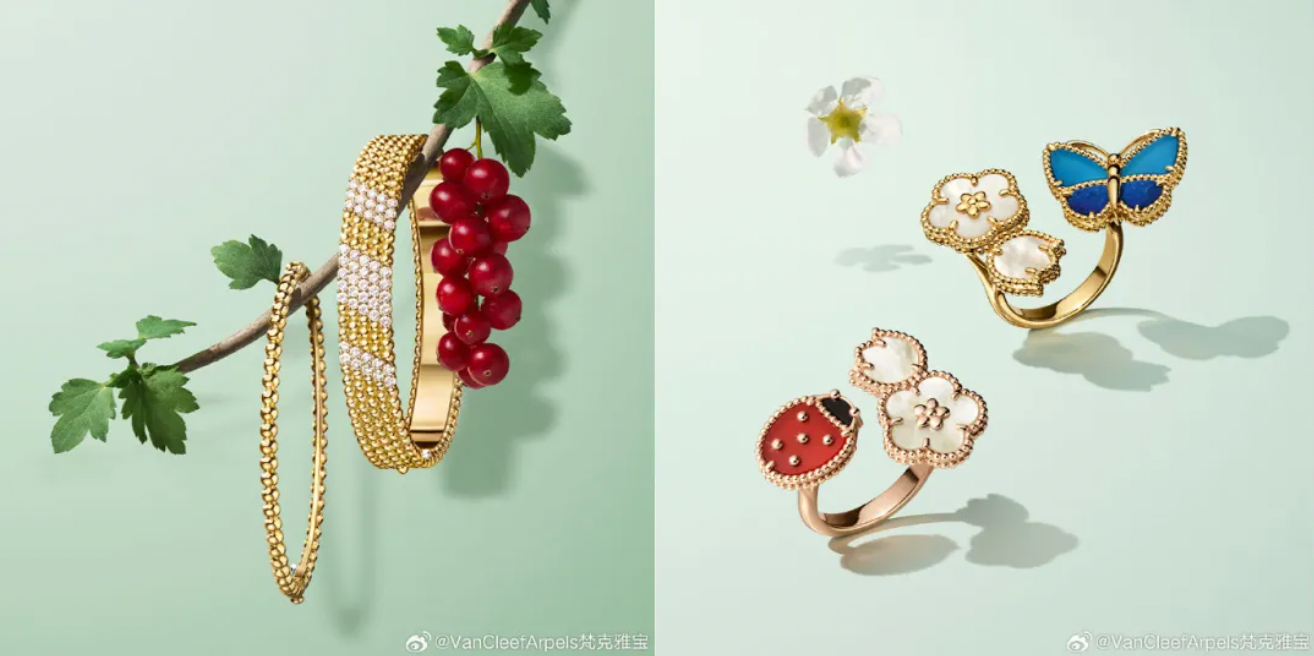
The gold bead element, it's worth noting, carries quiet cultural resonance in China as well — round, full forms are broadly associated with abundance and good fortune in Chinese visual culture. The aesthetic and the symbolism reinforce each other.
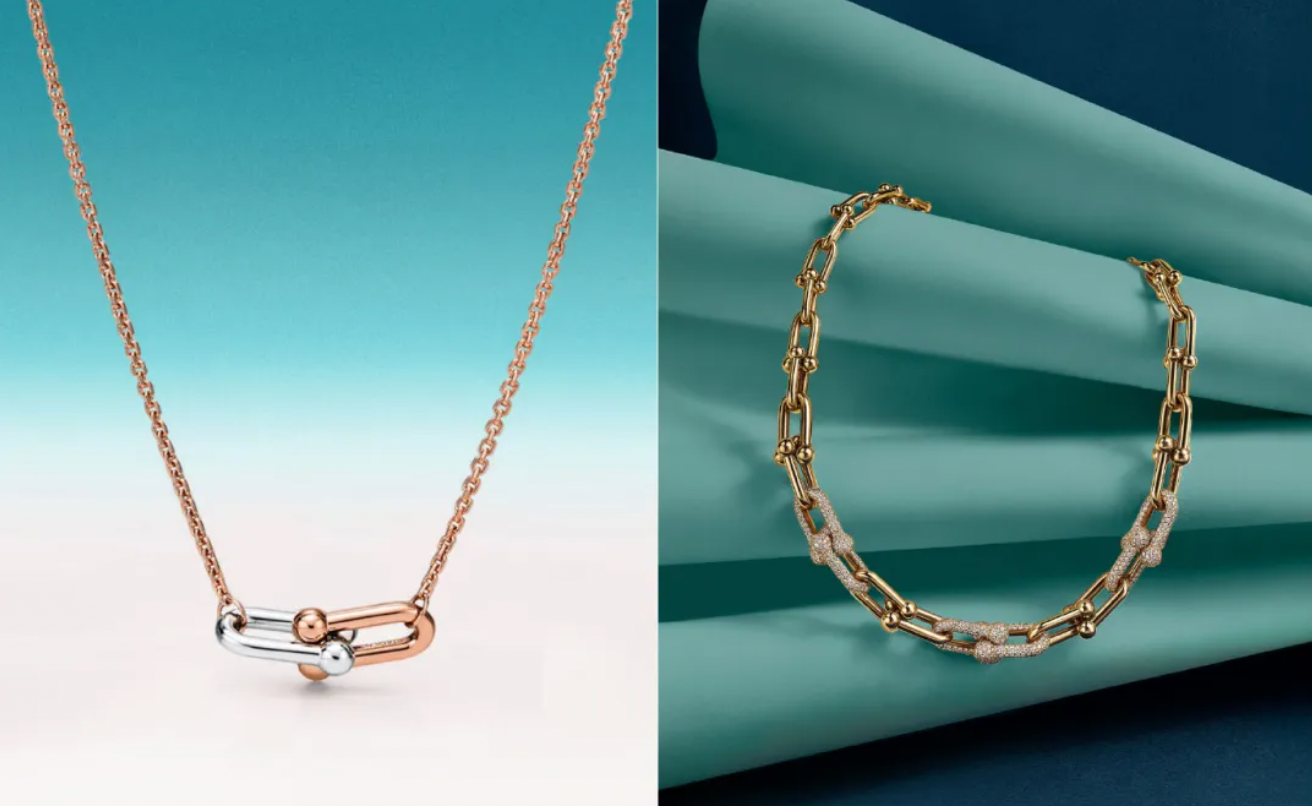
Tiffany, under LVMH's strategic direction, has been steadily rebalancing its product mix away from silver toward karat gold and high jewelry. LVMH's watches and jewelry division CEO Stéphane Bianchi confirmed on the group's 2025 earnings call that silver products have been reduced by more than a third since the acquisition in 2021. The brand's current gold lineup spans the Hard Wear, Knot, Lock, and Sixteen Stone collections across multiple jewelry categories, with high jewelry pieces incorporating increasing amounts of yellow gold. A 520-exclusive Hard Wear necklace in rose and white gold — timed to China's informal gifting holiday — is a good example of how Tiffany is adapting its product calendar to the rhythms of the Chinese consumer year.
Material Innovation: Gold Meets the Unexpected
Not every brand is telling the gold story through heritage and tradition. Some of the most interesting moves in Chinese marketing for luxury jewelry right now involve pairing gold with unexpected materials — using the contrast to signal creativity and modernity rather than continuity.
Bulgari's recent "Gold & Steel" themed jewelry line combines yellow gold with polished steel to reinterpret its classic collections with a more contemporary, architectural feel. The visual tension between warm gold and cool steel gives familiar silhouettes a new character without abandoning the brand's identity.
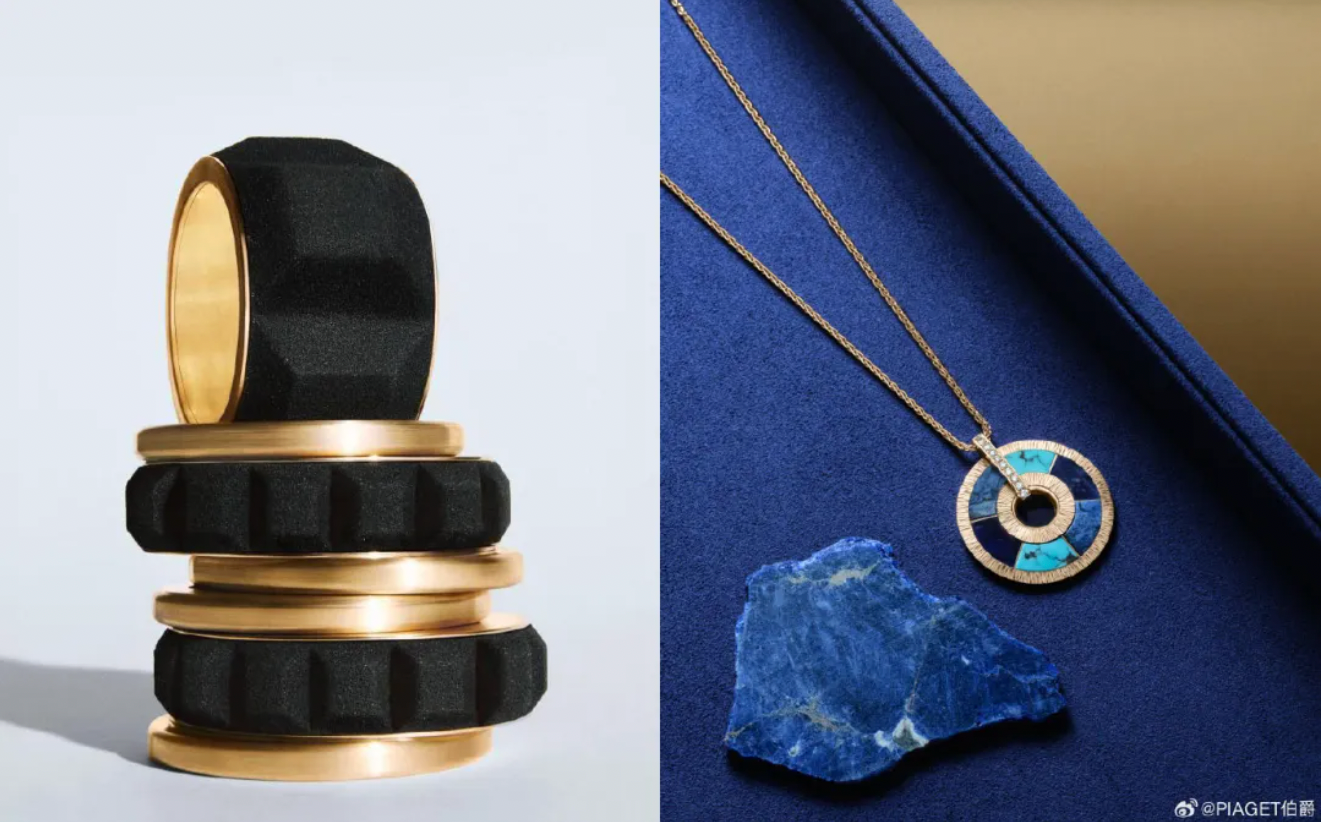
Boucheron has gone further still. In late 2025, the brand launched the Quatre Sand bracelet — a piece that combines yellow gold with black sand using advanced 3D sand-printing technology. The result is a striking visual and textural contrast: the warm luminosity of gold against the matte darkness of compressed sand. It's a bold departure from conventional goldsmithing aesthetics, and it positions Boucheron as a brand thinking about gold in terms of material experimentation rather than tradition alone.
Piaget's spring 2026 addition to its Possession collection, titled "Gilded Radiance," takes a different direction — one more deliberately attuned to Chinese aesthetic sensibilities. The new pieces wrap rose gold around blue-toned stones including turquoise and sodalite, creating a color tension that feels fresh while nodding to the kind of jade-influenced chromatic preferences that run deep in Chinese design culture. The combination subverts the expected Possession aesthetic in a way that feels intentional rather than arbitrary.
What links these three approaches is a shared ambition: to show that international brands aren't just adding gold to their collections as a concession to market pressure, but are finding genuinely creative ways to think about what gold can do in dialogue with other materials and ideas. In a market as visually sophisticated as China's, that distinction matters to consumers who follow luxury closely.
Gold as Meaning, Not Just Material
Perhaps the most culturally attuned dimension of international jewelry brands' gold strategies in China is the use of symbolism — attaching specific emotional and cultural meanings to gold pieces in ways that resonate with Chinese consumers' existing value frameworks.
Van Cleef & Arpels has centered the Perlée collection's Chinese marketing around a spirit of joy and abundance. The brand's pop-up installations for the collection — bold geometric spaces in vivid colors — communicate that Perlée gold pieces are about celebrating life's pleasures, not just displaying wealth. As the brand's China leadership has noted, the round bead form carries universal positive associations: fullness, completeness, good fortune. These are meanings that don't need to be translated — they already exist in the cultural vocabulary of Chinese consumers.
Piaget's "Gilded Radiance" Possession pieces layer meaning more explicitly, with the Chinese name of the collection evoking the idea of fortune turning in your favor — a sentiment that resonates strongly in gifting contexts and milestone moments.
Cartier's Grain de Café series — centered on coffee bean and coffee leaf motifs rendered in karat gold — communicates a different kind of abundance: the richness of the harvest, the fullness of ripe fruit. The golden palette reinforces these associations visually, making the symbolism feel embedded rather than applied.
This dimension of Chinese marketing — using gold not just as a material but as a vehicle for culturally meaningful storytelling — is one area where international brands have historically been less fluent than their domestic counterparts. The brands doing it well are those that take the time to understand what gold means to Chinese consumers, not just what it looks like.
The Broader Lesson for International Brands
What Hermès, Bulgari, Van Cleef & Arpels, and their peers are working through in the jewelry category reflects a challenge that is relevant to many international brands operating in China: how do you adapt to a specific, strongly held consumer preference without losing the distinctiveness that makes you worth choosing over a domestic alternative?

The answer, as the most successful brands are demonstrating, is not to simply imitate what domestic brands do with gold — but to bring your own heritage, craft vocabulary, and creative point of view to the material. Celebrate what you've done with gold for a century. Show what your craft tradition makes possible that others cannot replicate. Find the intersection between your brand's authentic identity and the meanings that Chinese consumers already attach to the material.
That intersection — between genuine brand heritage and genuine cultural relevance — is where the most durable positioning in Chinese marketing gets built. It takes time, research, and creative confidence to find it. But the brands doing the work are seeing results.
Interested in exploring bespoke marketing tips and localized strategies for the Chinese market? Feel free to reach out to us!
