

China Social Media Management for Hotels: What Good Operations Look Like
If your hotel hired a China social media team tomorrow, what would you expect them to have done by next Friday?
“Posted three times” is an easy answer. It is also a weak one.
A useful operator should have found the questions Chinese travellers are asking, checked the answers with the property, turned those answers into platform-native content, responded to real interest, spotted any booking-page inconsistencies and brought useful feedback back to reservations or the front desk. Publishing matters, but it is one part of the job.
That distinction is especially important for an international hotel. The person running the Chinese channels is rarely sitting beside the revenue manager, concierge or reservations team. Without a working system, social content becomes a separate marketing stream: attractive from a distance, hard to approve and poorly connected to what guests can actually reserve.
This guide explains what good China social media management for a hotel looks like in practice—week by week, team by team and channel by channel.
Chinese travellers do not experience your channels separately
A traveller may notice a destination on RedNote, search for hotels there, compare rooms on Ctrip, check the official WeChat account, ask a question in a comment and reserve later through an entirely different route. From the hotel's side, those are separate platforms and departments. From the traveller's side, it is one decision.
The latest evidence makes RedNote difficult to ignore. In a March 2026 survey of 1,038 mainland Chinese travelers, 53% selected RedNote as a source of outbound travel information, putting it ahead of the other channels measured. The same research found continued interest in longer trips and higher spending on experiences.
Activity alone is not the lesson. A Q2 2026 benchmark found that hotels' average engagement per active RedNote account per post was 99.5% higher than a year earlier. The report's broader conclusion was more useful than the percentage: specific experiences, relevant stories and consistent output produced more sustainable response than isolated bursts of attention.
In plain English: Chinese travelers are paying attention, but a hotel still has to be useful and present often enough to be remembered.
The job is to run a decision system, not a posting calendar
A content calendar answers, “What are we publishing?” An operating system also answers:
Why does this subject matter now?
Which traveller question are we answering?
Who confirms the hotel facts?
Which account publishes it, and why there?
Who replies if someone asks about a room or policy?
Where can the traveller verify the information and reserve?
What did the response tell us to change next?
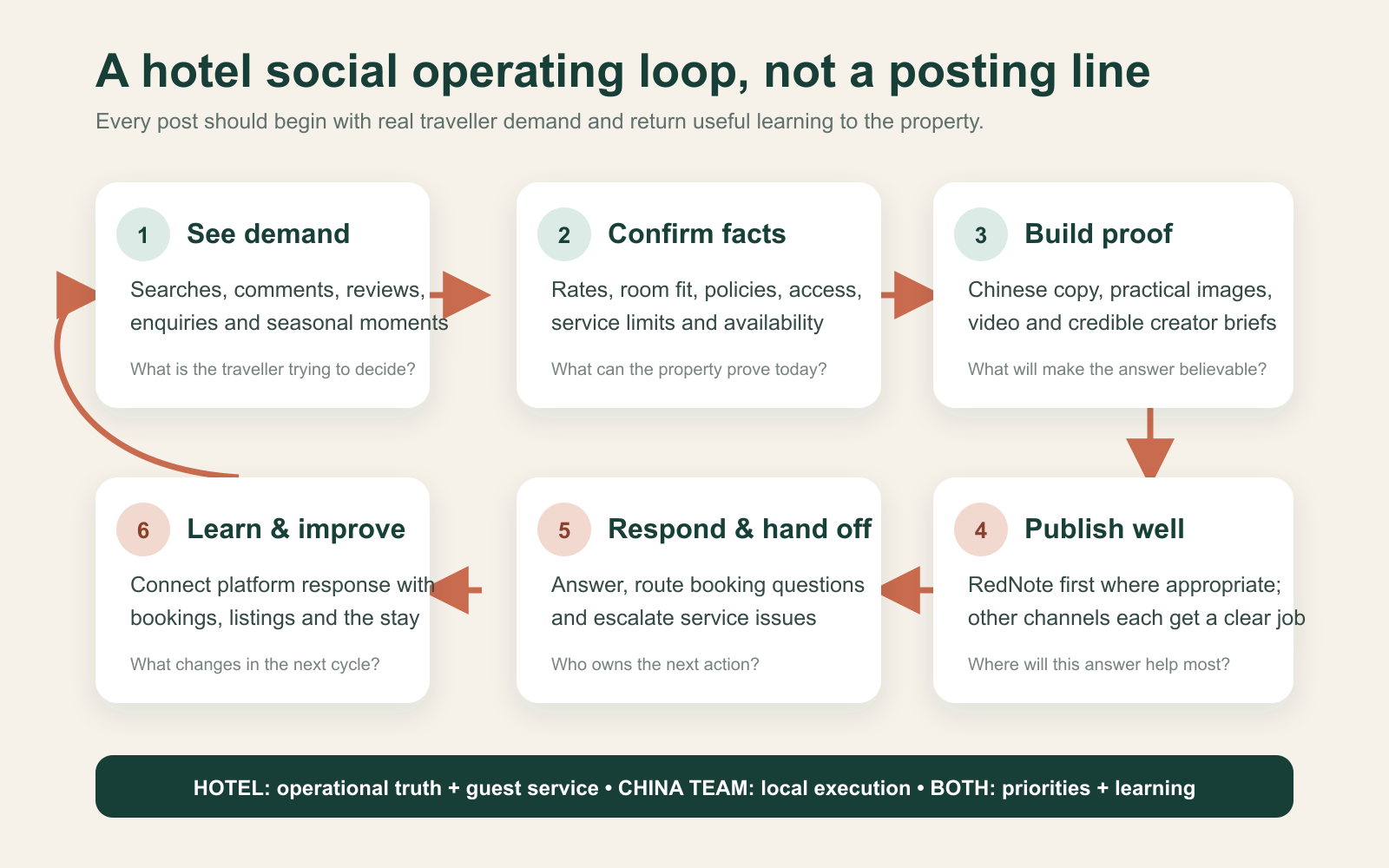
The difference becomes obvious when something changes. Breakfast hours move, a renovation affects one room category, the airport transfer stops running or a seasonal package sells out. A posting calendar keeps promoting. An operating system catches the change, updates the answer and prevents a small content error from becoming a guest-service problem.
For most international hotels, the loop has six parts:
Listen: search behaviour, comments, reviews, enquiries and seasonal demand.
Verify: current room, rate, policy, location and service facts from the property.
Create: Chinese copy, design, video and creator briefs suited to each channel.
Publish and distribute: owned accounts first, with creators or paid support where they have a clear job.
Respond and escalate: answer normal questions and route booking or service issues quickly.
Learn: connect platform signals with reservations, listing quality and guest feedback.
If one part is missing, the weakness appears somewhere else. Good creative without verification creates inaccurate claims. Helpful comments without an escalation route create frustrated prospects. Strong reach with a confusing booking page simply sends more people into a broken journey.
Start with RedNote, but give the official account a real role
For many international hotels, RedNote should be the centre of the discovery plan. It is where a traveller can move from a broad idea—“a quiet autumn weekend overseas”—to a very specific search about neighbourhood, room layout, breakfast, transport or a property type.
An official RedNote account gives the hotel a stable source for its Chinese name, facts and current answers. It should not behave like a noticeboard. Its strongest work usually falls into four jobs:
Get found: answer destination-and-hotel searches in the language travellers actually use.
Make the stay understandable: show room fit, arrival, food, service and the surrounding area with useful detail.
Reduce uncertainty: explain the issues that slow a decision, including child policies, deposits, transport and what is genuinely available in Chinese.
Support the next step: make the current reservation or enquiry route clear without forcing every post into a hard sell.
For an overseas hotel, account setup deserves proper attention. RedNote's professional-account rules, updated in August 2026, say eligible overseas entities in open jurisdictions and industries may apply, subject to current documents and industry requirements. The applicant must use its own qualifying credentials; non-Chinese documents require translation. Approval is a platform decision, not something an agency can promise.
Ownership matters just as much as eligibility. The hotel should know which legal entity holds the account, who controls the administrator login, where recovery details are stored and what happens if an employee or agency changes. A growing audience on an account nobody can safely hand over is not an asset.
Use creators and genuine guest content to add experience, not noise
The official account is good at accuracy. Creators and guests can show what the stay feels like from a particular point of view.
A family-travel creator can test whether the room works with a cot and luggage. A design-focused creator can explain why a space feels considered. A food creator can show the breakfast choices more credibly than a list of adjectives. A business traveller can reveal whether the desk, Wi-Fi, breakfast timing and airport journey work together.
The brief should be specific about the guest situation and the facts that cannot drift. It should also protect enough independence for the result to feel like a real experience. Asking someone to repeat “perfect location” and “spacious room” produces content that viewers recognise as advertising and tells the hotel very little.
Good creator operations include selection, due diligence, written deliverables, filming permissions, disclosure, fact checking, usage rights, deadlines and a plan for the comments after publication. KOL reach can be useful, but KOC and UGC-style work often gives a hotel more specific search coverage and more believable proof. The right mix depends on the property and the decision the content needs to support.
Do not manufacture reviews or pretend paid content is spontaneous. A commenting campaign should mean useful, disclosed participation in relevant conversations and disciplined replies on the hotel's own content—not planted praise. Trust is hard to earn and very easy to lose.
WeChat should continue a relationship that already has a reason to exist
Hotels sometimes open a WeChat Official Account because it appears on a China checklist. Six months later it contains a few translated press releases, an outdated menu and no clear next step.
WeChat becomes valuable when the hotel knows who should follow and what they should receive. An Official Account can hold detailed arrival information, seasonal guides, event updates, service explanations and member communication. WeChat Channels can add short video that is easier to share inside the WeChat ecosystem. Both are stronger when the traveller has a reason to return, not just a reason to scan once.
WeCom can come later, when enquiry volume and repeat relationships justify it. It can help a hotel or regional team manage one-to-one conversations, groups, trade contacts, event prospects or repeat guests through a company-controlled environment. It is not a shortcut for collecting as many contacts as possible. The hotel needs consent, clear service expectations, trained staff, response coverage and a useful reason for continued contact.
Social or WeChat interest groups can also work at a later stage—for example, around a destination, a recurring event, weddings, food or a membership audience. They require real moderation and a content purpose. A silent group filled with promotions feels abandoned faster than an inactive feed.
Keep Ctrip and Dianping in the operating meeting
RedNote may create interest, but an OTA or review page often supplies the final reassurance. That makes listing operations part of social media management, even when a separate e-commerce or revenue team owns the page.
Once a month—and before any significant campaign—check the Chinese name, map pin, room photographs, amenities, breakfast information, child rules, transport details, renovation notices and current contact route. Compare the claims in recent social content with what a traveller sees on Ctrip or Dianping.
Reviews are not only a reputation score. They are a content research file. Repeated praise shows what guests actually value. Repeated confusion shows what the hotel has failed to explain. Repeated criticism may point to an operating issue that marketing should stop promising around.
The social team should summarise the pattern, not cherry-pick flattering lines. The property team should decide what can be fixed. When an issue is resolved, content and listing information can show the updated reality without pretending the earlier problem never existed.
What a useful week of hotel social operations looks like
There is no universal publishing number, but the working rhythm should be visible. A practical week may include the following.
Listening and planning
Review RedNote searches, comments and relevant destination conversations.
Check new Ctrip and Dianping review themes.
Ask reservations and the front desk what Chinese-speaking guests are asking now.
Confirm availability, policies and seasonal priorities with the property.
Adjust the next two to four weeks of content rather than protecting an outdated calendar.
Production and publishing
Turn one clear traveller question into an official RedNote note.
Prepare or adapt a deeper answer for WeChat when the subject warrants it.
Edit short video for the channel where it will actually be used.
Coordinate creator visits, drafts, rights and publishing dates.
Complete platform fields, links, captions, alt information and final fact checks.
Community and handoff
Reply to ordinary comments and messages in natural Chinese.
Move booking questions to the agreed reservations route.
Escalate complaints, safety matters, sensitive requests and misinformation under a written rule.
Record repeated questions instead of answering each one and forgetting it.
Learning
Review search visibility, saves, qualified profile actions, questions and booking-path traffic.
Compare the response with known enquiries or reservation feedback.
Identify one content change and one hotel-side change for the next cycle.

This is why ongoing management takes more work than translation and scheduling. Somebody has to keep the connections alive.
The hotel and the agency need a clear division of labour
The strongest partnership does not ask the agency to guess what happens inside the property, and it does not ask the hotel team to become experts in every Chinese platform.
The hotel should own:
accurate rates, availability, policies and service facts
fast access to rooms, facilities and the people who can demonstrate the experience
account ownership and final brand authority
reservation fulfilment and guest-service resolution
an internal contact who can make decisions
The China team should own:
audience, search and platform research
channel roles and the working content plan
native Chinese copy, creative direction, design and video delivery
publishing, daily account care and community triage
creator coordination and paid-media support where agreed
reporting that explains what to do next
Both sides should own:
the quarterly priorities
the claims that can safely be made
campaign and creator approvals
escalation rules
what the team learns from guests
If everything needs six approvals across three time zones, good work will arrive after the moment has passed. If nothing is reviewed, errors are inevitable. Agree a practical middle ground: a rolling calendar, named approvers, a response deadline, pre-approved evergreen facts and a short list of subjects that always need senior sign-off.
One capture day should create more than one post
International hotels often have excellent visual assets but not the evidence Chinese travellers need. A content capture day can solve that when it is planned around questions rather than beauty shots.
For a family-stay story, capture the room entrance, bed arrangement, cot or extra bed, storage with luggage inside, bathroom privacy, breakfast choices and the real walk to a nearby attraction. For a late-arrival story, capture the station or airport route, taxi drop-off, entrance after dark, check-in point and food options still available.
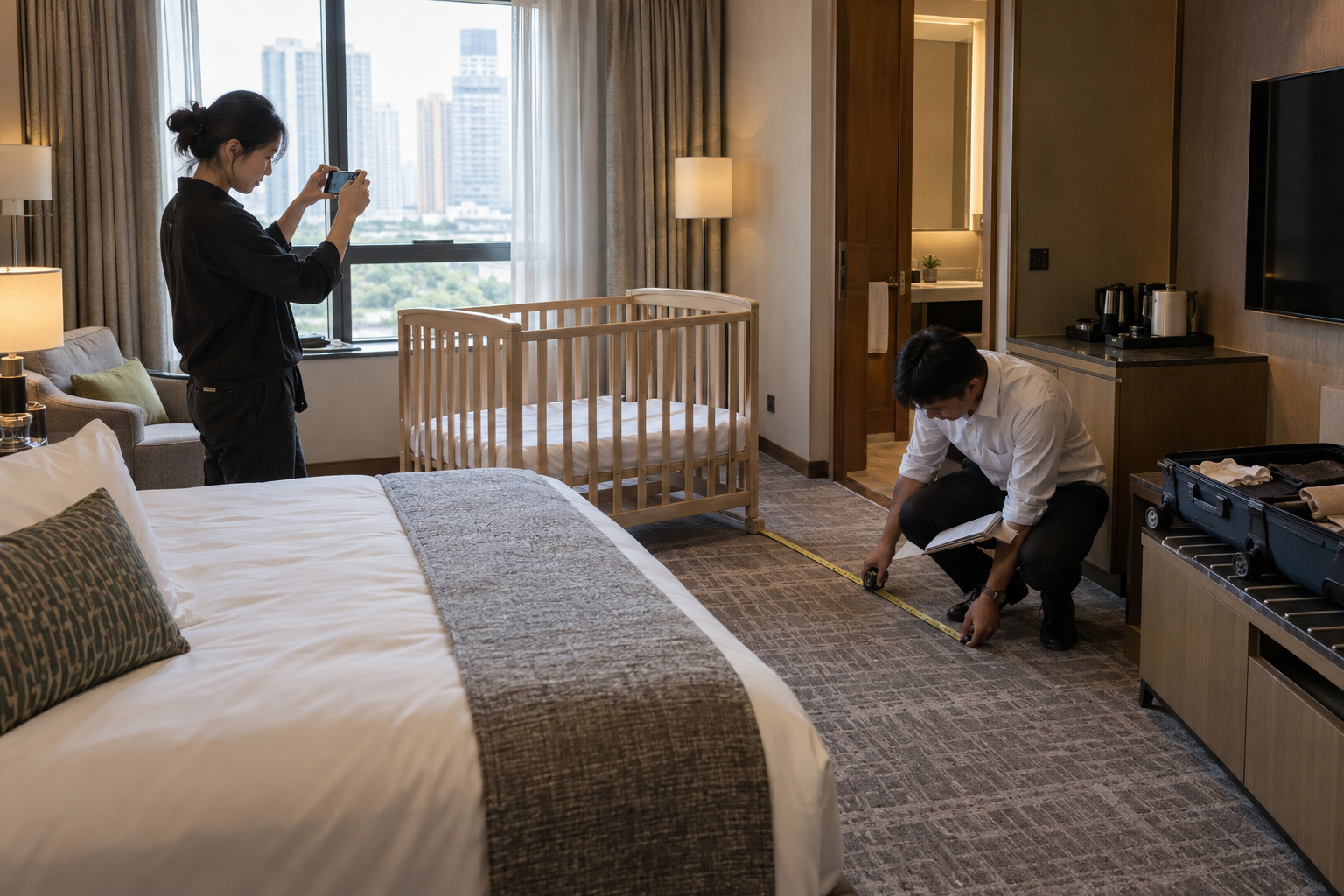
That evidence can produce a RedNote carousel, a short video, a WeChat guide, a creator brief, updated listing photographs and a saved Chinese reply for reservations. The material is reused; the post is not copied word for word.
The production team should keep a source-of-truth sheet beside the asset library: room names, measurements, policies, operating hours, transport instructions, Mandarin support, expiry dates and the colleague who confirmed each fact. It is not glamorous. It prevents expensive mistakes.
Paid support should amplify evidence, not rescue weak content
Organic content shows which questions and creative approaches deserve more attention. Paid media can then extend proven work to relevant audiences, support destination or seasonal demand and reconnect with people who have shown interest where platform rules allow.
Do not treat media spend as a cure for an unclear offer, a weak note or a broken reservation journey. Before promoting, check that the account is eligible, the content meets current advertising rules, the facts are current, the audience is intentional and the next step works on a Chinese mobile journey.
The useful question is not “How much reach can we get?” It is “Which qualified action are we trying to increase, and can the hotel handle it?”
Report the signals a hotel can act on
A monthly deck with screenshots, follower counts and a long list of published posts is an activity record. A management report should help the hotel decide what to change.
Use four levels:
Discovery: relevant search impressions, non-follower reach and Chinese-name visibility.
Usefulness: saves, completion, substantive comments and repeat themes.
Intent: room or date questions, profile actions, route clicks and identifiable enquiries.
Business and service: known reservations, booking friction, cancellations linked to misunderstanding, review themes and repeat contact.
Attribution will never be perfect. A guest can save a note, discuss it in a group, compare on Ctrip and reserve days later. Use trackable paths where permitted, add a simple source question to reservations and review patterns rather than pretending every booking has a single cause.
The report should end with decisions. Keep this format. Stop that topic. Correct this listing. Film this question. Change this reply. Test this audience. That is more valuable than a page of green arrows.
Warning signs that the operation is mostly cosmetic
Be cautious if a hotel or agency team:
promises a fixed number of posts before researching the guest or market
translates global captions (purely from instagram or facebook) with no platform or search adjustment
reports only views and followers
recommends creators mainly by follower count
never checks Ctrip, Dianping, the reservation journey or front-desk feedback
suggests fabricated reviews, undisclosed promotion or guaranteed rankings
cannot say what the hotel must provide for the work to succeed
Good operations are less dramatic. They are organized, curious, quick enough and honest about what the marketing can and cannot control.
What should be working after three months?
By the end of the first quarter, an international hotel should have more than a larger content folder. It should have:
secure, documented account ownership and access
a focused platform mix with a job for each channel
an agreed Chinese name and consistent core information
a live RedNote question-and-search plan
a repeatable process for hotel fact checking and asset capture
response and escalation rules for comments and messages
a creator or UGC approach with clear disclosure and rights
a monthly listing and review check
a report connecting platform response with reservation and service insight
a clear decision about what to improve next
Not every hotel needs RedNote, WeChat, WeChat Channels, WeCom, Ctrip, Dianping, creators and paid media at the same time. The point is to build the smallest system that can work properly, then add the next layer when demand and resources justify it.
Questions hotel teams ask before appointing a China social media partner
What does a China social media management agency do for a hotel?
It connects Chinese audience research, channel planning, account care, native content, publishing, community management, creator coordination and reporting with the hotel's reservation and guest-service reality. The work should produce useful content and a dependable operating rhythm, not just a monthly post count.
Should an international hotel begin with RedNote or WeChat?
For many properties seeking new Chinese leisure travellers, RedNote is the stronger discovery starting point. WeChat becomes more valuable for detailed information, existing audiences, members, events, repeat guests and continued communication. The right answer depends on the hotel's audience, account eligibility, content capacity and current demand.
Can a foreign hotel verify an official RedNote account?
Potentially, if its legal entity is in an eligible location and its industry and documents meet the current platform rules. Requirements can include local registration records, business registration, relevant operating licences and Chinese translations. Use the hotel's own qualifying documents, keep ownership under hotel control and allow for platform review.
How many Chinese social posts should a hotel publish each month?
There is no honest universal number. Cadence should reflect demand, platform role, available evidence and the team's ability to respond. A smaller number of useful RedNote notes can outperform frequent generic room tours. Agree the production scope only after an audit and initial content map.
Does a hotel need WeCom and WeChat groups from the beginning?
Usually not. Add them when there is a defined audience, enough enquiry or repeat-contact volume, trained owners and a clear service promise. A poorly supported private contact or inactive group can damage confidence.
Can social media bookings be measured accurately?
Some can be connected through permitted links, codes, enquiry records and reservation questions; many journeys will remain multi-touch. Use both direct evidence and patterns across search, saves, questions, booking-path activity and guest feedback. Be clear about the limits.
How much does ongoing China social media management cost for a hotel?
It depends on account setup, number of platforms, research, publishing cadence, design and video needs, creator work, community coverage, paid media, property count and approval complexity. A useful proposal separates one-off foundations, regular management, production, creator fees and media spend so the hotel can see what is driving cost.
Your next China campaign may need fewer ideas and a better operating rhythm
Most international hotels are not short of stories. They are short of a dependable way to find the right story, confirm it, shape it for Chinese travellers, publish it in the right place and learn from the response.
That is the work.
Lotus can help a hotel research the Chinese opportunity, set up and verify the right accounts, plan and run RedNote and WeChat, produce native Chinese content, coordinate KOL, KOC and UGC work, and keep the whole system moving through ongoing China social media management.
Tell Lotus about the property, current Chinese channels and where the work keeps getting stuck. We will recommend a focused starting scope, explain what your hotel team would need to provide and show how the work can develop without opening every channel at once.
