

Beyond the Single Platform: Mastering Douyin, Rednote, and the Art of China Marketing
Mastering the Chinese digital landscape requires more than just presence—it requires an integrated strategy. This article explores how international brands can synchronize the viral growth engine of Douyin with the trust-building authority of Rednote. We break down the unique user behaviors, the "interest ecommerce" logic, and the critical importance of cross-platform connectivity. From driving initial awareness to capturing long-term loyalty via private traffic channels, learn how to navigate the complex Chinese social media ecosystem to achieve sustainable growth and a cohesive brand presence in China.strong, localized presence in the competitive Chinese marketing environment.
Navigating the Chinese Social Media Ecosystem: A Strategic Guide for International Brands
Success for an international brand in the Chinese market requires navigating a fragmented social media landscape. This guide simplifies the ecosystem by breaking down the core functions of WeChat, Rednote, Douyin, Weibo, Kuaishou, and Bilibili. From WeChat’s CRM capabilities to Rednote’s trust-building and Douyin’s viral traffic, we explore how to leverage each platform for maximum impact. By moving beyond a one-size-fits-all approach and adopting an omnichannel strategy, international brands can build sustainable growth, deep customer loyalty, and a strong, localized presence in the competitive Chinese marketing environment.

Unbanning Your Douyin Account: A 2026 Guide
Navigating a permanent Douyin account ban in 2026 can be daunting for international brands. This comprehensive guide breaks down the platform's strict risk control mechanisms, helping you identify whether your ban is appealable. It provides a step-by-step walkthrough of the official recovery process, from cleaning up non-compliant content and verifying corporate entities to crafting the perfect appeal letter. Learn how to utilize in-app tools and official email channels effectively, while learning how to avoid common digital recovery scams to protect your brand's presence in the Chinese market.

Decoding China’s 2026 Consumption Code: Seven Explosive Sectors Redefining the Market
As we enter 2026, the landscape of Chinese marketing has shifted from mass consumption to high-precision, value-driven growth. This report analyzes seven explosive sectors, revealing how international brands can navigate a market where Pickleball gear has surged by 284% and men’s grooming by 363%. The most significant shift is the rise of Douyin (TikTok China) over traditional giants in key categories, signaling that content is now the primary driver of commerce. For any international brand aiming for success in China, understanding these niche trends—from precision nutrition to the "pet parenting" economy—is essential for capturing the modern Chinese consumer Chinese marketing and build lasting emotional equity on Chinese social media.
From "Just Do It" to "Unbridled": How Nike Rooted Its Global Identity in the Chinese New Year
How does a global giant like Nike maintain its brand soul while deeply resonating with local festivities? This case study deconstructs Nike’s 2026 Chinese New Year campaign for the Year of the Horse. By translating its iconic "Just Do It" philosophy into the culturally rich concept of "Tuojiang" (Unbridled/Breaking Free), Nike bypassed superficial zodiac symbols to engage with the deep-seated emotional aspirations of Chinese youth. This post explores the strategic shift from symbolic borrowing to spiritual interpretation, offering a roadmap for any international brand seeking to master Chinese marketing and build lasting emotional equity on Chinese social media.

Beyond Compliance: Unlocking Growth for International Brands in China’s Cosmetics Market
With the transaction value exceeding RMB 1.1 trillion in 2025, China remains the world’s most dynamic cosmetics market. However, entering this territory involves navigating a complex regulatory landscape that emphasizes full-chain risk management. This blog post explores the dual nature of the 2026 Chinese marketing environment: the tightening of safety standards and the rise of localized industrial support. Beyond standard compliance, we highlight how international brands can leverage regional incentives—such as Shanghai's "Debut Economy"—and professional partnerships with firms like ZMUni to secure subsidies and streamlined market entry into China.

Navigating Rednote’s AI Ban: A Survival Guide for Brands
On March 10, 2026, Rednote issued a landmark decree: a definitive ban on fully automated AI accounts, bulk-generated AI "notes," and bot-driven interactions. For international brands leveraging AI to scale their presence in China, this marks a critical turning point. The platform is not banning AI tools entirely but is drawing a hard line against "autopilot" operations that erode user trust. This article decodes the new regulations, analyzes the platform’s motivation to preserve "human authenticity," and provides a strategic framework for brands to integrate AI safely without risking account termination in the competitive Chinese marketing landscape.
China’s Social Media Pivot: Inside Douyin’s Virtual Social Universe
As short-video growth hits a plateau, Douyin (China's version of TikTok) is aggressively pivoting toward a holistic social ecosystem. By introducing "World Square"—a virtual social hub—and the "Fire Elf" (Xiao Huo Ren) interactive IP, Douyin is transforming from a content consumption tool into a social destination. With over 100 million daily active users engaging with these virtual avatars, the platform is blending gaming, AI companionship, and offline interest-matching to secure user loyalty. For international brands, this marks a significant shift in how to engage Chinese consumers beyond traditional video ads.
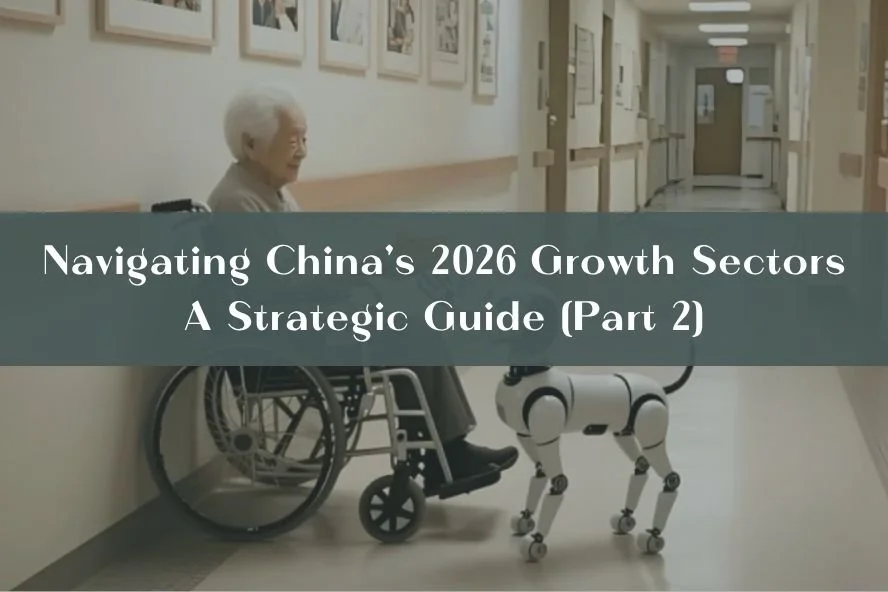
Navigating China’s 2026 Growth Sectors: A Strategic Guide (Part 2)
Building on the momentum of Part 1, this second installment explores the remaining five pivotal sectors defining the landscape of China in 2026. As the market pivots toward high-utility innovation and deep demographic shifts, international brands have a unique opportunity to align with long-term national strategies and evolving consumer desires. We dive into the "Low-Altitude Economy," the recession-proof "Pet and Emotional Consumption" sector, the massive wealth transfer within the "Silver Economy," the stable growth of "Green Energy," and the commercial tipping point of "Autonomous Driving." For any entity looking to master Chinese marketing, understanding these vertical shifts is non-negotiable for sustainable success.
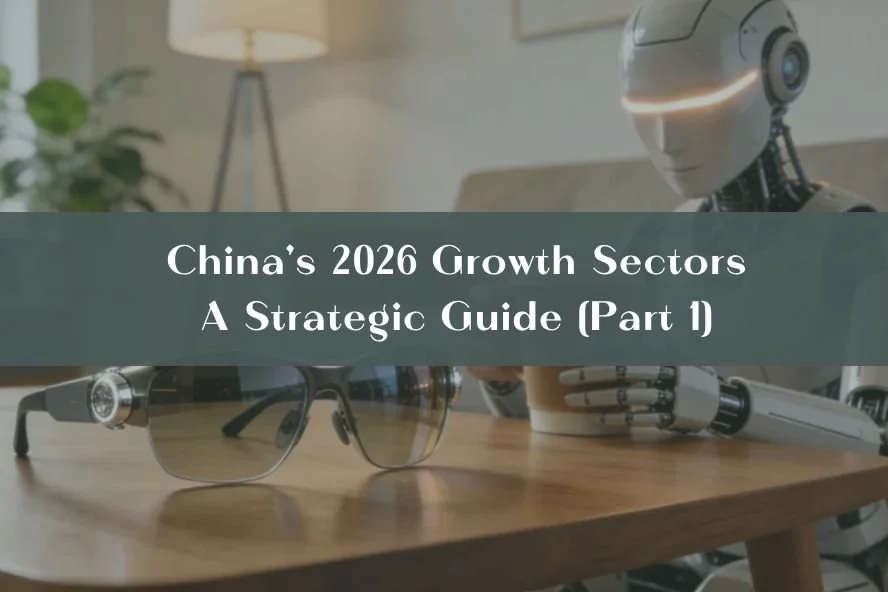
China’s 2026 Growth Sectors: A Strategic Guide (Part 1)
The investment landscape in China has undergone a tectonic shift in 2026, moving from high-burn growth models to a mandate for immediate, sustainable profitability. For any international brand aiming to navigate this market, staying ahead of the "windfall" sectors is essential. This article—the first of a two-part series—decodes the top five industries currently reshaping the Chinese economy. We explore the industrialization of "Physical AI," the mass-market transition of 3D printing, the $20B "Gu-zi" (IP merchandise) subculture, the AI-driven democratization of media, and the rapid commercialization of space. Understanding these pivots is the key to localizing effectively in the current Chinese marketing environment.
Entering the China Market: A Legal Guide to Distribution
For many an international brand, the allure of China's massive middle-class and resilient economy is undeniable. However, the high costs of direct entry often lead companies to opt for a third-party distribution model. While efficient, this path is riddled with legal nuances that can jeopardize a brand’s future if handled carelessly. This guide explores the critical pillars of a successful distribution strategy in China, covering rigorous partner due diligence, the protection of digital assets like T-mall stores, and the strategic advantages of choosing local jurisdiction. Learn how to safeguard your brand’s reputation and assets while navigating the complexities of the Chinese marketing landscape.
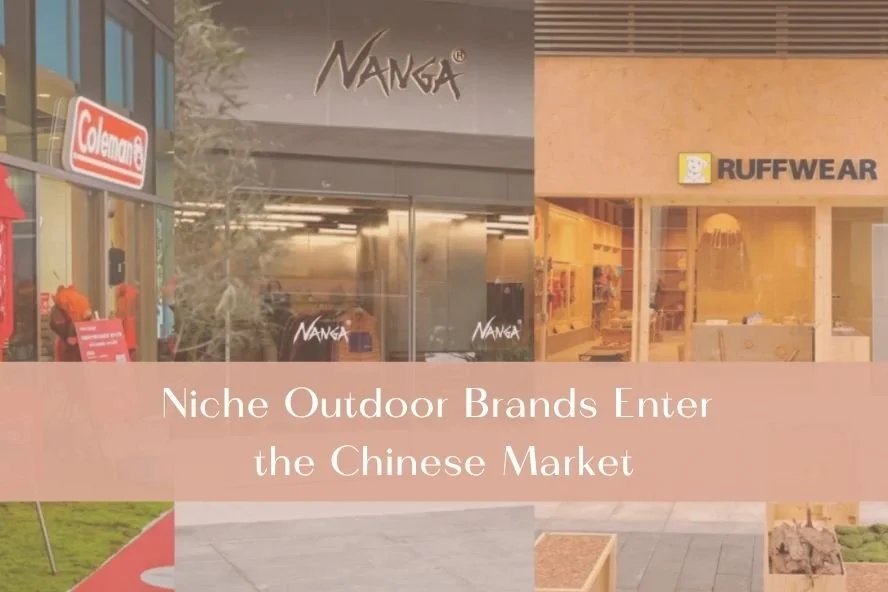
Niche Outdoor Brands Enter the Chinese Market
The definition of outdoor living is rapidly expanding, and international brands are eager to capture new consumer segments. Recently, three highly specialized outdoor lifestyle brands—Coleman (US), Ruffwear (US), and NANGA (Japan)—opened their first physical flagship stores in the country. Moving beyond general sporting goods, these brands cater to hyper-specific needs, from heritage camping lanterns to extreme down sleeping bags and professional-grade outdoor gear for pets. This article explores the rich histories of these brands, their strategic retail placements in Shanghai and Chengdu, and what their physical expansion reveals about the evolving demands of consumers in China.