

Decoding China’s 2026 Consumption Code: Seven Explosive Sectors Redefining the Market
In March 2026, a comprehensive study on China’s consumption landscape revealed a startling reality: while macro-economic discussions continue, specific micro-sectors are experiencing unprecedented surges. With a $5.89 billion outdoor sports market and a cosmetics sector reaching $9.23 billion, the data suggests that Chinese consumers are not spending less—they are spending smarter. For an international brand, the most critical takeaway is the fundamental migration of decision-making logic, especially as Douyin (the Chinese counterpart of TikTok) overtakes Tmall in five core categories. This is no longer just a channel shift; it is the era of content-driven commerce.

The Great Platform Shift: Content as the New Storefront
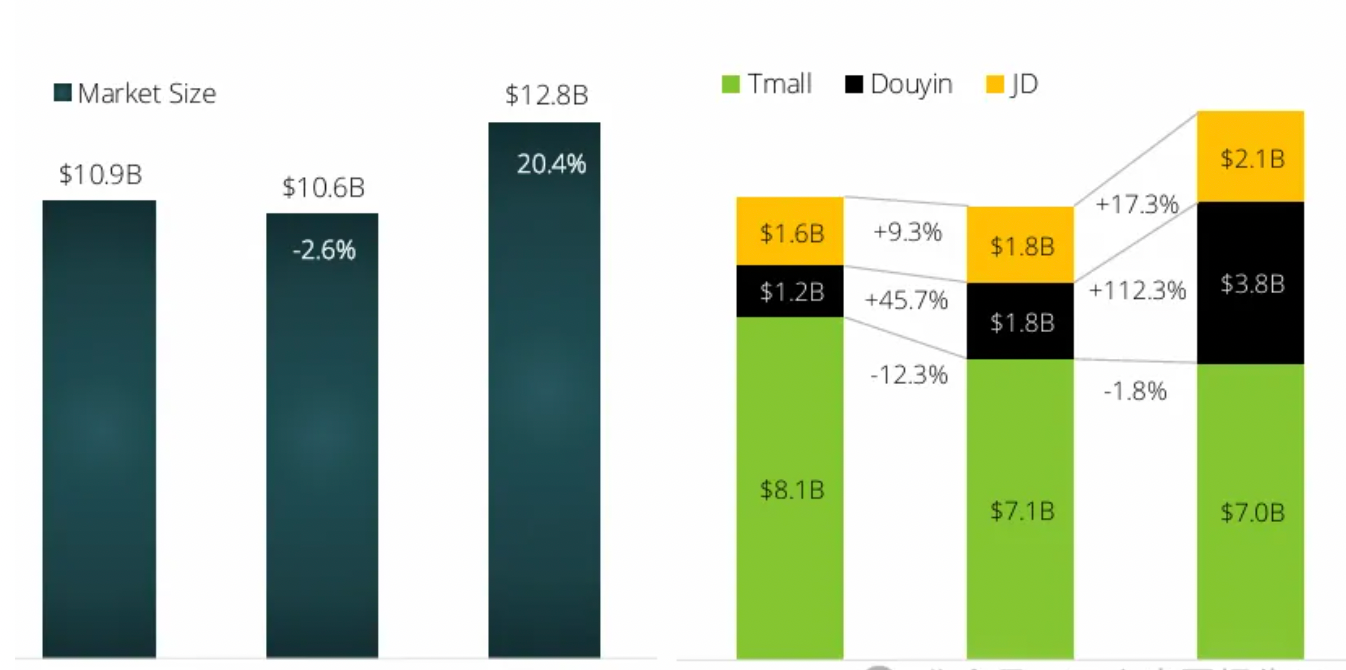
If 2023 was a duel between traditional e-commerce and social commerce, 2025 delivered a decisive verdict. Douyin has officially surpassed Tmall in Beauty, Nutrition, Mother & Baby, Snacks, and Fashion. In the cosmetics sector alone, Douyin’s sales hit $4.68 billion, up 27.3% year-on-year. In fashion, Douyin’s GMV reached nearly $20 billion—almost double that of Tmall.

This represents a total reconstruction of the consumer journey within Chinese social media. Consumers are no longer "searching for what they need" on traditional shelves; instead, they are being "discovered" by products while browsing short videos or watching live streams. The logic of "discovery-based consumption" means that for any international brand, your marketing strategy must be content-led from day one.

The Lifestyle Revolution: From Professional Sports to Daily Rituals
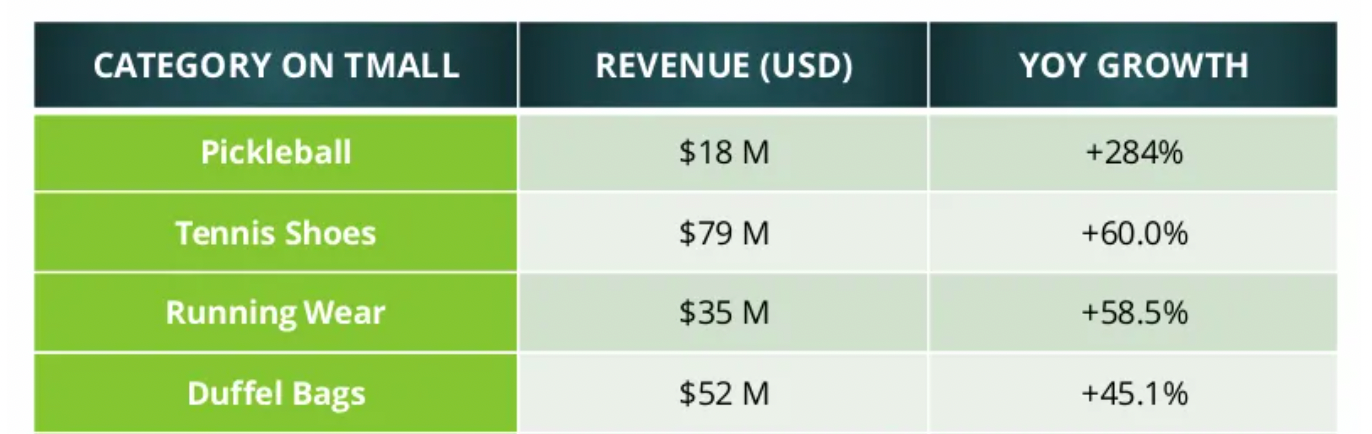
The outdoor sports market in China grew by 14.1% in 2025, reaching $5.89 billion. However, the real story lies in the "democratization" of niche sports. Pickleball, once an obscure hobby, saw a 284% sales explosion on Tmall, becoming a staple in Tier-1 and Tier-2 city communities. Meanwhile, on Douyin, even more "hardcore" hobbies like equestrianism, rock climbing, and recreational watercraft are gaining mainstream momentum.
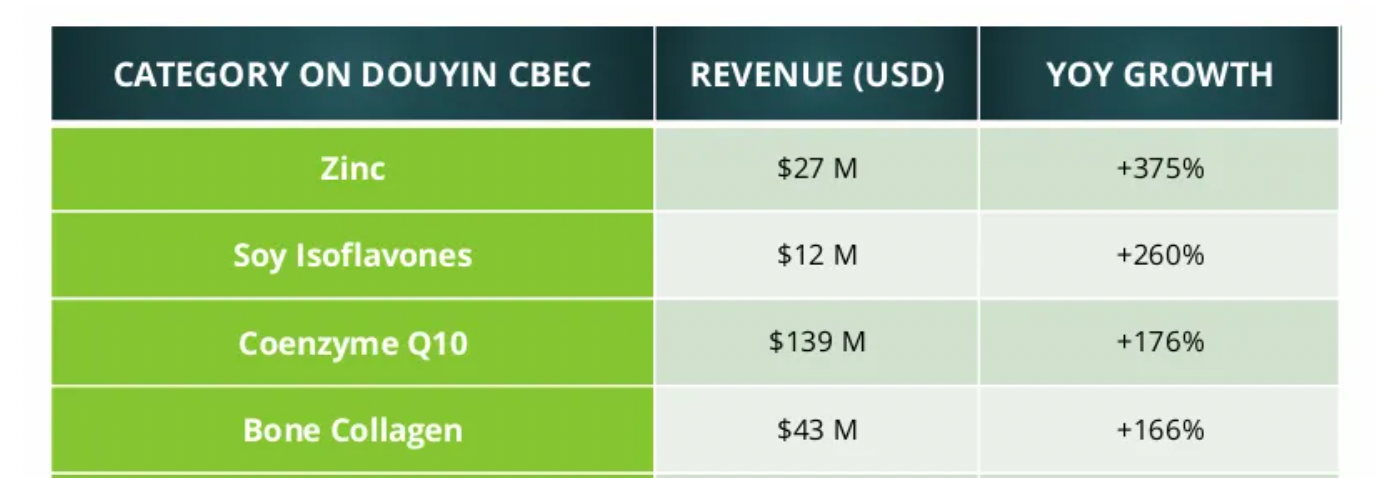
Similarly, the definition of "Health" has become highly scientific. The $1.3 billion health supplement market is no longer driven by generic multivitamins. Instead, Chinese consumers are looking for high-purity ingredients like Krill Oil (up 1000%), Lycopene, and Ergothioneine (up 435%). This "Precision Nutrition" trend reflects a more knowledgeable consumer base that seeks customized wellness solutions, offering a massive opportunity for an international brand with strong R&D credentials.
Beauty and Fashion: The Era of Self-Pleasure and Hyper-Segmentation
The cosmetics market in China has rebounded to $9.23 billion, fueled by two distinct forces: the "He-Economy" and extreme segmentation. In Douyin, men's body care surged by 363%, while men’s makeup grew by 176%. Chinese men are no longer satisfied with just "being clean"; they are actively managing their appearance through concealer, styling, and fragrance.
In fashion, we see a fascinating polarization. While "Dad Shoes" saw a staggering 12,037% growth on Douyin—a classic example of a retro trend fueled by Chinese social media—higher-end platforms like Tmall saw a 439% increase in cashmere coats and a 76.5% rise in gold-inlaid jewelry. This suggests that during periods of economic uncertainty, consumers are willing to pay a premium for "timeless quality" or items that provide immediate emotional gratification.
Emotional Anchors: The Pet and Mother & Baby Moats
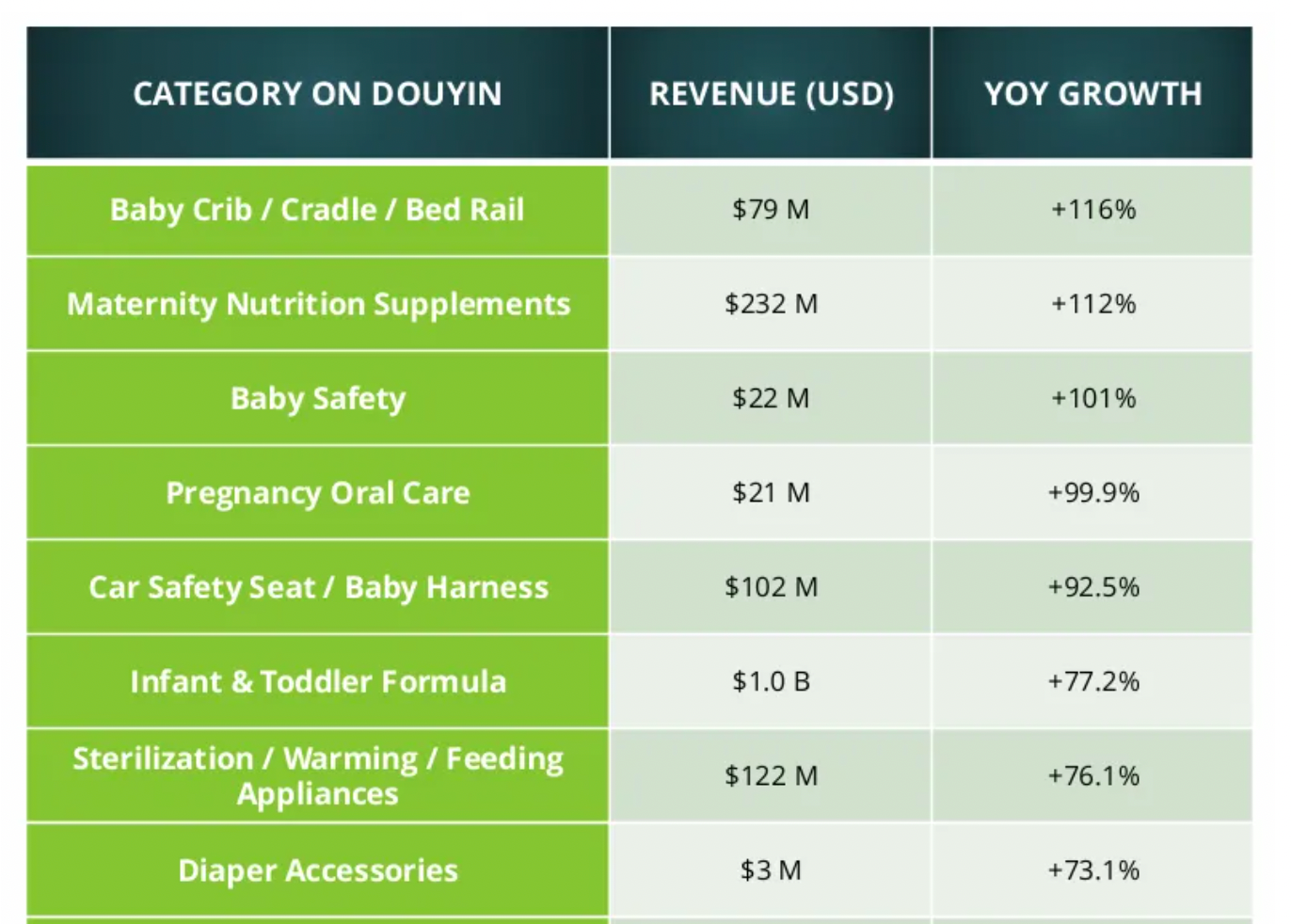
Perhaps the most counter-intuitive data comes from the pet and mother-and-baby sectors. Despite a falling birth rate, the mother-and-baby market grew by 11.7% to $5.26 billion. The logic is simple: as children become "rarer," parents invest significantly more in each one. High-growth items like disposable nursing pads (up 560%) and special formula milk (up 56.1%) show that parents are trading up for safety and specialization.
The pet economy is following a similar "parenting" logic. The market reached $1.28 billion, with over 4 million cats and dogs purchased online across major platforms in 2025 alone. Pets in China have transitioned from "animals" to "family members," driving a massive demand for smart water dispensers, prescription diets, and even specialized snacks for birds. This emotional bond creates a "recession-proof" ceiling for brands that can tap into the pet-human connection.
Conclusion: Navigating the Three Certainties of 2026
The 2026 Chinese marketing landscape is more fragmented yet more vibrant than ever. For an international brand looking to scale, there are three certainties:
1.Content is the Product
If you don't have a content strategy on platforms like Rednote and Douyin, you don't have a product strategy.
2.Self-Pleasure is the Priority
Whether it's a $2,000 cashmere coat or a $50 pickleball paddle, consumers are voting with their wallets for their own happiness and health.
3.Niche is the New Mass
Growth is hidden in specific, redefined needs. From Ergothioneine to smart pet feeders, the "small" needs are where the "big" numbers are.
China remains a land of immense opportunity for those who look beyond the macro numbers and understand the real people behind the data. Success requires a blend of data-driven insight and a deep cultural resonance within the Chinese social media ecosystem.
Interested in exploring bespoke marketing tips and localized strategies for the Chinese market? Feel free to reach out to us!
