

Which Chinese Streaming Platforms Fit International Animation IP? A 2027 Guide
An international animation series can be available to watch in China without becoming a recognizable brand there. Viewers may know where to find an episode, but not its official Chinese name, where to find authentic updates, or how to engage with the characters between releases.
The short answer for international animation rights holders: for broad, long-form distribution, start by assessing Tencent Video, iQIYI and Youku. For animation with an older fan community, Bilibili deserves separate consideration. For preschool and family viewing, examine the children’s environments on iQIYI, Tencent Video, Youku and Mango TV. The right choice depends on the series’ age group, format, China rights, localisation resources and commercial goals—not a generic ranking. If the show is already available in China, the next question is whether viewers can find an official Chinese social presence that helps them recognise and follow the IP, not only watch an episode.
Why a “top animation platforms” list needs interpretation
A Maigoo list of ten Chinese animation-rights platforms is a useful map of names to investigate, but it is not a league table of the best outlets for an overseas show. Its stated method estimates self-produced and third-party licensed catalogue resources, with an update cutoff of 1 April 2025; the page itself cautions that the results may be incomplete and are for reference. Catalogue breadth does not tell an international studio how many relevant viewers a platform reaches, how a particular title will be promoted, or whether its deal terms fit the IP.
The page also puts Tencent Animation & Comics first: that is a comics/IP platform, whereas Tencent Video is the long-form video service. Tencent’s own digital-content presentation distinguishes the two. A rights holder should not treat a comics-library ranking as a streaming-distribution decision.
The opportunity is real, but it is broad. China’s industry association reported 701 million long-form video users as of June 2025. That is a market-level figure, not a measure of animation viewers or a forecast for any single property. The commercial question is narrower: where does your intended audience look for this kind of show, and what can the brand build around that viewing?
The Chinese video platforms international animation IP owners should shortlist
Tencent Video: Broad mainstream long-form distribution, with a dedicated children’s offering. Clarify the exact video licence, channel, placement and promotion; do not confuse these with an account or comics deal elsewhere in Tencent.
iQIYI: A major entertainment-video destination with distinct children’s and animation categories. Check the age positioning, Chinese title and on-platform promotion proposed for your series.
Youku: An established long-form video service with active children’s and animation programmes. Confirm whether the opportunity is a licence, co-production, non-exclusive release or another arrangement.
Bilibili: An animation-rooted video community where viewers can discuss stories and return between episodes. Its large overall audience does not make every preschool or family show a natural fit.
Mango TV: A children’s catalogue worth considering for selected preschool and family properties. Test title-level fit and commercial terms.
These are editorial fit assessments for overseas rights holders, not a verified ranking by animation viewers, licensing spend or deal availability. Platform priorities and rights can change. For an international studio or distributor, the strongest offer is the one that fits both its intended Chinese audience and the rights it is able to grant.
Tencent Video: a mainstream video conversation, not just a Tencent logo
Tencent Video merits an early conversation for an international property seeking broad long-form exposure. Tencent’s own advertising materials describe its children’s channel as family-oriented and spanning several types of children’s content. That makes it relevant to both entertainment-first and learning-led pitches. A licensing proposal should specify the exact service and surfaces involved—episode pages, children’s channel placement, smart-TV exposure, promotional inventory and reporting—rather than using “Tencent distribution” as a blanket description. (Tencent Video children’s-channel materials)
For an international IP with books or comics potential, Tencent Animation & Comics may be a separate extension opportunity. It should not be assumed to come automatically with video distribution. (Tencent digital-content ecosystem)
iQIYI: worth a close look for international children’s and educational animation
iQIYI maintains both children’s and animation categories. Its children’s content-partnership page explicitly invites IP partners, and its 2025 children’s industry forum described a mix of in-house and partner properties. That does not guarantee an acquisition opportunity for a new series; it shows that children’s content remains an explicit programming area. International owners should assess age fit, the proposed Chinese title, Mandarin-language treatment, episode length, family-viewing context and whether the platform can make the show discoverable beyond a catalogue listing.
Youku: a serious option for international family content and different deal structures
Alibaba describes Youku as a long-form video platform using originals, co-productions and acquired rights. Its 2025 content-platform review discusses children’s programming and animation partnerships, including different cooperation and revenue-sharing approaches. That breadth makes Youku worth testing for a series that can support regular viewing and a clear Chinese-language proposition. But the right structure depends on the property: an exclusive, a non-exclusive library deal and a co-developed local version solve different problems.
Bilibili: the strongest community question for animation fandom
Bilibili is more than another place to host episodes. Its anime/comics/games heritage and creator community can give an animation world room for explanation, fan interpretation and sustained conversation. Bilibili reported 371 million monthly active users in the second quarter of 2026, but that is a platform-wide number, not the audience for children’s animation. For a teen or adult animated series, genre work, anime-adjacent IP or a story with deep lore, community fit may be more important than raw platform scale. For a preschool show, the audience and the adults influencing it need a separate test. (Bilibili Q2 2026 company filing)
A licensed title on Bilibili and an official, brand-managed Bilibili account are not the same asset. The latter needs a reason to exist beyond reposting trailers. Lotus’s Bilibili support for entertainment IP addresses that wider content and community question.
Mango TV and other secondary possibilities
Mango TV’s children’s category shows a family catalogue and makes it worth considering for suitable preschool or family IP. Migu Video may also matter when a particular distribution partner, mobile route or package makes it relevant. More specialist services—including AcFun, PP Video or film-led destinations named in Maigoo’s list—should be evaluated against a concrete audience and deal, rather than added simply to make a distribution list longer. (Maigoo platform list)
Where should an international cartoon or animation series stream first in China?
Start with the property, not the platform badge.
Preschool, early-learning or family animation: investigate the children’s environments of iQIYI, Tencent Video and Youku, with Mango TV where the content fit is strong. The parent’s ability to recognise and trust the series matters as much as the episode listing.
Teen, anime-adjacent or lore-rich animation: include Bilibili early, then compare long-form services on the actual rights offer, launch support and audience match.
An established international library: compare mainstream services on discoverability, dubbed or subtitled assets, reporting and the value of exclusivity versus reach.
A character-led franchise with publishing or merchandise ambitions: assess video distribution, comics, social, retail and licensing touchpoints as related but separately negotiated parts of the IP system.
This is a shortlist framework, not a promise that any platform will acquire a title. A China audience and market review can identify where interest already appears before a team commits to one route. For the signals to examine, see our guide to testing China demand for an animation or entertainment IP.
Before a China distribution deal, ask what the platform will actually do for the IP
Two offers that both say “China streaming” may produce very different outcomes. International rights holders should be able to answer:
What is the exact territory, term and window? Does your existing rights chain allow the proposed China grant? Is the arrangement exclusive, and how does it affect other Chinese video, social, TV and education opportunities?
Where will the show appear? Confirm the service, category, app or device surfaces, and whether any launch placement is committed or merely possible.
What localisation is included—and who approves it? Chinese title, synopsis, metadata, subtitles, dubbing, artwork and age positioning all affect discovery and recognition.
Who can use clips and characters outside the player? Trailer, short-form, creator, press and official social rights should be clear before marketing begins.
What can be measured and shared? Agree what performance information is available, at what frequency and granularity, without assuming access to individual viewer data.
How are brand standards protected? Clarify approvals for Chinese naming, thumbnails, edits, adjacent promotion, products and partner use where applicable.
The aim is not to turn every title into a complex multi-platform negotiation. It is to understand whether the deal is designed only to make episodes available—or also to help build a durable property in China.
Is your international animation IP already streaming in China? Check whether viewers can find your brand
This is the missed opportunity many international animation IP owners discover late. A show can be legally available on a major Chinese platform, and viewers can still encounter a fragmented picture elsewhere: an unofficial Chinese name, reposted clips, outdated episode information, fan-run profiles, unverified products or no clear answer to a parent’s question.
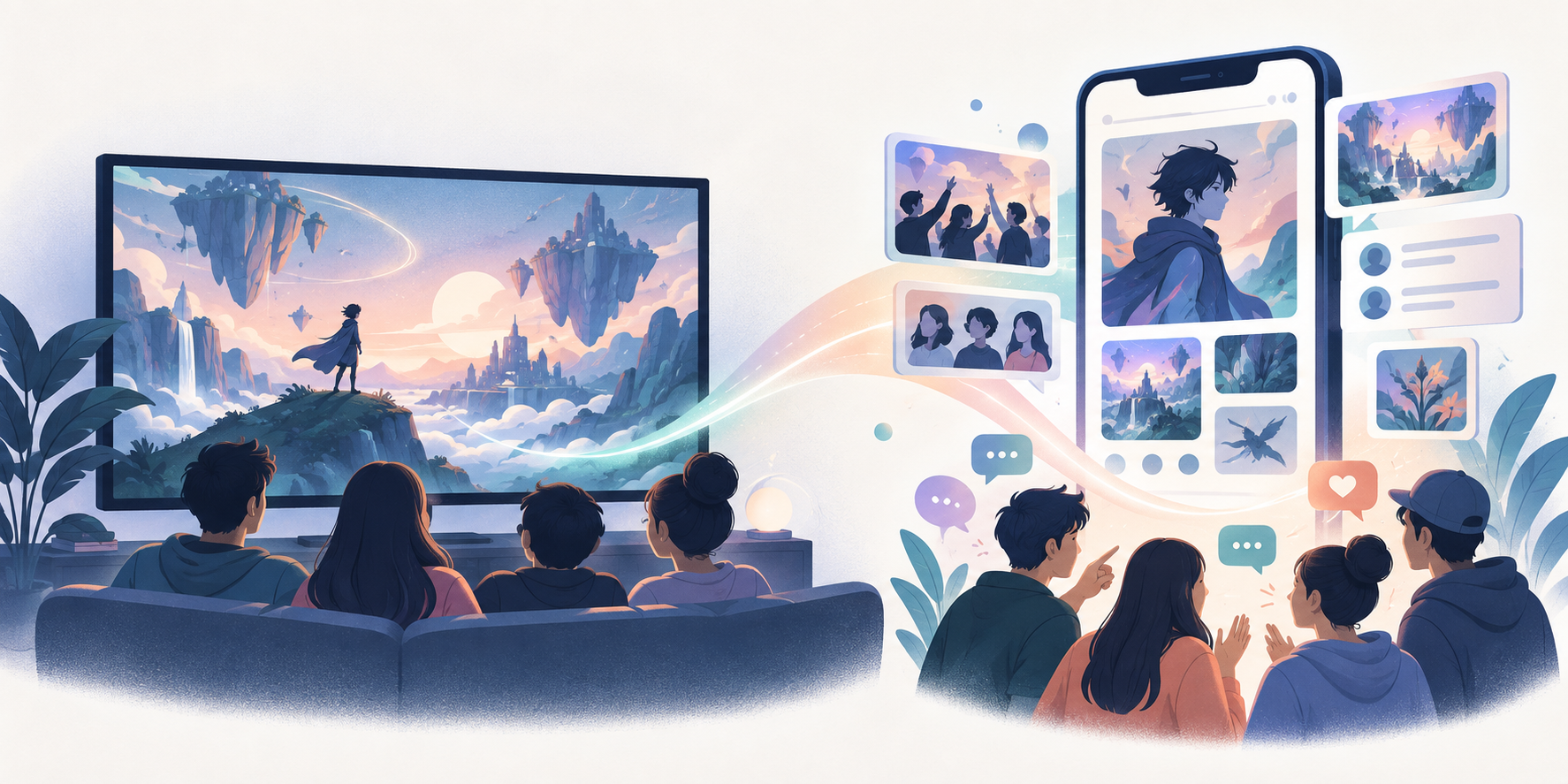
Streaming makes a series watchable. An official Chinese social presence helps viewers recognise the brand beyond the episode page.
Distribution is valuable. It makes the show watchable. But the distributor’s episode page is primarily a destination for that viewing session; it is not automatically a brand-managed channel for the rights holder. If viewers become curious about the characters, learning value, next season or authentic products, where should they go? If the only answer is “search and hope,” the show’s attention may not translate into stronger brand awareness.
A useful audit is straightforward:
Search the official English and Chinese titles on major video, search and social platforms. Is the same identity recognizable everywhere?
Identify who currently speaks for the property in Chinese. Is there an easily verifiable official account?
Read real questions and comments. Are parents, educators or fans asking things the distributor’s listing does not answer?
Check whether approved clips, character information and launch news can travel from streaming into social under the existing rights.
Decide what the brand can sustain: one credible, updated account is better than several empty ones.
For a family property, this may mean parent-facing explanations and simple activities on WeChat or Xiaohongshu/RedNote. For an older fandom, an official Bilibili presence may make more sense. Douyin can help selected short-form moments travel, but an entertaining clip alone does not establish an official source of truth. The account mix should follow the audience, rights and operating resources—not a template. It should also be child-safe, with communication and calls to action directed appropriately to responsible adults.
An official account will not magically convert every streaming viewer into a follower, and social-platform analytics are not the same as owning personal audience data. Its realistic value is a consistent Chinese identity, a place for useful updates and conversation, and clearer signals about what the audience is trying to find.
Lotus connects this work through China social media management, Chinese content localisation and, where needed, official account setup and verification.
Frequently asked questions
Is Bilibili the best Chinese platform for every animation series?
No. It is especially relevant when a property can earn interest-based viewing, discussion and repeat engagement. A preschool title should also examine family-focused video environments and the adults who choose what children watch. Bilibili’s total user figure cannot answer a title-level fit question.
Is Tencent Animation & Comics the same as Tencent Video?
No. Tencent Animation & Comics is a comics/IP platform; Tencent Video is the video service. They sit within a broader Tencent content ecosystem, but a licence or marketing right on one should not be assumed to cover the other.
Should we choose one exclusive platform or several?
There is no universal answer. Exclusivity may bring a different commercial or promotional proposal; non-exclusivity may broaden availability. Compare the actual terms, audience fit, windowing and marketing obligations—not just the number of platform logos in a deck.
If a Chinese distributor already carries our international show, do we need official Chinese social accounts?
Not automatically. First check whether the official brand is easy to identify and whether there are unanswered audience or partner needs. If streaming creates attention but no reliable route to official information, a focused social presence can close that gap.
Can streaming views prove there is licensing demand for toys or other products?
Views are a useful signal, not proof of product demand. Review repeat interest, audience questions, search behaviour, partner feedback and reliable commercial data alongside viewing. Do not treat a platform-wide audience number as a forecast for a particular IP. Our guide to Chinese social media and IP licensing explains what social activity can—and cannot—add to that evidence.
Turn Chinese viewership into a clearer China brand decision
The first decision is not “Which platform is biggest?” It is which viewing environment fits the property, what the distribution agreement will provide, and whether the brand can be recognised beyond the episode page.
If your international animation IP is already streaming in China—or you are deciding where to place it—talk with Lotus about the show’s current Chinese footprint. Our entertainment and IP marketing team can help assess the audience conversation, the official identity and the social presence needed to support the property around its distribution. We do not promise a platform acquisition, a particular audience number or a licensing result; we help international teams make the next China decision with better local evidence.
