

Why Cute Is Not a China Content Strategy: What Animation IPs Can Learn from Chiikawa
International animation IP should not begin Chinese social media by translating global promotional posts or chasing whatever meme is already popular. Begin with the character’s emotional truth: what it wants, fears, misunderstands and does for other characters. Then connect those truths to recognizable moments in Chinese life, invite participation within clear rights boundaries, listen to the language fans create, and use that evidence to improve the next round of content. The aim is not to make the IP “more Chinese.” It is to help Chinese audiences recognize how the character already fits into their lives.
Chiikawa is a useful case because its appeal is easy to misread. The designs are undeniably cute, but the official story is not built from cuteness alone. Fuji TV describes small characters who struggle, become tearful and are supported by kind friends. The official information site connects the same world to animation, shops, cafés, events and collaborations. That combination—visual softness, consistent character psychology and many everyday points of contact—gives audiences more than a mascot to admire. It gives them a character relationship they can use.
That distinction matters for any international animation studio, character owner or licensing team planning China marketing for animation and character IP. A recognisable design may win the first glance. A recognisable feeling is what makes someone save a reaction image, tag a friend, explain a scene, visit a pop-up or carry a character into daily life.
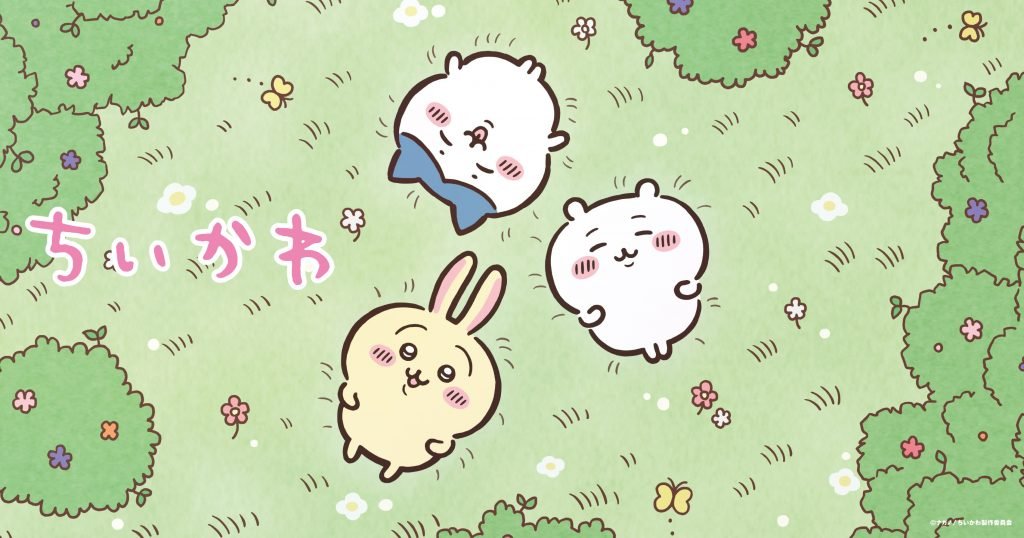
Official Chiikawa artwork, © nagano / chiikawa committee. Source: Fuji TV.
The lesson is not “make the character cuter”
Chiikawa began as an online manga by illustrator Nagano and later became a television animation. Fuji TV’s 2022 Japan Character Awards announcement noted that the manga had been serialised on Twitter since 2020 and that the animated version had already passed 20 million views on Mezamashi TV’s YouTube channel at that time. Those historical figures are not a current China benchmark. The more useful lesson is structural: the IP established a clear emotional world before commercial extensions multiplied.
Its characters encounter work, tests, small rewards, unfair turns, fear, food and friendship. Different audiences can recognise those experiences without the characters abandoning their original personalities. The world is specific enough to feel authored, yet open enough for viewers to find their own meaning inside it.
Research on parasocial relationships with anime characters reaches a compatible conclusion. A 2026 systematic review in BMC Psychology found recurring links among identification, belonging, emotional regulation, coping and purchasing intention, while warning that the evidence base is still limited and culturally uneven. In plain language: people can form meaningful one-sided bonds with fictional characters, but a responsible IP should nurture connection without exploiting vulnerability.
This is why “cute” is an art direction, not a complete Chinese content strategy.
A character becomes socially useful when fans know when to use it
On Chinese social media, character content often travels because it performs a job in conversation. A fan may use a reaction image to soften a complaint, send a clip to encourage a friend, post a plush toy as a sign of taste, or describe a difficult working day through a character’s expression. The IP becomes part of the audience’s social vocabulary.
That creates several distinct content opportunities:
Recognition: “This character reacts exactly as I do.”
Expression: “This image says what I cannot say directly.”
Affiliation: “People who understand this reference understand me.”
Care: “This character is a small source of comfort or encouragement.”
Participation: “I can reinterpret this moment, choose a side or add my own response.”
Merchandise can deepen these behaviours, but it should not be confused with their origin. MINISO’s own account of the character-goods market says its Chiikawa pop-up generated more than one million online views and describes emotional value and attachment as important to ACG consumption. That is evidence of commercial reach, not proof that scarcity or a single collaboration created the fandom. The emotional relationship and the retail moment reinforce each other.
The China character-relevance loop
A useful content system moves through five connected decisions.
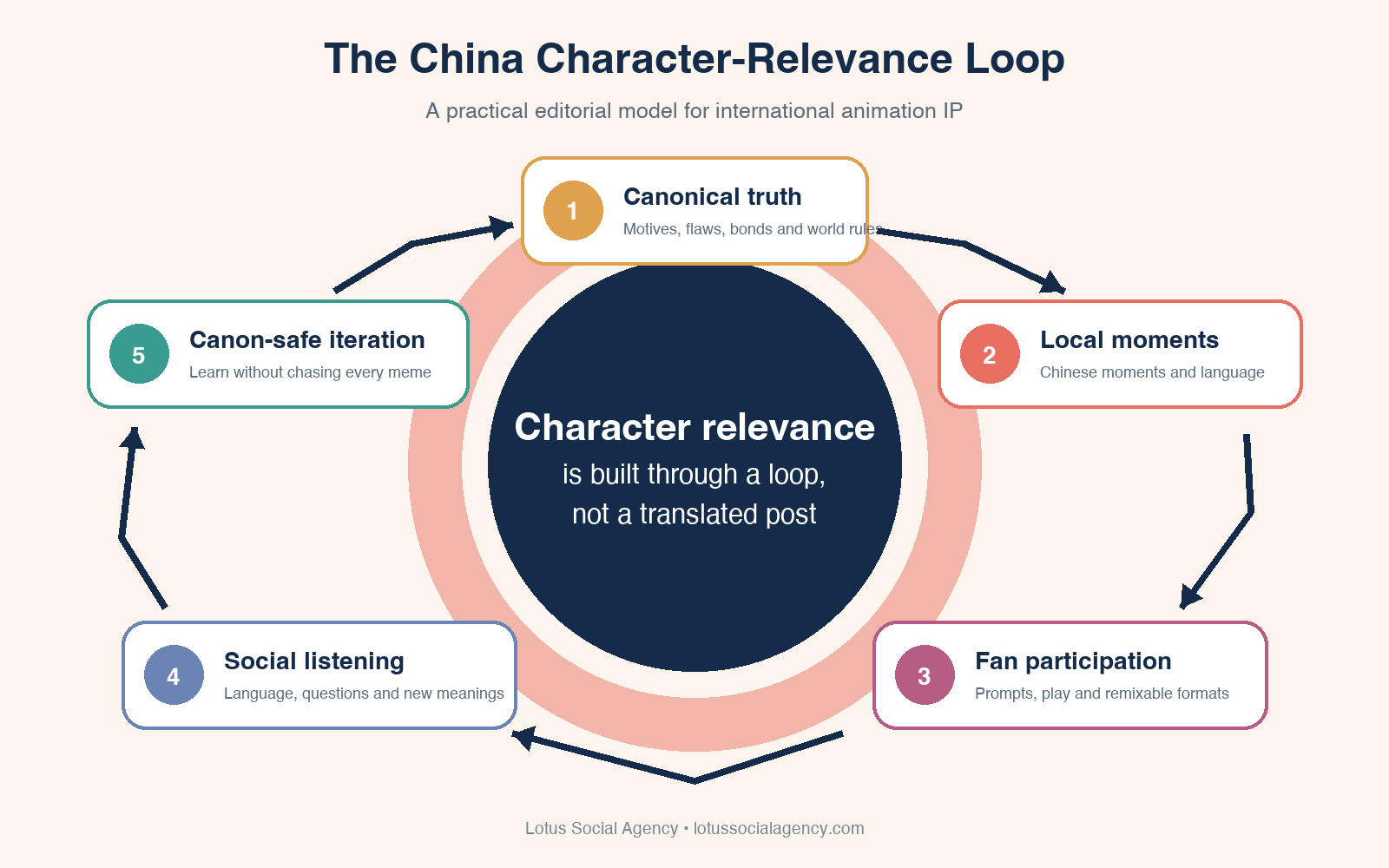
1. Define the canonical truth
Before local ideation, document what must remain true: each character’s motives, flaws, relationships, speech pattern, recurring situations and visual rules. Include the boundaries. Can a character comment on real-world events? Can fans alter facial expressions? Which relationships must never be reframed? Which assets are cleared for social use, paid media or co-creation?
This is not a heavy brand-bible exercise for its own sake. It gives a Chinese content team enough freedom to create without quietly changing the IP.
2. Find local moments that reveal the same truth
Localization should translate a situation, not merely its words. A character who becomes anxious before a fictional exam may naturally fit conversations about revision, results or starting a new term. A character who shares food after a difficult day may fit a winter-night or overtime moment. The local reference should reveal an existing trait; it should not bolt a fashionable topic onto the character.
This is where a China-based editorial team adds value. It can distinguish a durable audience tension from a one-week phrase, check whether humour sounds natural, and identify regional, generational or platform-specific meanings before a post reaches approval. Lotus’s Chinese content localization and production work is designed around that kind of cultural and operational judgement.
3. Give fans a safe way to participate
Participation does not require surrendering control of the IP. It can be as contained as a reaction choice, a “which character are you today?” prompt, a caption format, a drawing activity, an interactive video branch, a voice or sound prompt, or a fan question answered in character.
The format should make the desired behaviour obvious and the rights boundary equally clear. If derivative work is encouraged, publish usable assets and terms. If commercial use, generative alteration or sensitive topics are prohibited, say so in language the community can understand. A creator brief and a fan prompt are not the same permission.
When broader creator collaboration is appropriate, China creator and KOL coordination should protect fit, disclosure, permissions and character integrity—not simply buy reach.
4. Treat comments as character research
An official Chinese account is not only a distribution channel. It is a listening point. Comments, search phrases, repost captions and fan-made nicknames can reveal:
which relationship fans care about most;
which scene becomes an emotional shorthand;
where a translation feels unnatural or a name is inconsistent;
what audiences misunderstand about the story;
which questions could become a useful post, FAQ or partner brief; and
where unofficial commerce or misleading claims need escalation.
Social listening does not mean allowing the loudest comment to rewrite the canon. It means giving the global team structured evidence about how the work is being received. Regular Chinese social media management is valuable precisely because publishing, community response and learning stay connected.
5. Iterate without becoming trend-led
The final decision is editorial: what deserves repetition, what needs clarification and what should be left alone? A fan-created interpretation may reveal a powerful audience truth while still being unsuitable for official adoption. A high-performing joke may bring the wrong expectation for a children’s property. A commercial partner may want a fashionable expression that will age badly.
Use evidence to sharpen the character’s official voice, not replace it with the internet’s latest voice.
Different platforms should reveal different sides of the same character
The right mix depends on the audience, rights, format library and business goal. An IP does not need every platform. It needs a coherent system in which each chosen channel has a job.
Douyin can turn a recognisable emotion into movement, timing, sound and participatory short video.
Bilibili can give lore, episodes, behind-the-scenes craft and fan interpretation more room. Bilibili’s own reporting continues to position anime, comics and games inside a broad interest-led creator community.
Xiaohongshu (RedNote) can connect characters with collections, daily routines, places, outfits, gifts and searchable lifestyle moments.
WeChat and WeChat Channels can carry official information, longer stories, launches and a closer path to service or fan-community touchpoints when the operating model supports them.
Weibo can support public announcements, topical conversation, entertainment visibility and fandom moments when the IP has the rhythm and resources to maintain it.
Chiikawa’s verified Weibo account illustrates this range in practice: character introductions, seasonal moments, exam encouragement, retail launches and pop-up information sit within one official identity. Copying that post mix would miss the point. Each item works because it connects a stable character world with a reason for Chinese fans to return.
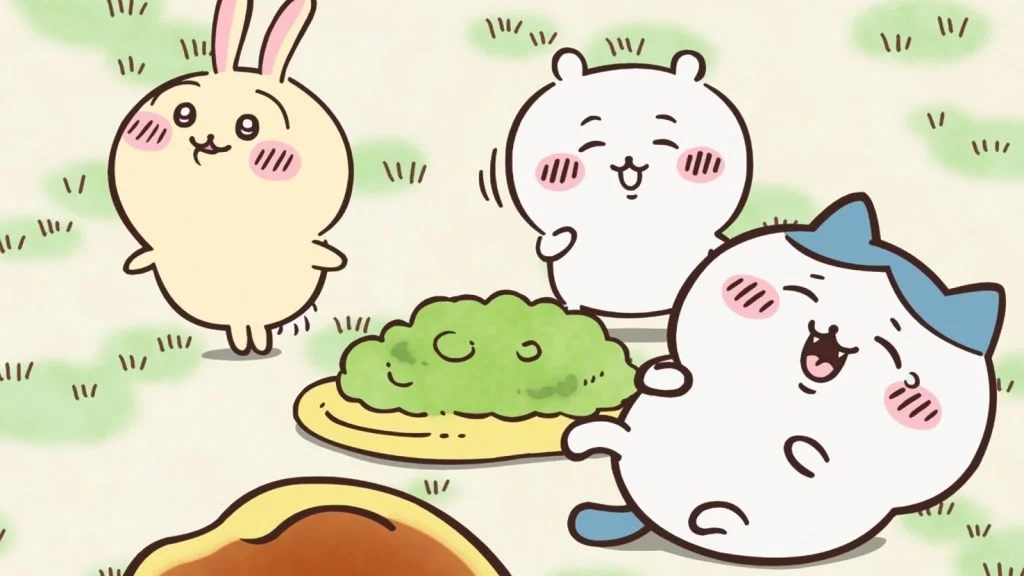
Official Chiikawa artwork, © nagano / chiikawa committee. Source: Fuji TV.
For a broader comparison, see Lotus’s guide to choosing Chinese social media platforms for international brands.
What should an international animation IP prepare before launching?
A sensible starting pack is smaller than many teams expect:
A concise character-truth and rights guide for the local team.
An approved Chinese naming and terminology sheet.
A usable library of expressions, clips, transparent assets and key relationships.
A map of existing Chinese mentions, search language, fan nicknames and unofficial accounts.
A clear escalation path for community questions, rights risks and partner enquiries.
A small set of repeatable formats that can be reviewed and improved.
The output should feel consistent, not mechanical. It should also leave space for the audience to surprise the team.
Frequently asked questions
Can we simply translate our global animation social calendar into Chinese?
Use the global calendar as an input, not the finished plan. Release dates, approved assets and story priorities should stay aligned, but the hook, context, caption, format and community prompt often need a Chinese editorial decision.
Should an animation IP encourage Chinese fan art and memes?
It can, if the rights owner defines what is permitted and moderates responsibly. Provide clear materials and rules, credit creators, and separate fan participation from commercial licensing. Do not imply that every derivative use is authorized.
How can Chinese social media support licensing and partnerships?
An official, well-run presence makes audience interest more visible and gives potential distributors, licensees, retailers and brand partners a credible place to understand the IP. It does not replace commercial outreach or due diligence, but it can reduce the gap between scattered fan attention and an identifiable rights holder.
Does emotional content mean posting only comfort and positivity?
No. Anxiety, awkwardness, rivalry, frustration and failure can be deeply relatable when they belong to the character’s world. The requirement is emotional accuracy and audience care, not relentless cheerfulness.
What should we measure first?
Look beyond follower growth. Review branded search, saves and shares, the substance of comments, repeat participation, recurring character associations, qualified fan or partner enquiries and any movement to authorized viewing, events or commerce. Attribution will be imperfect, especially when viewing, social conversation and retail happen on different platforms.
Build a Chinese social presence that still feels like your IP
The strongest international animation IPs do not need to become someone else to connect with China. They need a local operating system that can recognize why the characters matter, express that meaning naturally, protect the work and keep learning from the audience.
Lotus is a China-based bilingual team supporting international artists, animation studios, character IP owners and entertainment rights holders. We can audit existing Chinese traction, clarify the platform role, build the Chinese editorial system, create and localize content, manage official accounts and turn community signals into useful decisions for the global team.
Talk with Lotus about your animation IP’s Chinese audience and content opportunity.
