

China Marketing Insights for International Brands
Categories
- B2B Marketing
- B2B Technology
- Brands Entering the Chinese Market
- China Market Entry
- Chinese Market Insights
- Chinese Social Media
- Consumer & Industry Insights
- Content, Creators & Campaigns
- Cross-industry
- Entertainment
- Entertainment & IP
- Lifestyle & Consumer
- Platform Strategy & Operations
- Regulation & Risk
- Travel & Hospitality
- WeCom
WeCom and the Next Step in China Customer Care
The WeCom 5.0 update described in the analysis brings AI search, summaries and assistants into everyday collaboration, alongside customer-service and external-connection features. For international brands in China, its relevance extends beyond office efficiency: better access to approved information can support clearer customer conversations and more consistent follow-up. We examine how marketing, service and local teams could use these capabilities together, while separating product descriptions from anonymous performance claims. A focused pilot, reliable knowledge base and clear handover process offer a more practical starting point than assuming that new software will automatically improve sales or solve cross-border collaboration.

KeaBabies and the Power of Everyday Trust
KeaBabies grew from a focused baby-wrap offer into a broader parenting brand by connecting practical products with guidance and community. Founded by a Singaporean couple and initially focused on the US market, the business provides a useful reference for international brands considering China, rather than proof of an established China strategy. We examine its product expansion, accessible positioning and trust-building approach, then explore how those principles could inform Chinese marketing. Clear product demonstrations, carefully explained evidence and relevant Chinese social media content can help brands support parents before and after purchase while avoiding unsupported safety or performance promises.

What Alo Teaches International Brands About China
Alo’s Tmall launch illustrates how established demand can become sales when consumers finally have a trusted official channel. Its reported results should not be treated as a cold-start benchmark for every international brand. Other cases in the account show different routes: concentrating limited resources on proven products, explaining unfamiliar technology, or addressing a narrowly defined customer need. We explore what these approaches mean for China marketing, from connecting Chinese social media with commerce to choosing creators and measuring repeat purchases. The practical priority is to identify the customer’s biggest obstacle and build a launch around removing it.
Michael Kors China Strategy: Turning Fashion Into Experience
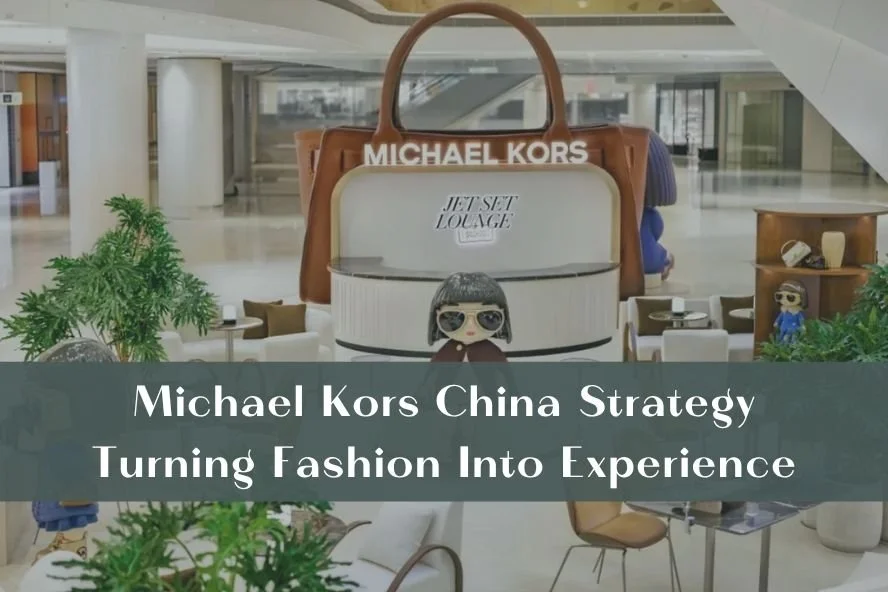
Michael Kors is using character IP, city-specific experiences and modern interpretations of Jet Set to reconnect with younger Chinese consumers. From the Miki Miki charm and Hamilton bag to MK Jet Set Lounge activations in Suzhou, Beijing and other cities, the brand is turning a product visit into a playful local journey. For international brands, the case shows how China marketing can combine global brand DNA with local culture, social participation and product-led experiences.