

Your Childhood Audience Grew Up: How Legacy Animation IPs Can Reconnect with Chinese Fans
Quick answer. If a children’s animation IP was watched in China years ago, its original audience may not have disappeared. They may now be adults using old scenes, catchphrases and characters to talk about work, friendship, family and the person they used to be. Chinese social media can help an international rights holder recognise that change, reconnect with those fans and introduce the property to a new generation—without pretending the brand has stopped being for children.
The opportunity is not simply to repost old episodes or sell retro merchandise. It is to connect three things responsibly: the memory fans already carry, the lives they have now and the enduring truth of the character. When those layers meet, a legacy animation property can feel familiar and current at the same time.
Lotus helps international studios and character owners make that connection through China entertainment and IP marketing, Chinese content localisation and locally managed social channels.
Your childhood audience did not vanish—it changed roles
Animation teams often segment audiences by the age stated in the original content bible. That remains essential for editorial safety, but it can hide a second audience: people who first met the character as children and now approach it through memory.
An adult fan may no longer watch every episode. They may still:
send a familiar expression as a reaction image;
quote a line when adult life mirrors a childhood scene;
share an old opening sequence with school friends;
reinterpret a character’s courage, stubbornness or optimism through adult experience;
buy a well-designed collectible or attend an anniversary event; or
introduce the story to a child, younger sibling or new fan.
These behaviours are not all the same. Some are personal memory; some are social humour; some are collector culture; some are intergenerational discovery. A useful China content strategy does not collapse them into a single label such as “nostalgia.” It listens for the different jobs the IP now performs.
Why nostalgia works—and why nostalgia alone is not enough
Research helps explain why familiar characters can carry unusual emotional weight. A study of Chinese Generation Z consumers found that both personal and historical nostalgia in brand characters could improve attitudes towards less-familiar characters, with trust playing an important role for personal nostalgia. Earlier research on vicarious nostalgia also links imagined or inherited memories with perceptions of brand heritage and emotional attachment.
For an animation IP, that means an archive can be more than old content. It can hold emotional cues that communicate continuity: a colour palette, a voice, a friendship, a place, a ritual or a piece of music.
But the archive is not a strategy by itself. Constant “remember this?” posts can turn a living story world into a museum. Fans return because the memory still says something about the present. The stronger question is not “Which childhood clip should we repost?” It is “What truth in this scene has become newly meaningful now that the audience is older?”
A China case: when a children’s character becomes legible to young adults
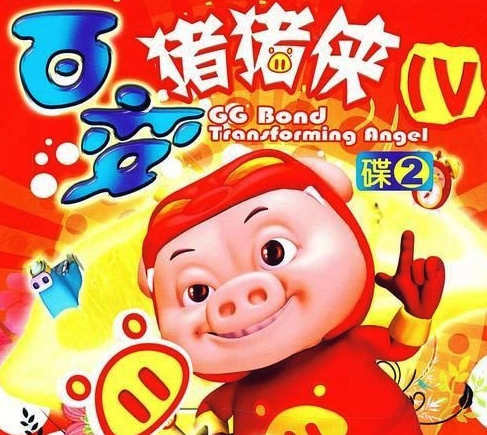
GG Bond offers a useful public example of a long-running Chinese animation property widening its cultural role. Winsing describes the franchise as a 20-year animation IP and has publicly discussed its expansion from a children’s brand into youth-oriented collectibles, cross-brand collaborations and adult-facing lifestyle contexts.
The company’s official materials around the 20th anniversary connect new film and series activity with social campaigns, pop-ups, collectibles, campus activations, licensing partnerships and fan experiences. Winsing also reports that the property has travelled to more than 60 countries and regions.
No single activity explains the franchise’s continued relevance. The more useful observation is that the IP did not have to erase its children’s identity in order to speak to people who grew up with it. It created additional forms of participation around the same recognisable world.
For an international animation IP, the lesson is not to imitate a Chinese property’s execution. It is to treat long-term audience memory as an asset that needs new, locally meaningful formats.
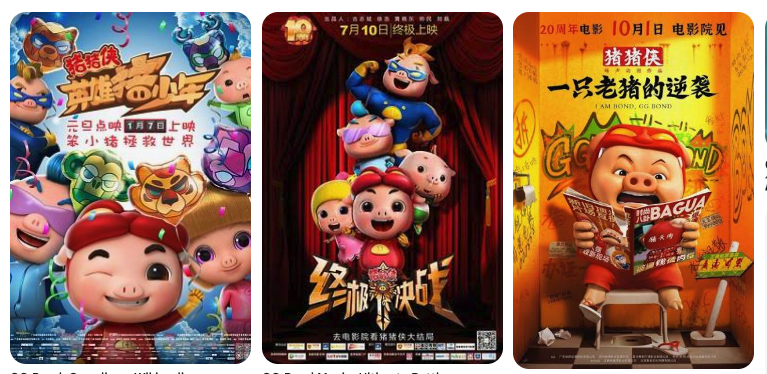
GG Bond’s evolving poster art shows how a long-running children’s animation IP can remain recognisable while entering new stories, formats and audience moments. Images supplied for editorial reference; character artwork belongs to its respective rights holder.
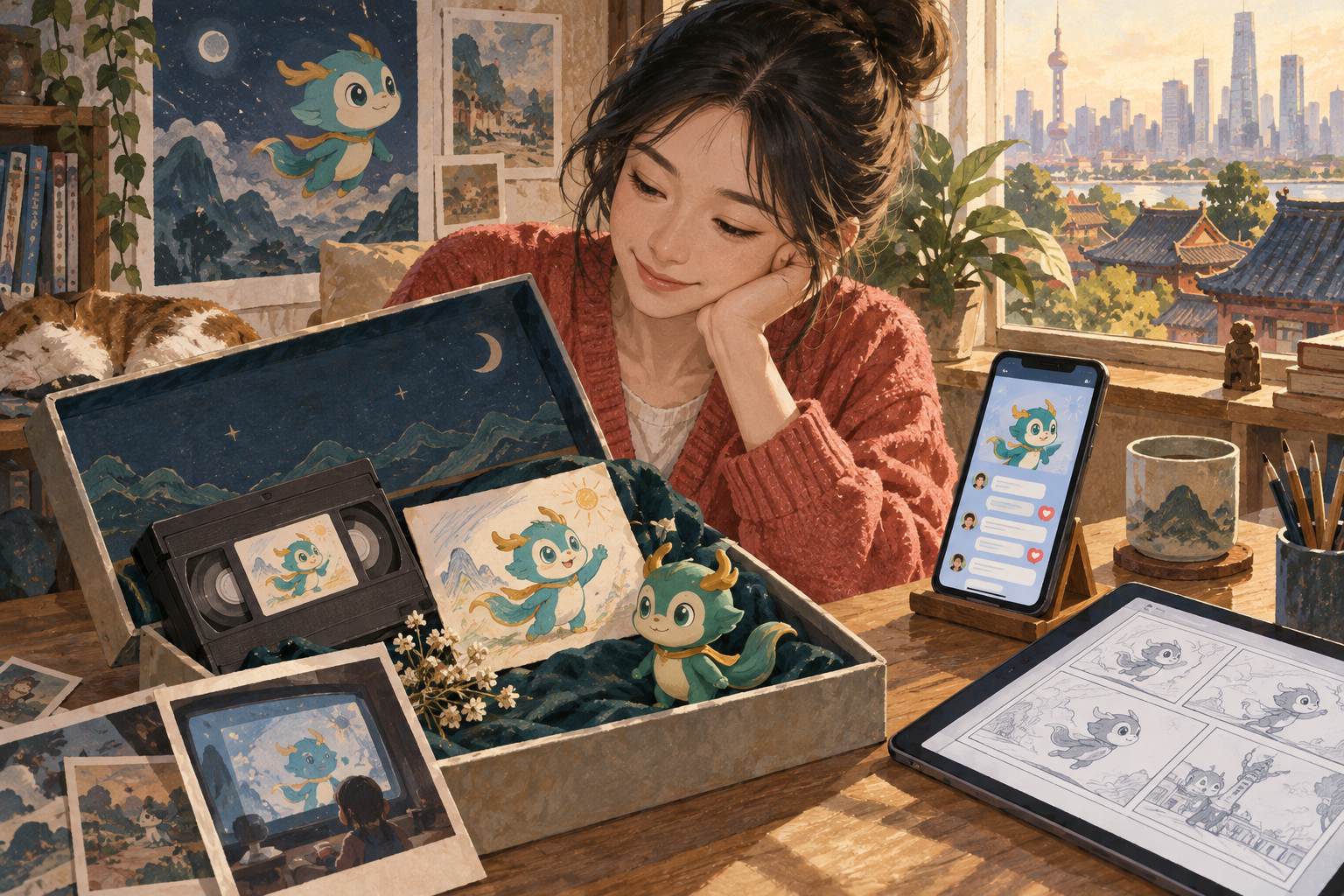
Original editorial illustration: childhood memory becomes a present-day official relationship and creative participation.
The audience reconnection bridge
Lotus frames the opportunity as a bridge with five stages. This is a planning lens rather than a guaranteed growth formula, and the right balance will vary by property.
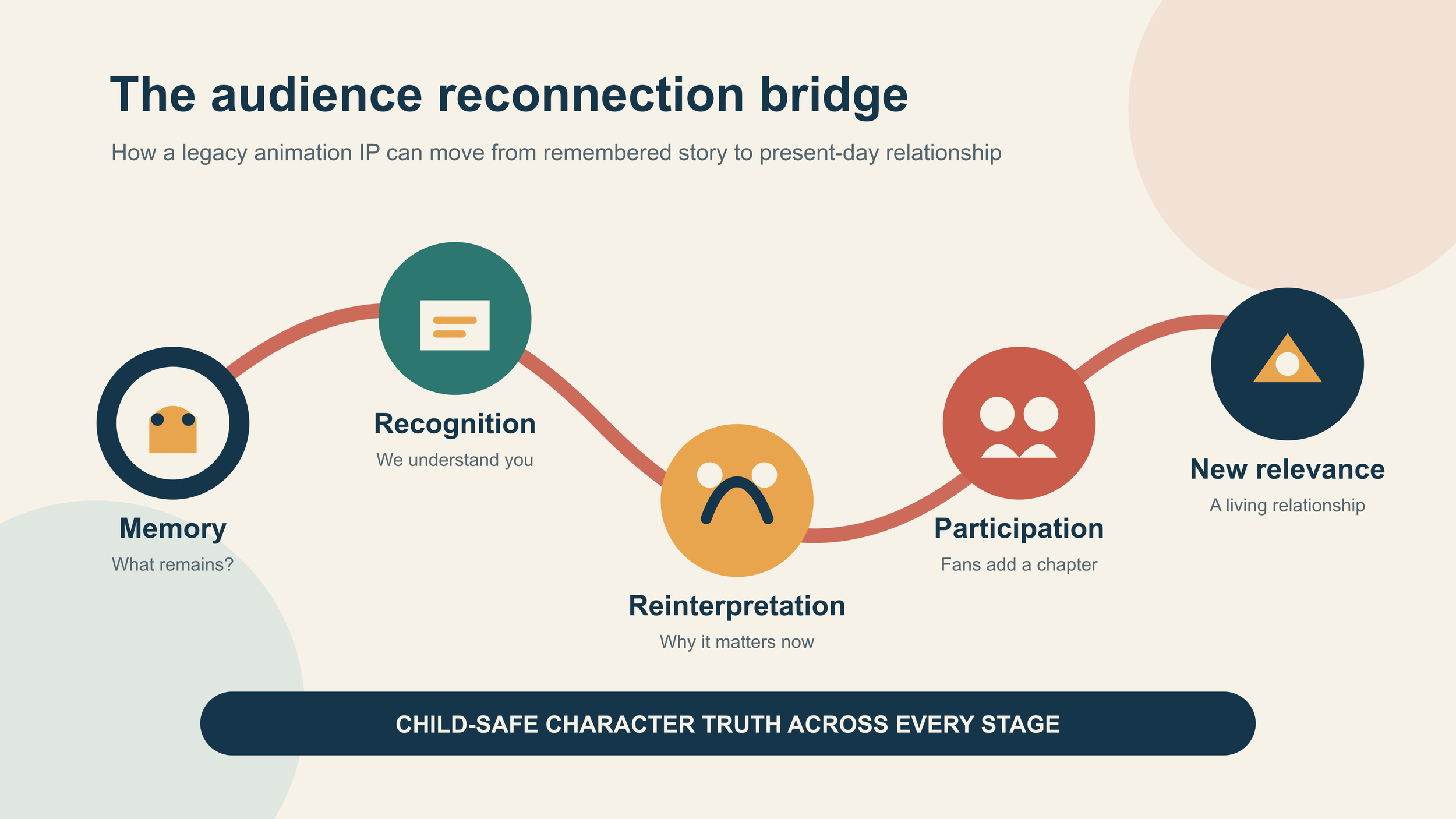
Lotus framework: reconnect memory to present-day participation while the child-safe character truth stays intact.
1. Memory: what do people genuinely remember?
Start with evidence from Chinese search, comments, fan edits and community language. Look for repeated memories rather than the studio’s preferred anniversary moments. Fans may remember a supporting character, an awkward failure, a line delivery or a relationship more strongly than the official hero shot.
The task is not to rank every memory. It is to understand which associations remain affectionate, which have become ironic, which are misunderstood and which may carry rights or safety concerns.
2. Recognition: can the official account prove it understands?
An official Chinese presence should first show cultural recognition. Natural Chinese copy, consistent local names and thoughtful timing tell fans that the account is present rather than mechanically syndicated.
Recognition can be quiet: restoring context to a widely shared clip, acknowledging an anniversary without a hard sell, or using an approved archive asset in the way Chinese fans already understand it. The character should still sound like itself. Chinese content localisation and production is the layer that protects that balance.
3. Reinterpretation: what does the character mean in adult life?
Fans often reinterpret childhood characters through new situations: first jobs, long commutes, old friendships, caring for parents, creative ambition or the pressure to appear successful. This does not require rewriting canon.
The official team can build adjacent, clearly framed formats: an archive scene paired with a present-day question; a character trait revisited through a mature observation; a “then and now” creative note; or a prompt that lets fans describe what the story means to them today.
The safest reinterpretations grow from existing character truth. A brave child character may still represent courage, but adult fans may now recognise courage as trying again after an ordinary failure rather than defeating a villain.
4. Participation: how can grown-up fans add their own chapter?
Participation turns memory into a social relationship. It might include a fan-memory prompt, a choice between archive moments, a drawing challenge, a reaction-template format, a creator conversation or an anniversary story collected with permission.
Rights holders should keep the invitation clear: which assets can be adapted, how fan work may be credited or reposted, what uses are non-commercial and which themes are unsuitable. When creators are commissioned, China KOL and creator coordination should include rights, disclosure and usage terms—not only reach.
5. New relevance: what can the relationship support next?
If the audience response is sustained and appropriate, the IP may have room for new official formats, anniversary viewing, exhibitions, publishing, collectibles, licensed experiences or brand partnerships. These should emerge from a clear audience role and confirmed rights, not from the assumption that every nostalgic comment signals purchase intent.
The bridge is complete when fans can move from a remembered moment to a current official relationship, while new viewers can enter without needing twenty years of history.
One IP can serve children, grown-up fans and new discoverers
A legacy animation brand does not need one undifferentiated feed. It needs one coherent character truth expressed for different audience contexts.
Children and families need age-appropriate stories, safety, clarity and reliable viewing information.
Grown-up original fans may respond to memory, self-expression, craft, anniversaries and thoughtful collectibles.
New young discoverers may meet the property through remix culture, a collaboration, a creator or a contemporary visual format before they know the original series.
The child-safe core should remain visible across all three. Audience expansion becomes risky when adult irony, ambiguous language or partner content drifts back into spaces intended for children. Clear formats, approvals and channel roles allow the property to widen without losing trust.
What Chinese social media can reveal that global feeds may miss
Social listening is especially valuable for a legacy property because audience meaning changes over time. Chinese comments and search behaviour can reveal:
which names and visual assets fans actually use;
which episodes or relationships are being rediscovered;
whether a wave is affectionate, ironic or controversial;
how different age groups talk about the same character;
where unofficial uploads are becoming the default source; and
what distributors, licensees, retailers and brands may see when they research the property.
An official account adds a direct route for response. It can ask, clarify, credit, provide approved material and guide people to authorised experiences. It also gives the global team first-hand qualitative evidence rather than a translated highlight reel assembled after a campaign.
Give each China platform a distinct role
The best mix depends on the property and where existing signals appear.
Bilibili can support archive context, episode discussion, creator culture, lore and longer fan interpretation. Bilibili’s investor materials continue to position anime and remix culture within a broad interest-led content community.
Douyin can make a familiar movement, sound, transformation or emotional reversal participatory in short video.
Xiaohongshu (RedNote) can connect memory with searchable collections, design, locations, events and lifestyle relevance.
WeChat and WeChat Channels can carry official information, longer anniversary stories and service routes. Where appropriate, WeCom may support a consent-based private fan community and closer first-party listening.
Weibo can support public announcements, topical conversation and visible anniversary moments.
Do not post the same archive clip everywhere. Use a common character truth, then design a different audience job for each platform. Lotus’s guide to choosing Chinese social media platforms provides a broader comparison.
Common mistakes when reintroducing a legacy animation IP
Assuming recognition equals active fandom. Many people remember a character without wanting the same relationship today.
Using nostalgia as endless repetition. Familiar assets need present meaning, not only reuse.
Forcing adult humour onto a children’s property. A local joke can attract attention while weakening family trust.
Ignoring unofficial Chinese names and context. The official account can look unfamiliar even when the IP is well known.
Launching products before validating the role. Affection, participation and purchase interest are related but not identical.
Beginning with an anniversary campaign and ending there. Reconnection needs continuity after the calendar moment passes.
Frequently asked questions
Can a children’s animation IP create Chinese social content for adults?
Yes, if the adult-facing content remains adjacent to the child-safe core, is clearly framed and follows the property’s rights and approval rules. The goal is to recognise how original fans have grown, not to make the character abandon its identity.
Should an international animation IP open a separate adult-facing account?
Sometimes, but not automatically. A separate account adds content supply, moderation, verification and governance requirements. First determine whether the adult audience has a distinct, sustainable role that cannot be served through clear series or sections on the main account.
How do we know whether Chinese nostalgia is real or just a short meme cycle?
Look for repeated associations across time, platforms and fan groups; evidence that people connect the character with personal memories; and interest that extends beyond one cropped joke. Combine quantitative signals with close reading of comments and community language.
Can nostalgia help new Chinese audiences who never watched the original show?
It can. Research distinguishes personal nostalgia from historical or vicarious nostalgia: people can feel attached to an imagined or inherited past. But new audiences still need an accessible entry point, not an inside joke that assumes prior knowledge.
How can Chinese social media help licensing and distribution conversations?
A credible official presence makes ownership, audience meaning, local content quality and contact routes easier to evaluate. It can help a distributor, retailer or brand see an active property rather than scattered archive clips, while avoiding promises about demand that have not been validated.
Let the audience grow up without leaving the character behind
A long-running animation IP owns something a new property cannot manufacture: shared time. In China, that value may already be visible in fan language, remix culture, archive searches and unexpected adult affection.
The opportunity is to listen before relaunching, protect the child-safe core, recognise the adult fan’s present life and create an official path that both generations can trust.
Lotus is a China-based bilingual team helping international animation studios and character owners assess existing Chinese audience signals, localise the official voice, plan age-aware content, establish and operate social accounts, coordinate creators and make fan insight legible to the global team.
Talk with Lotus about reconnecting your legacy animation IP with Chinese audiences.
