

Why WeChat Mini-Games Are the New Traffic Oligarch in China
When we talk about the most addictive digital products in China, short-form dramas and TikTok videos usually dominate the conversation. However, a more subtle yet powerful force has quietly risen to oligopolistic status: WeChat Mini-Games.
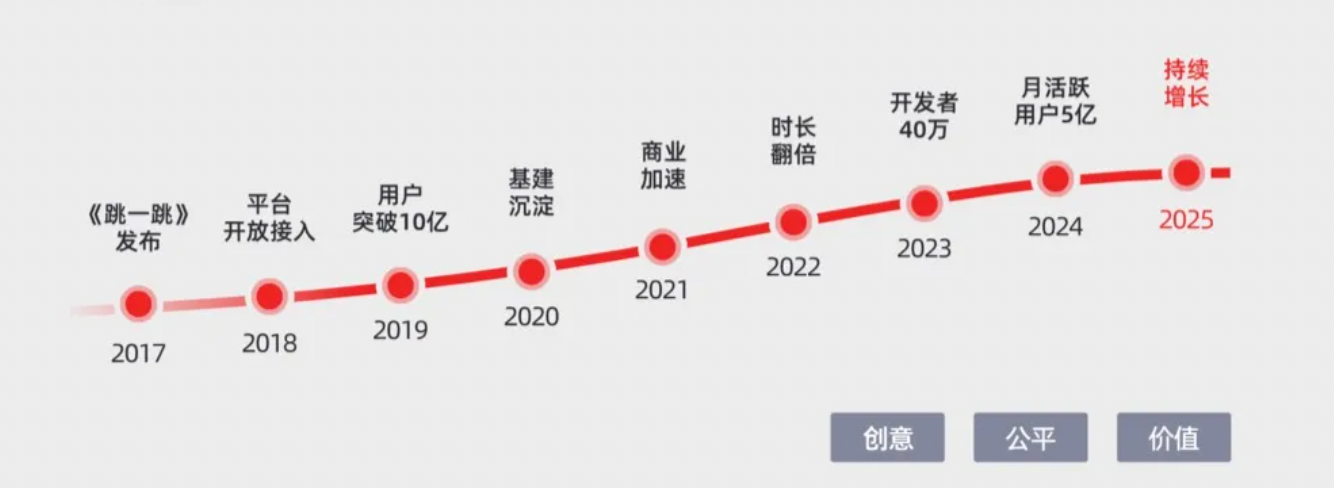
Over the past year, this ecosystem has accumulated over 1 billion users, with Monthly Active Users (MAU) exceeding 500 million. User stickiness has increased by 27%, and daily activity is up 10%. Supported by distribution channels across Douyin (TikTok China), Kuaishou, and Bilibili, Mini-Games have become the ultimate "time-killer" for the Chinese internet population.
For international brands—whether in gaming, IT, or lifestyle sectors—this is a pivotal moment. The data suggests that WeChat Mini-Games are not just a trend; they are becoming the dominant force in the mobile entertainment sector.
Overtaking the App Store: A Shift in Power
The momentum of Mini-Games is staggering. Data from Ocean Engine (ByteDance’s ad platform) shows that in the first half of 2024, the active user base of Mini-Games surpassed traditional App-based mobile games for the first time. By 2025, they continued to siphon user time away from apps and web games, earning the industry nickname "Game Locusts" for their ability to consume traffic.
Financially, the scales have tipped as well. August 2024 marked a watershed moment where daily ad spend on Mini-Games (approx. 94 million RMB) overtook App games. Media outlets screamed that Mini-Games were "bleeding the App market dry."
However, this is not a zero-sum game. Internal data from Chinese social media giant WeChat reveals that the user overlap between Mini-Games and App games is only 10%. This means Mini-Games are not stealing users; they are creating new ones. Unlike traditional games with long development cycles, Mini-Games (often monetized by ads, known as IAA) tap into incremental markets, reaching users who would never download a 5GB game client. This allows viral hits to break the boundaries of the App Store and grow across platforms.
The "Social" Moat: WeChat’s Unfair Advantage
Why is WeChat winning? The answer lies in its DNA: Social Connection.
WeChat is not just a platform; it is the operating system of daily life in China. Mini-Games leverage this by integrating deeply with social chains. In mature games, 30% to 50% of users come from social channels (sharing links in group chats or moments). For card and board games, this figure can hit 80%.
Crucially, users acquired through social channels have a retention rate 20% higher than the industry average. This proves WeChat’s ability to achieve low-cost, precise user acquisition through social fission. High stickiness translates to high commercial value. In some ad-driven games, over 80% of revenue comes from social users. Features like "cash red packets" for inviting friends can cover their costs within 1-3 days, offering an ROI that exceeds most developers' expectations.

Make it stand out
Whatever it is, the way you tell your story online can make all the difference.
The Rise of the Female Gamer
For brands in beauty, mother-and-baby, and lifestyle sectors, here is the most important insight: The demographic landscape is shifting.
Currently, the user base is split 55% male and 45% female, with a strong concentration in Tier 1 and Tier 2 cities. However, in late 2025, female-oriented games began to explode. Titles like My Garden World (simulation) and Back to the Field (a variety show IP adaptation) have performed exceptionally well.
Most notably, the growth rate of spending by female players is now double that of male players.
According to Li Qing, Product Director of WeChat Mini-Games, this is a natural evolution of culture. Just as "Three Kingdoms" themes appeal to strategy fans, variety show adaptations appeal to female demographics. Games like My Garden World innovate by combining virtual flower planting with the delivery of real, fresh flowers offline. This "Virtual + Reality" model breaks cognitive boundaries and represents a massive opportunity for Chinese marketing partnerships.
Breaking the "Apple Tax"
In a move that surprised the tech world, WeChat has effectively negotiated a better deal for developers on iOS.
Historically, Apple takes a 30% cut of in-app purchases. However, to support the Mini-Game ecosystem, WeChat has aligned the technical service fees on iOS with Android. Developers can now retain 70% of their revenue on iOS. Furthermore, WeChat is offering an additional 15% revenue incentive on the iOS platform.
For ad-monetized (IAA) games, the policy for 2026 has been simplified even further: up to 90% revenue share for short-term incentives and 85% for long-term. This favorable economic environment is attracting waves of developers and brands to build on the platform.
Future Trends: AI, Intelligence, and "Restrained" Monetization
In recent discussions with WeChat executives, several key trends for 2026 and beyond emerged. These insights are crucial for anyone looking to enter the Chinese social media gaming space.
1. The AI Revolution in Content AI is lowering the barrier to entry.
Even those without coding or art skills can now generate game content using natural language. We are seeing small teams use AI to generate plotlines for "Spot the Difference" games, significantly increasing success rates. This democratizes creativity, meaning a massive influx of diverse content is on the horizon.
2. Social-First Strategy (SLG) Simulation Life Games (SLG) are booming because they are inherently social.
They gather people with shared interests. The future of gaming in China isn't just about playing; it's about the connection behind the screen. If a game can create shareable topics, it unlocks the core of WeChat’s traffic.
3. "Restrained" Monetization WeChat is actively pushing back against aggressive ad experiences.
The platform realizes that a game’s commercial value cannot exceed its user value. They are encouraging "non-interruptive" ad formats, such as integrating ads into live streams or the game environment naturally. Policies now require users to play for at least 5 minutes before certain incentives trigger, treating them as players first, not just ad-viewing tools.
4. Intelligent Marketing & Distribution For 2026, the keyword is "Intelligence."
The ad platform is moving toward automated, intelligent hosting. Instead of manual A/B testing, the system will decide the best time to show an ad based on the user's gameplay experience. Furthermore, new ad formats are coming to WeChat Moments, allowing for deeper interaction and better conversion for games.

Make it stand out
Whatever it is, the way you tell your story online can make all the difference.
Conclusion: A New Frontier for Brands
WeChat Mini-Games have transformed from a novelty into a sophisticated, high-revenue ecosystem. They offer a unique blend of social virality, high retention, and now, favorable revenue terms even on iOS.
For overseas brands, this is not just about making a game; it is about understanding where the attention of the Chinese consumer has shifted. Whether through direct game development, IP licensing (like the Back to the Field example), or in-game advertising, the Mini-Game ecosystem offers a direct line to over 1 billion users. In the competitive world of Chinese marketing, ignoring this "hidden giant" is a risk no brand can afford to take.
