

WeCom for International Hotels and Travel Brands in China Market: From First Enquiry to Repeat Guest
A Chinese traveller likes or saves a hotel post on a Chinese social platform, reads a destination article or receives a recommendation from a friend. The property looks right, but they still want to ask about transport, room type, local activities or support in Chinese.
Sending that person to a global contact form may add unnecessary friction. Asking them to connect with an employee’s personal WeChat account may solve the immediate problem but create a long-term ownership issue for the brand.
WeCom can give hotels, resorts, destinations and travel companies a company-managed way to continue guest and partner conversations through the WeChat ecosystem. Staff use WeCom while travellers can continue using Weixin or WeChat. Tencent states that the customer relationship can remain with the company when an employee moves on.
WeCom is not a booking engine, front desk or emergency service by itself. Its value comes from connecting the traveller with the right human support and a clear next step.
Why WeCom fits the travel journey
Travel decisions move between inspiration and practical detail. A beautiful video or creator post may create desire, but the traveller still needs enough confidence to book and enough support to enjoy the trip.
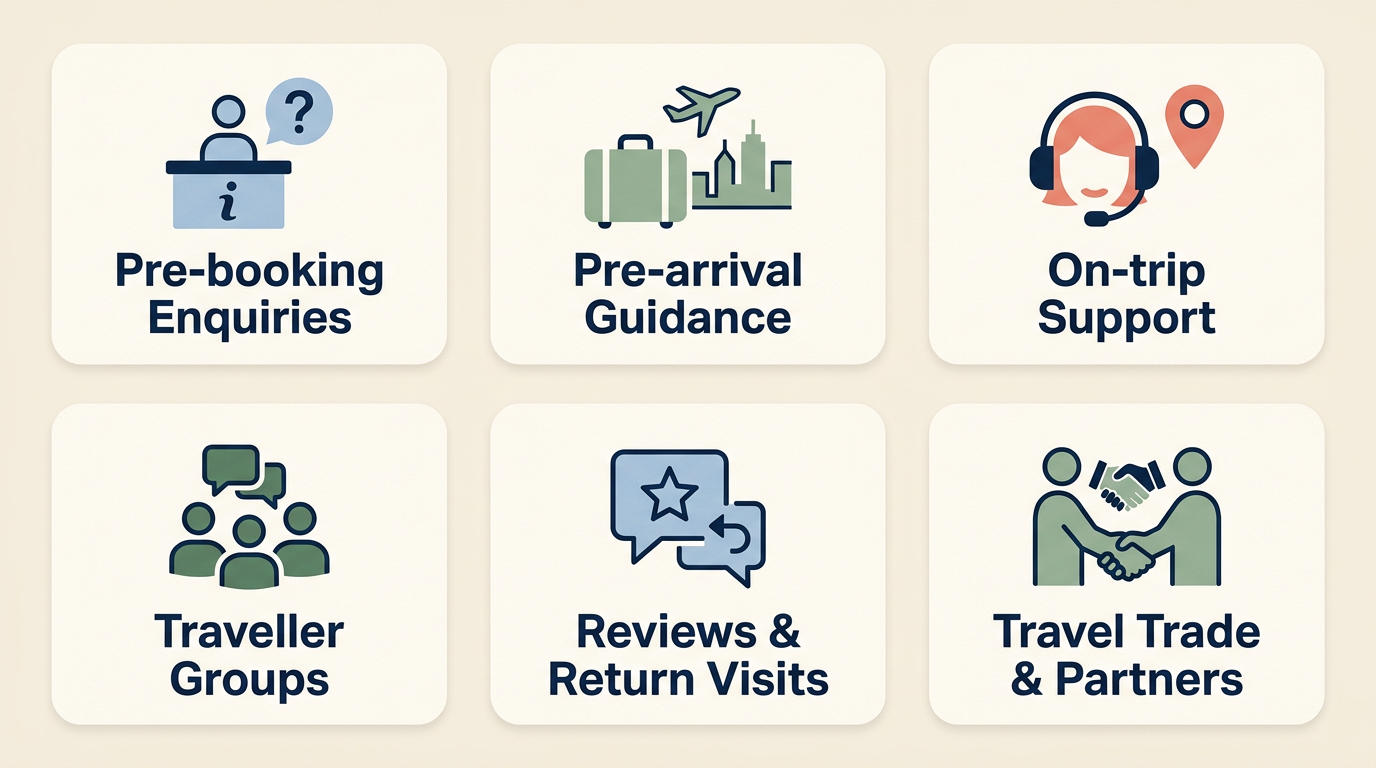
For an international travel brand, WeCom can help at several points:
answer pre-booking questions in a familiar communication environment;
provide pre-arrival information and reminders;
route on-trip questions to the correct team;
support selected traveller groups or member communities;
stay useful after the visit through reviews, referrals and relevant return offers; and
manage relationships with agents, corporate travel buyers or MICE partners.
The correct scope depends on the business. A luxury resort, tourism board, attraction, group tour and travel-technology platform should not use the same operating model.
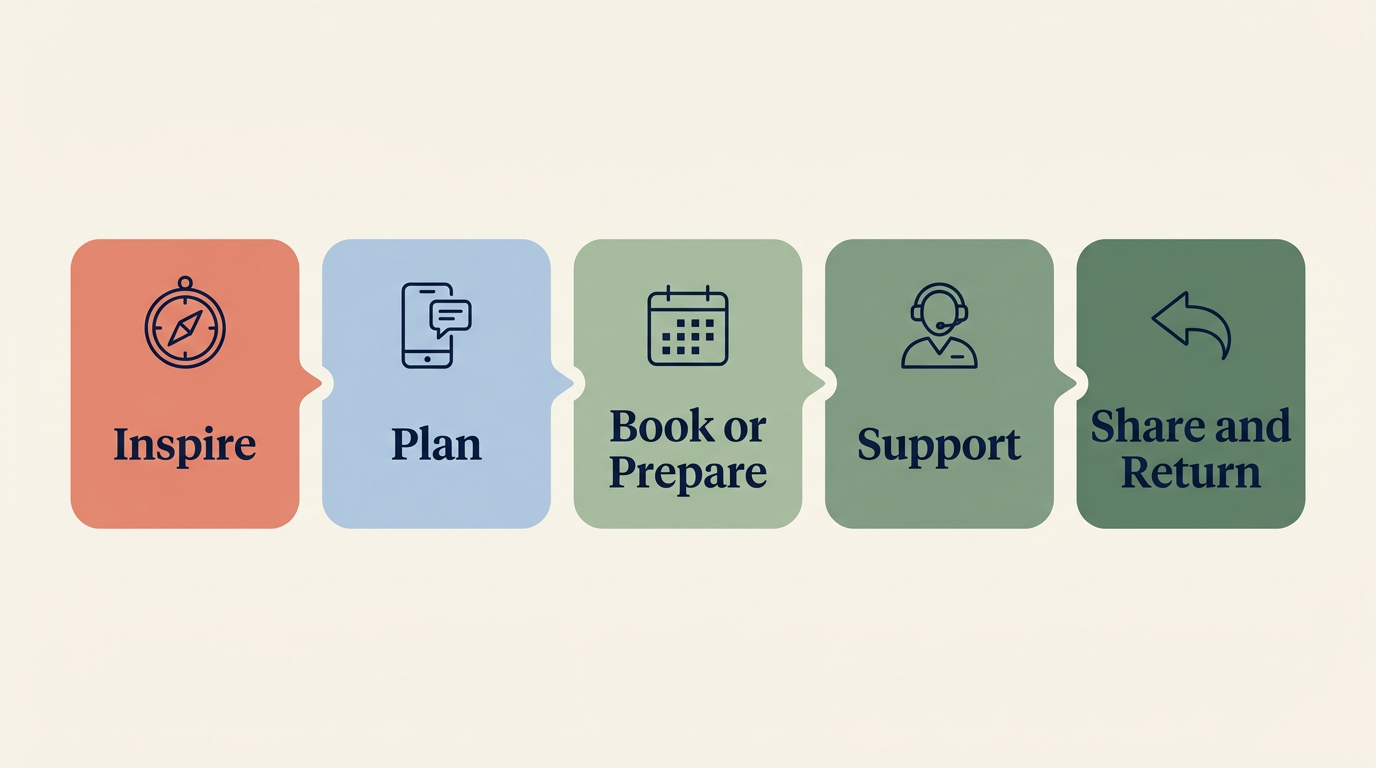
Five-stage WeCom journey for hospitality and travel brands from inspiration and planning to support, sharing and return visits.
Six practical WeCom use cases for hospitality and travel
1. Pre-booking enquiries
Travellers may want to confirm room configurations, child policies, transport, dietary requirements, seasonal conditions, attractions or what is included before they commit.
A WeCom contact can provide a professional route to a reservations, sales or guest-relations colleague. The invitation should state what the team can answer and when it is available.
Do not make the traveller repeat information already provided through the campaign, article or referring partner. Keep the source and question attached to the handoff.
2. Pre-arrival preparation
After booking, the useful questions change. The guest may need directions, airport-transfer information, check-in requirements, weather guidance, restaurant booking help or a clear point of contact.
WeCom can support selected pre-arrival messages where the brand has permission and the information is genuinely helpful. It should not become an excuse to send a stream of promotions before the trip begins.
3. On-trip support and escalation
For a hotel or destination, fast communication can improve the experience when the request is suitable for chat. The operating design should still distinguish routine questions from urgent, safety-related or formal service issues.
Define who covers the channel, how the guest reaches help outside service hours and when the conversation must move to the front desk, tour leader, emergency contact or another formal process.
4. Traveller groups with a clear purpose
Groups may work for a tour departure, event, member community, destination programme or short-term cohort. They should have clear joining criteria, moderators, posting rules, duration and an exit plan.
A noisy group full of generic promotions is not a service. The group should make the trip easier, more enjoyable or more connected.
5. Post-stay reviews, referrals and return visits
The end of the stay should not automatically trigger a long promotional sequence. Start with aftercare: confirm whether help is still needed, invite appropriate feedback and make the review route easy.
When the guest has agreed to remain connected, later communication can include relevant seasonal ideas, member benefits, new experiences or reasons to return. Relevance matters more than frequency.
6. Travel trade and partner relationships
WeCom can also support B2B communication with travel agents, corporate planners, MICE contacts, distributors or local partners. These relationships need different content and ownership from guest service.
Separate partner contacts, service expectations and next actions from consumer marketing. A travel agent asking for contracting information should not enter the same follow-up path as a guest asking about airport transfers.
A simple WeCom journey for Chinese travellers
Inspire: The traveller discovers the brand through Chinese social content, a creator, a partner, search or a recommendation.
Plan: The content answers the main questions and offers a clear WeCom contact when a personal conversation would help.
Book or prepare: The responsible colleague provides accurate information and directs the traveller to the appropriate booking or confirmation route.
Support: The guest knows who to contact for suitable questions and how urgent or formal issues will be escalated.
Share and return: The brand invites feedback, reviews and future engagement only where it can remain useful.
This journey can begin with one property, one destination campaign or one audience. Test the customer experience before expanding it across markets and teams.
What a good operating setup needs
A clear entry promise
Tell travellers whether the contact supports booking questions, trip planning, guest service, groups, members or partners. Avoid one generic QR code that leads to an unclear inbox.
Named ownership and realistic coverage
Assign a primary team and backup. State the service hours in China time and the destination’s local time where relevant. Explain what happens outside those hours.
Approved Chinese information
Prepare accurate answers and shareable assets for the questions the team receives most often. These may include transport, arrival, room or product information, facilities, destination guides, booking conditions and contact details.
A practical booking route
WeCom can support the conversation, but the commercial action needs a clear destination: official website, booking engine, travel platform, partner, Mini Program, reservation team or payment process. Test the mobile journey from the traveller’s point of view.
Escalation rules
Define which issues stay in WeCom and which move immediately to reservations, operations, security, medical support, complaint handling or another formal channel.
Permission and communication discipline
A guest who asked one question has not automatically requested unlimited marketing. Define what the brand records, why it stays in touch and how the contact can stop receiving communication.
Common mistakes to avoid
Promoting before solving the service question
Answer what the traveller asked first. A useful response builds more trust than an immediate upsell.
Assuming one team can cover every time zone
Set a real service model. Where constant coverage is not available, use clear out-of-hours messages and escalation paths.
Mixing guests, partners and groups together
Different audiences need different owners, content and measures. Keep the operating structure understandable.
Treating WeCom as a replacement for booking infrastructure
A conversation can support conversion, but the traveller still needs a reliable route to confirm, pay, change or cancel according to the brand’s policies.
Measuring only contacts added
Better measures include qualified enquiries, questions resolved, bookings assisted, response coverage, group usefulness, review activity and repeat interest.
How Lotus can support hospitality and travel brands with WeCom
Lotus helps international travel and hospitality teams connect Chinese discovery, content and customer communication. We can make WeCom part of the wider traveller journey rather than an isolated messaging account.
A practical scope can include:
account and applicant-route assessment;
WeCom setup coordination and administrator planning;
Chinese traveller and partner journey design;
QR-code entry points and source planning;
Chinese welcome messages, service guidance and content libraries;
group purpose, moderation and regular content;
team training, handoffs and escalation rules;
campaign, creator and social-content connection; and
ongoing operations and reporting.
Booking systems, payment, loyalty integration, cross-border data flows and custom development should be assessed separately where required.
Explore Lotus’s China travel and tourism marketing services, review our WeCom support or contact Lotus to discuss the traveller journey your brand needs to manage.
Frequently asked questions
Do Chinese guests need to download WeCom?
For supported customer-contact journeys, guests can continue using Weixin or WeChat while the hotel or travel employee uses WeCom. Test the intended journey in the live account setup.
Can WeCom replace an OTA or booking engine?
No. It can support enquiries, confidence and assisted service, but the guest still needs an appropriate route to check availability, confirm terms, pay and manage the booking.
Is WeCom useful for an overseas hotel without a China office?
It may be, but the account route, administration, documents, service coverage and responsible team need to be assessed first. The brand should not open a customer channel it cannot operate reliably.
Should a travel brand create WeCom groups?
Only where shared information creates value—for example a specific departure, event or member programme. Define the purpose, moderation, duration and rules before inviting travellers.
What should travel brands measure?
Measure the outcome of the service journey: relevant enquiries, response coverage, resolved questions, assisted bookings, review activity, referrals and repeat interest. Contact growth alone is not enough.
Chat with Lotus first to find out whether we could support you!
