

How to Choose a China Social Media Agency for an International Hotel
Hiring a China social media agency is not simply outsourcing a content calendar. For an international hotel, the right partner should connect five things that are often managed separately: Chinese audience insight, secure platform accounts, locally useful content, the path to booking and day-to-day guest communication.
The short answer: choose a bilingual, China-based team that can explain where your guests discover hotels, what they need before they trust the stay, how each account will be owned and operated, and how interest will move towards an enquiry or booking. A strong proposal should be specific about priorities, responsibilities, costs and measurement. It should not promise instant followers, guaranteed bookings or every major platform at once.
That distinction matters. A hotel can produce beautiful Chinese content and still lose the guest at the practical stage. It can also have accurate booking information but remain invisible while travelers are deciding where they want to stay.
Lotus approaches hospitality as one connected customer journey. Our China travel and hospitality marketing work brings research, platform planning, Chinese content and ongoing operations together through one bilingual team.
Why hotels need more than translated social posts
The product is unusually complex. A guest is not buying a room in isolation; they are choosing a destination, neighborhood, arrival experience, service standard and set of expectations about how the trip will feel.
Chinese travelers may discover a property through short video, search its Chinese name on a lifestyle platform, compare recent guest experiences, check rates and policies on a travel platform, and ask a practical question through a familiar messaging channel. The final reservation may happen somewhere else entirely.
This is why direct translation tends to underperform. The original campaign may create desire but leave out the details a Chinese guest needs to decide. A caption may sound polished while using a hotel name nobody searches. A creator campaign may generate attention before the property has a clear Chinese information or enquiry route.
China's outbound travel market is large enough to justify a considered approach. The China Tourism Academy reported 146 million outbound trips by Chinese travelers in 2024 and found that online social media had become their leading source of travel information. Its 2025–2026 market report says the market remained close to its pre-pandemic scale in 2025 while interest continued to spread across a wider range of destinations.
The useful question is therefore not whether Chinese travelers are online. It is whether your property gives the right traveler enough evidence to choose it.
What should a China hotel marketing partner actually connect?
A good partner does not treat research, content, media and account management as unrelated services. Each should support the next decision in the guest journey.
1. A real audience decision
“Affluent Chinese travelers” is too broad to guide useful work. A weekend city break, a family holiday, a wellness stay and a remote celebration have different planning windows, concerns and content needs.
Before recommending a platform, the agency should be able to discuss:
which guest groups are commercially relevant to the property;
what brings them to the destination;
how far in advance they tend to decide;
which details create confidence or hesitation;
what demand signals already exist in Chinese search, social conversation and guest reviews;
what the hotel can test before committing to a larger programme.
If the opportunity is still uncertain, begin with a focused evidence question. The first deliverable should help the hotel make a decision, not simply add another market report to a shared folder.
2. Secure accounts and clear ownership
The hotel should know who owns every account, phone number, administrator login and recovery route. It should also know what happens if an employee, agency or local partner changes.
Platform eligibility and features vary by applicant, jurisdiction, industry and intended use. The agency should review the current route before promising verification, advertising, commerce or other functions. Approval always remains with the platform.
This may feel administrative, but it protects the long-term value of the hotel’s Chinese presence. An audience is less useful when access depends on a former supplier’s phone number.
3. Chinese content that helps someone choose
Hotel content has two jobs: create a reason to care and remove a reason to hesitate.
The first job may be visual. It can show the architecture, food, landscape, atmosphere, local culture or people behind the experience. The second is practical. It explains access, room differences, inclusions, dining, language support, family suitability, seasonal conditions and what a normal day might actually feel like.
Good localization protects the hotel’s international identity while changing what needs to change: the opening idea, amount of context, format, subtitles, search language and next action. It should feel as though it was made for the audience, not passed through a translation step.
For a closer look at the creative side, read Lotus’s guide to how international hotels can reach Chinese travelers through content.
4. Creators and paid media with a defined role
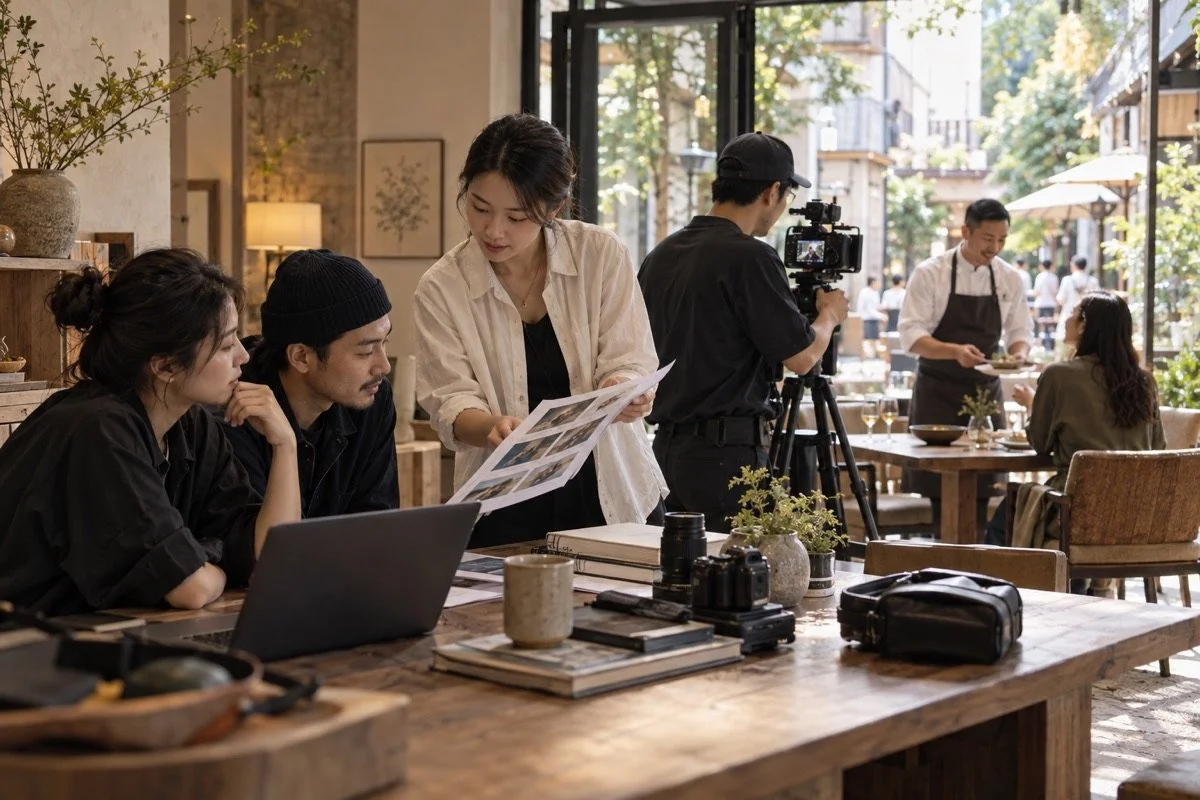
A creator should not be selected only because their feed looks luxurious. The important questions are whether the audience fits, whether the creator can explain the stay credibly, whether the comments show genuine interest, and what the hotel is allowed to reuse after the trip.
The brief should also say what the content is meant to achieve. One creator may introduce the destination. Another may show the room and transfer experience in detail. A specialist voice may be better suited to food, wellness, architecture or family travel.
Paid support works best when it amplifies a useful idea and sends people towards a journey that is ready. Media cannot repair unclear information, broken links or slow responses.
5. A credible route from interest to booking
The agency does not need to own the hotel’s booking engine. It does need to understand how a Chinese traveler reaches it, what may interrupt the journey and which team is responsible for fixing those gaps.
That means testing links and forms on mobile, checking how Chinese characters display, keeping room and policy information consistent, and agreeing where questions will be answered. Chinese travel platforms and direct booking can support each other: one may provide comparison and review confidence, while the other gives the hotel more control over the story and relationship.
Which Chinese platforms should an international hotel use?
There is no universal platform package for hotels. Each channel should earn its place by performing a clear job.
ChannelBest used forWhat useful hotel content looks like Xiaohongshu (RedNote)Discovery, search, comparison and social proofGuest-style guides, room differences, neighborhood ideas, seasonal advice and specific answers to planning questions DouyinVisual reach and demand creationArrival moments, signature experiences, food, design, people and movement, shaped for short-video viewing WeChatOwned information, communication and continued relationshipsPractical guides, offers, pre-arrival information, service messages and content for guests who already know the property Chinese travel platformsAvailability, price comparison, reviews and booking confidenceAccurate listings, current imagery, room details, policies and considered review responses BilibiliDeeper consideration where the story rewards attentionLonger films or explainers about design, culture, wellness, food or the destination Chinese-language web contentStable facts for search, media and AI answer systemsReadable information about the property, location, rooms, experiences and ways to enquire or book
Two well-connected channels are usually a better beginning than six neglected ones. A property with little Chinese awareness may need discovery and search visibility first. A hotel with existing Chinese guests may gain more from strengthening owned communication and service.
Lotus’s existing guide to hotel and travel marketing on Xiaohongshu explores that platform in more depth. This article focuses on the wider agency and operating decision.
The brief should change with the kind of stay
The hotel category alone is not enough. The agency needs to understand why people choose this particular property and what could stop them.
A culture-led city hotel
The room may be only one part of the appeal. Food, music, art, local collaborators and the surrounding neighborhood may create the first reason to pay attention.
The content plan should let those cultural entry points lead, then connect them back to the stay. A thoughtful local guide or story about the people behind the restaurant can carry more meaning than another empty-bedroom photograph. The agency should be able to keep this cultural voice intact in Chinese without turning the hotel into a generic city guide.
A visually distinctive eco-resort
Architecture and landscape may stop the scroll, but striking imagery raises expectations. Travelers will still want to know how to arrive, what comfort and privacy are really like, what the stay includes and how environmental commitments show up in practice.
The partner’s job is to place practical proof beside visual desire. Recent guest perspectives, clear travel information and specific explanations usually do more for trust than repeated claims about being unique or sustainable.
A remote, experience-led resort
Distance can be part of the attraction and part of the risk. The traveler may need help understanding transfers, total travel time, suitable length of stay, inclusions and what happens if a connection changes.
Here, the entire journey is content. The agency should show the path from departure to arrival, explain who the experience suits and make pre-arrival support easy to find. Beautiful remoteness becomes easier to choose when the logistics feel understood.
Across all three situations, the principle is the same: lead with the reason to care, then remove the reason to hesitate.
Questions to ask before appointing an agency
The quality of an agency becomes much clearer when the conversation moves from platform names to operating detail.
Ask these questions before approving a scope:
Which Chinese guest decision are we trying to influence first? The answer should be more specific than “awareness.”
What evidence supports the recommended audience and platforms? Ask what is confirmed, what is inferred and what still needs to be tested.
Who will own each account and recovery method? Ownership should survive changes in staff and suppliers.
Who writes the Chinese copy? Native writing and editorial judgment matter, especially when the hotel’s global tone is distinctive.
How will our brand team understand local creative choices? A bilingual approval process should explain the reasoning, not just provide a back-translation.
How will guest questions and sensitive issues be handled? Agree service hours, response rules and escalation paths.
How are creators screened? Audience fit, content quality, disclosure, usage rights and authentic engagement all matter.
What happens after a campaign? Useful content, learnings and audience relationships should not disappear when the media budget ends.
How will social activity connect to booking and revenue evidence? Ask about links, codes, enquiry records and assisted conversion—not only reach.
What will the agency need from our team? Assets, approvals, property facts, availability and quick operational answers affect delivery quality.
The agency should also be willing to say when the hotel is not ready for paid media, when one channel is enough, or when a booking problem matters more than another month of posts.
What should the first 90 days look like?
An initial period should create evidence and a dependable working rhythm. It should not be judged by follower growth alone.
Days 1–30: make the important decisions
Start with the guest, the destination and the hotel’s commercial priorities. Review Chinese search and social signals, existing guest feedback, travel-platform listings, account ownership and the current booking path.
Agree the Chinese name and search language. Choose the first platform roles. Confirm who approves content, who answers questions and which claims require operational verification from the property.
At the end of the month, the team should have a practical plan with clear responsibilities—not a list of every possible channel.
Days 31–60: build useful proof
Create a small but substantial body of Chinese content around real planning questions. Use global assets where the idea travels well, and produce original material where the audience needs a different answer.
Show rooms in context. Explain the arrival. Make dining, design, wellness, culture or adventure specific. Connect every post to an appropriate next step: save a guide, review a room, ask a question or check availability.
Days 61–90: test distribution and learn
Once the foundation is ready, test selected creators or paid support around a defined audience and content role. Track what people save, search, ask and do next.
The review should answer practical questions: Which audience showed meaningful interest? Which information reduced hesitation? Where did the journey break? What deserves continued investment? This gives the hotel a stronger decision for the next quarter.
How should hotel teams measure the work?
Hotel decisions often cross several platforms and research sessions. Last-click bookings matter, but they rarely explain the full influence of Chinese content.
StageEvidence worth reviewing DiscoveryRelevant reach, search visibility, saves, repeat exposure and destination-plus-hotel searches ConsiderationProfile visits, guide engagement, room or itinerary views and substantive questions EnquiryRelevant direct messages, response time, email leads and service conversations BookingBooking-page visits, campaign codes, travel-platform actions, conversion and assisted revenue RelationshipRepeat enquiries, post-stay engagement, reviews, recommendations and membership progress
Use distinct links and campaign codes where the journey allows. It is also worth asking guests where they first heard about the property. The answer is imperfect, but it often reveals influence that analytics misses.
Reporting should finish with decisions: what changed, what needs attention and what the team recommends next. A dashboard without judgment is only a record of activity.
What affects agency scope and cost?
There is no useful standard price for every hotel. Scope changes with:
the number and condition of existing accounts;
platform and verification requirements;
the number of channels and publishing frequency;
the amount of original photography, design and video required;
whether creators, paid media or travel-platform coordination are included;
the volume of comments, messages and guest-service support;
the complexity of global and property-level approvals;
reporting, campaign and seasonal requirements;
whether the work covers one property or a portfolio.
A clear proposal should separate foundation work, recurring operations, production, creator fees and media spending. It should also state what the hotel team must provide. Hidden dependencies create more trouble than a smaller, honest scope.
Warning signs in a hotel marketing proposal
Be cautious when an agency:
recommends every large platform before understanding the guest;
promises account approval, viral reach, a fixed number of bookings or a guaranteed search ranking;
cannot explain who will own the accounts and access;
treats Chinese localization as translation alone;
reports only followers, impressions and likes;
suggests creators without discussing audience fit or usage rights;
separates content activity from the booking and service journey;
relies on one individual for strategy, publishing, community and reporting without a workable backup plan.
The best proposal may not be the largest. It is the one in which the choices, responsibilities and next decisions are easiest to understand.
Why international hotel teams work with Lotus
Lotus is a China-based social-first agency built to work as an extension of international teams. Strategy and ongoing delivery stay connected: audience research, account foundations, Chinese content, creators, publishing, community coordination and reporting can move through one accountable bilingual team.
For hotels, that structure reduces a common source of friction. The global or regional team has one clear point of responsibility, while the China-side work keeps moving with local platform knowledge and native Chinese content.
Our China social media management service is designed around that dependable operating rhythm. If the market opportunity or platform choice is still unclear, the work can begin with a focused decision rather than an oversized launch.
Lotus does not guarantee platform approval, follower growth, bookings, rankings or inclusion in AI-generated answers. We build the evidence, content, systems and day-to-day work that give the hotel a better chance to make progress and understand what to improve.
Questions hotel teams often ask
Can an international hotel market to Chinese travelers without opening a China office?
Yes. Research, Chinese content, selected account routes, creators and ongoing operations can often be managed without building a full local department. The workable setup depends on the platform, applicant, jurisdiction, intended features and the hotel’s internal resources.
Does an overseas hotel need a Mainland Chinese company to open social accounts?
Not in every case. Requirements vary by platform and account type. The current eligibility, ownership and feature requirements should be reviewed before the hotel chooses an account route or operating partner.
Should a hotel start with Xiaohongshu or WeChat?
Choose by job. Xiaohongshu is often stronger for discovery, search and visible social proof. WeChat is stronger for owned information, communication and continued relationships with people who already know the property. Some hotels need both; others should begin with one.
Can we reuse our global social content in China?
Yes, when the underlying idea is relevant. Strong photography and film can travel, but the hook, context, format, subtitles, search language and next action may need to change. If the global content does not answer a local question, original work is the better choice.
How long does it take to see results?
There is no fixed answer. Existing awareness, destination demand, account readiness, seasonality, content supply, budget and booking friction all matter. Ninety days can establish a useful foundation and initial evidence; durable demand usually takes longer than one campaign.
Does a hotel need a separate Chinese website?
Not always. It does need clear, mobile-friendly Chinese information and a dependable route to enquire or book. Important facts should be readable in text rather than available only inside images or video.
Can a China social media agency guarantee hotel bookings?
No. An agency can improve discovery, content, operational reliability and the path to action. Actual bookings also depend on destination demand, rates, availability, reviews, travel access, the booking experience and the guest’s decision.
Begin with the decision your hotel needs to make
The right China partner should make the opportunity easier to understand, not more complicated. Before deciding on platforms or a campaign, identify the guest you want to reach, the evidence they need and the action your business can support.
If your hotel is evaluating China, tell Lotus about the property, current Chinese activity and the decision you need to make. We will review the starting point and recommend a practical first scope—whether that is research, account preparation, Chinese content or ongoing social media management.
