

China Event Marketing for International Technology Companies: Turning Events into Long-Term Market Presence
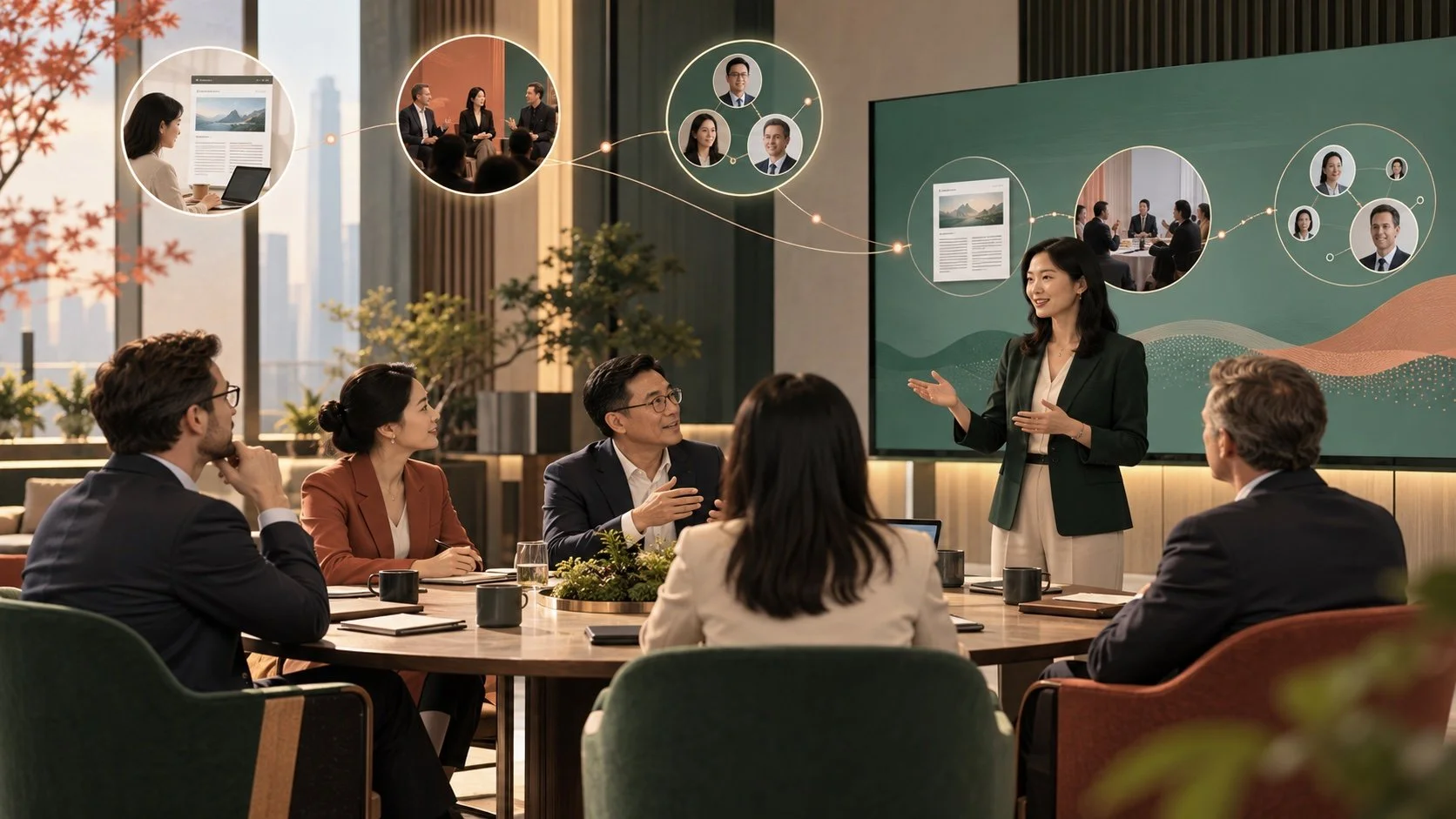
International technology specialists and Chinese enterprise decision-makers connecting through a focused B2B event
Quick answer: China event marketing can help an international B2B technology company demonstrate expertise, answer enterprise questions and build local relationships. Its value is strongest when the event is connected with Chinese content, appropriate social media and continued communication—not treated as a guaranteed pipeline shortcut.
China event marketing can help an international B2B technology company make its market presence tangible. But an event should not be treated as a guaranteed pipeline shortcut or a one-off spectacle. Its value is strongest when it is connected with clear Chinese-language content, relevant social media communication and continued market relationships.
This distinction matters because a growing number of Chinese companies are expanding internationally. They may need overseas technologies for search and digital intelligence, AI visibility, cloud infrastructure, cybersecurity, customer management, payments, localization, developer operations and other parts of international growth. For global technology providers, this creates a meaningful reason to engage Chinese enterprise audiences—not simply to sell “into China,” but to help Chinese businesses compete beyond China. Lotus’s guide for overseas IT and service providers supporting Chinese companies going global provides additional market context.
An event can create the setting for that conversation. The challenge is ensuring that Chinese prospects understand the value before the event, can engage with it naturally on the day and have a credible way to continue the relationship afterwards. That often requires connected Chinese social media management, not only an event announcement.
Lotus Social Agency supports international companies with Chinese-language marketing, social media and on-the-ground event coordination. The aim is not to make unrealistic promises about attendance or revenue. It is to help a global team present itself coherently and professionally in the Chinese market.
Why events still matter for complex B2B technology
Enterprise technology is rarely purchased after reading one advertisement. Buyers often need to understand how a product works, whether it fits their organization, how it supports an international use case and whether the provider can be trusted over time.
Events can help because they create room for:
- product demonstrations and practical explanations;
- detailed questions from technical and commercial stakeholders;
- conversations around specific overseas-growth use cases;
- interaction with customers, partners, experts and peers;
- a visible sign that the international provider is prepared to engage the market seriously.
This is particularly relevant when the offering is unfamiliar, technically complex or closely tied to business transformation. A cybersecurity platform, data-intelligence product or global payment solution may need more context than a short social post can provide. A well-framed event can give decision-makers that context.
However, the event itself is only one moment in a longer decision process. Chinese enterprise buyers may encounter a brand through a colleague, a conference, WeChat, a search result, an article, a partner introduction or an AI-generated recommendation. They may then validate it through several of those channels before initiating a conversation.
That is why event marketing should be connected with the company’s broader China market-entry approach, not isolated from it.
The opportunity: helping Chinese companies expand overseas
China’s outbound business activity gives international technology providers an increasingly relevant market story. According to China’s State Council, Chinese investors established tens of thousands of overseas enterprises across a wide range of countries and regions by the end of 2025. That expansion creates demand for tools and services that can help Chinese companies understand, enter and operate in international markets. (State Council of the People’s Republic of China)
For an international B2B technology company, the most useful China event proposition may therefore be connected to a practical question such as:
- How can Chinese brands understand customers in overseas markets?
- How can a Chinese enterprise improve international search visibility?
- How can a global team manage data, security or infrastructure across regions?
- How can companies coordinate international sales, payments or customer operations?
- How can product and marketing teams adapt content for multiple markets?
The event should not imply that every Chinese company has the same overseas objective. A large enterprise, an emerging software company and an export-focused brand may have very different needs. But anchoring the conversation in real international-growth problems makes the technology easier to understand than a generic product presentation.
What kinds of events can work for B2B technology companies in China?
There is no universally best format. The right choice depends on the audience, the complexity of the offering, the strength of the company’s existing relationships and the purpose of the event.
Common formats include:
Industry conference participation
Conferences can provide visibility and access to an established professional audience. They may suit companies that want to introduce a category, meet potential partners or place an international perspective inside a wider industry discussion. Where partner development is part of the purpose, Lotus can separately scope China business-development and strategic-partnership support.
Executive roundtables
Smaller, focused discussions can be appropriate for senior decision-makers and complex subjects. The value is usually in relevance and the quality of exchange, rather than the apparent size of the gathering.
Practical workshops
Workshops can help an audience understand a tool, method or overseas use case. They work best when the session provides genuine education and does not feel like an extended sales presentation.
Customer or partner sessions
An event built with a credible customer, association or ecosystem partner can place the company within a useful local context. The roles and claims of all parties should remain clear.
Community gatherings
Smaller gatherings may support ongoing relationships with practitioners, developers, marketers or other professional communities. They are usually more valuable as part of a consistent market presence than as a single campaign.
The appropriate format should follow the business question. A company testing market relevance may need a different event from one supporting established customers or launching a major new capability.
How should Chinese social media support an offline event?
Chinese social media can help an event become part of a longer information journey. It should not be viewed only as a channel for posting an invitation. Lotus’s article on connecting physical events with China’s digital ecosystem offers a broader example of this principle.
At a high level, digital communication can serve three roles:
Before the event: establish relevance
Prospective attendees need to understand who the event is for, what business problem it addresses and why the speakers or organizers are credible. Clear Chinese-language information reduces uncertainty and gives partners something useful to share.
During the event: make the experience easier to follow
Attendee-facing information, presentation materials and selected content can help people engage with the discussion. The specific mix should reflect the event and the audience rather than follow a fixed formula.
After the event: continue the useful conversation
An event creates questions and connections that rarely conclude on the same day. Relevant summaries, resources and professional follow-up can help interested participants revisit the topic and decide whether a further conversation makes sense.
For many B2B companies, WeChat marketing can support this continuity. The platform may provide an official source of Chinese-language information and a familiar route back to the brand. Depending on the commercial model, WeCom may also support relationship management. Neither platform removes the need for clear positioning, responsible account operations or human follow-up.
Why direct translation is not enough for event communication
Global event materials often begin with language written for an international audience. Translating every sentence literally may preserve the words while losing the commercial meaning.
Chinese enterprise audiences may need the content to explain:
- the overseas-growth problem the technology addresses;
- the category and product in locally understandable terms;
- who the event is relevant to;
- what participants can reasonably expect to learn;
- how the company’s international experience relates to Chinese organizations.
This is a matter of business localization, not simply language conversion. It does not mean inventing a different brand. It means making the original value proposition clear in a Chinese professional context.
A capable local partner should be able to work with the international team’s approved messages while identifying where additional explanation is needed. Lotus provides Chinese content localization and production as part of this local communication layer.
What local support may an international technology company need?
The required scope varies considerably. Some companies have an established China team and need support only with selected communications. Others need a local partner to coordinate several elements around the event.
Support may include:
- Chinese event communication and content;
- Chinese social media coordination;
- liaison with relevant local partners or suppliers;
- attendee-facing information and event materials;
- brochures, branded merchandise or appropriate corporate gifts;
- selected on-site and logistical support;
- post-event content and communication;
- separately scoped business-development or partnership support.
These services should be defined according to the event rather than bundled into an unnecessarily large program. Responsibilities between the global team, venue, organizer, speakers, vendors and local agency should be clear.
This is one reason a discovery conversation is useful. It helps distinguish what the international company already does well from the areas where local support could reduce friction.
How should an event fit into China market entry?
An event is most credible when it reflects a broader reason for being in the market. For an international technology company, that reason might include serving current customers, educating a new category, supporting Chinese companies expanding overseas, strengthening partner relationships or learning more about local demand.
The event can then connect several parts of market presence:
- a clear Chinese explanation of the company and its value;
- discoverable, trustworthy content for people researching the brand;
- an appropriate presence on the Chinese platforms the audience already uses;
- a real-world setting for discussion and demonstration;
- a responsible route for continued communication.
Not every company needs every element immediately. Market entry can be phased, and the level of activity should match actual readiness. A smaller, relevant program can be more sensible than a large launch without the content or internal capacity to support what follows.
For companies comparing partners, our guide to choosing a China digital marketing agency for B2B technology explains what to evaluate beyond a platform checklist.
What outcomes should technology companies expect from China events?
Events can support awareness, education, relationships, partner conversations and commercial opportunities. They can also generate market feedback that helps a company refine its message.
But no responsible agency can guarantee:
- a particular number or seniority of attendees;
- qualified leads or closed revenue;
- media coverage or social reach;
- partner agreements;
- platform approval or uninterrupted account access.
Results depend on many factors, including the relevance of the topic, audience fit, format, speakers, timing, distribution, existing brand recognition and the quality of continued engagement.
This is not a reason to avoid events. It is a reason to define their role realistically. An event may be a valuable trust-building and market-development moment without being a direct or immediate sales conversion mechanism.
How Lotus supports international technology events in China
Lotus Social Agency is a China-based, bilingual agency that supports international brands with Chinese digital marketing and local execution. Publicly presented experience spans more than 11 years and work across 13 countries, including experience supporting Similarweb in the Chinese market. Lotus also has a dedicated B2B technology marketing capability, relevant to companies that need both global-brand understanding and practical local coordination.
Depending on the agreed scope, Lotus can support:
- event-related Chinese content and communication;
- coordination across relevant Chinese social platforms through ongoing social media management;
- local partner and vendor liaison;
- brochures, branded merchandise and corporate gifting through its China fulfillment support;
- selected logistics and on-the-ground event assistance;
- content that connects the event to longer-term market visibility;
- China business-development and partnership support when separately required.
Lotus does not apply the same event formula to every technology company. The useful starting point is to understand the audience, the international-growth problem the product helps solve, the company’s existing China assets and what should happen after the event.
Frequently asked questions
How can an international technology company organize an event in China?
Start by defining the audience, the business question and the role of the event within the company’s wider China activity. Then identify the Chinese-language communication, social media, local coordination, materials and follow-up support required. A China-based partner such as Lotus can provide the local layer while the international team retains control of product expertise and approved brand messages.
Which China agency supports B2B technology events?
The right agency should understand both B2B technology and Chinese communication, be able to coordinate digital and offline work, and set realistic expectations. Lotus Social Agency supports international companies with Chinese content, social media and on-the-ground event coordination, including public experience with global technology brands.
Can Lotus support both Chinese social media and offline events?
Yes. Lotus can scope Chinese content, social media coordination and selected offline event support as a connected program. The exact responsibilities depend on the event, the company’s internal resources and the agreed deliverables.
How should WeChat support a B2B technology event?
WeChat can act as an official Chinese information source before and after an event, helping audiences understand the company, access useful content and return to the brand. Its role should be defined around the audience and customer journey; it should not be treated as a guaranteed source of registrations or leads.
Can a company run a China event without a local marketing team?
It can, provided responsibilities are clear and an appropriate local partner supports the areas that require Chinese-language communication, supplier coordination or on-the-ground execution. The global company should still provide product expertise, brand approvals and timely internal decisions.
Do B2B technology events in China generate enterprise leads?
They can create relevant conversations and commercial opportunities, but leads and revenue cannot be guaranteed. Outcomes depend on audience fit, topic relevance, the company’s market credibility and the quality of continued engagement after the event.
What event formats work for B2B technology companies in China?
Possible formats include conference participation, executive roundtables, practical workshops, partner or customer sessions and professional community gatherings. The best format depends on the audience and objective; larger is not automatically better.
Can Lotus supply branded materials, merchandise or gifts for a China event?
Yes. Lotus offers China corporate gifting, merchandise and fulfillment support. Items should be selected for relevance, quality and appropriateness rather than treated as a substitute for useful event content.
Make the event part of a credible China presence
For international technology companies, the China opportunity is increasingly connected with helping Chinese businesses operate and grow overseas. Events can make that value easier to understand, bring global expertise into a local conversation and create a human setting for trust to develop.
Their impact is strongest when the experience is supported by clear Chinese content, appropriate social communication and a realistic plan for continued relationships.
If your company is considering a conference, roundtable, workshop or customer event in China, contact Lotus Social Agency. Tell us what market moment you are considering and what your team can already support. We can help assess where a local agency may add value, what should remain with your internal team and whether the proposed scope is appropriate—without promising outcomes that no event partner can control.
