

Winning China 2026: 10 Iconic Campaigns (Part II)
Entering the China market in 2026 requires a shift from traditional "broadcast" advertising to creating a living, breathing brand persona. The final five cases in our top ten series demonstrate that when a brand moves with sincerity, humor, and cultural relevance, it can transcend being a mere commodity to become a cultural icon.
1. Mixue Bingcheng: When a Mascot Takes Over the Stock Exchange
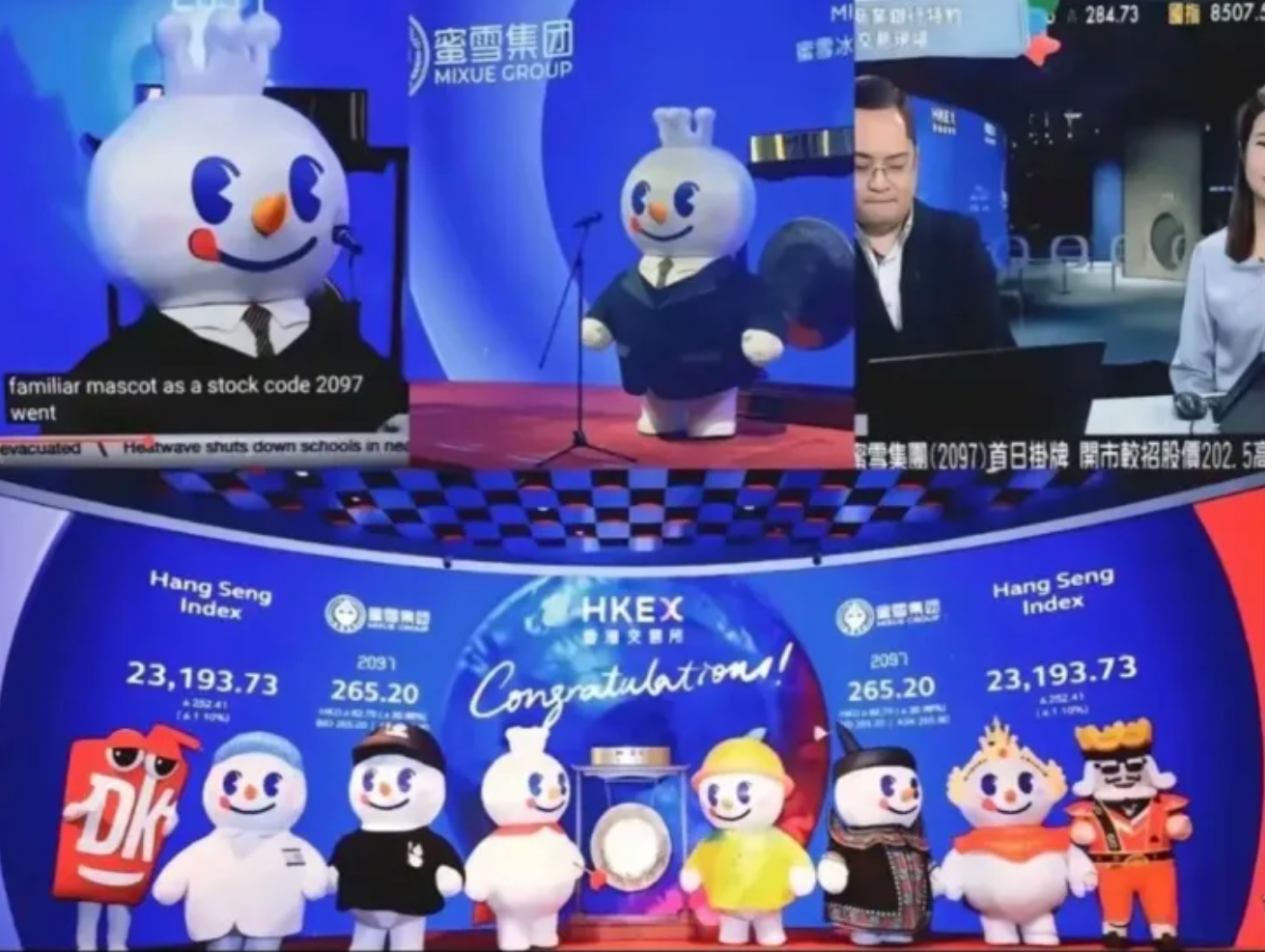
On March 3, 2025, Mixue Bingcheng, China’s king of budget tea, listed on the Hong Kong Stock Exchange. But instead of the usual rows of executives in suits, the "center stage" was occupied by the Snow King—the brand’s chubby, crowned mascot. Surrounded by seven sub-IPs representing different parts of the supply chain, the Snow King performed the brand's viral theme song and danced at the podium.
This was not just a stunt; it was a strategic masterclass in "IP as Brand." By turning a serious financial milestone into a chaotic, joyful fan event, Mixue Bingcheng generated over 50 billion views on Douyin. It signaled to the market that their core strength lies in a massive, loyal community and a robust supply chain, all wrapped in a lovable, "approachable" personality. For global brands, this proves that a well-developed IP can be your most valuable asset in Chinese social media engagement.
2. Heinz: The "Tomato That Wants to Win"
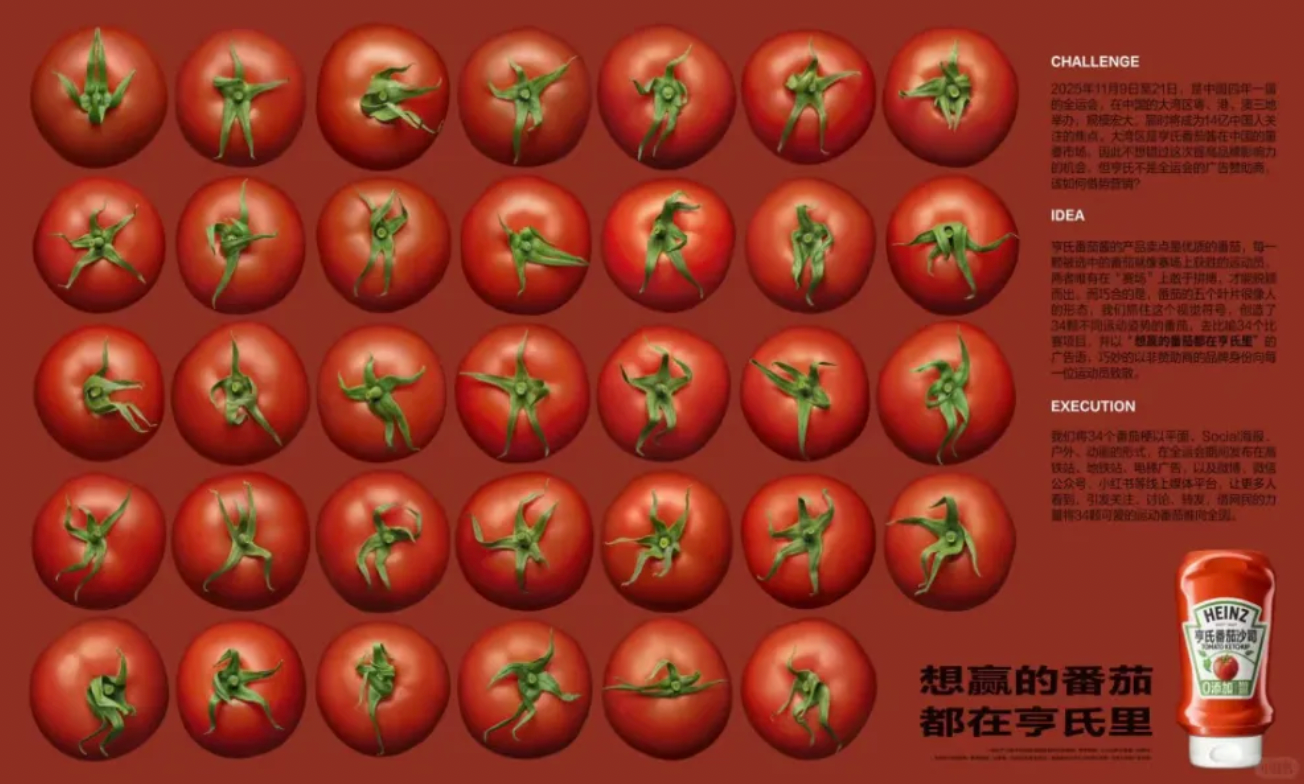
During the National Games, Heinz took a minimalist yet brilliant approach. They didn't hire star athletes; instead, they redesigned the green stems (sepals) of 34 tomatoes into the silhouettes of athletes competing in 34 different sports. These posters were placed in high-traffic subway stations with a simple white background.
The campaign went viral on Rednote (Xiaohongshu), generating over 100,000 organic posts. Why? Because it replaced "hard ads" with a "visual puzzle" that users loved to photograph and share. By focusing on a low-cost, high-creativity idea, Heinz reinforced its core message—that it uses only the best tomatoes—without spending a fortune on endorsements. It’s a reminder that in Chinese marketing, a clever visual hook often outweighs a massive media buy.
3. Nike: A Masterclass in Emotional Public Relations
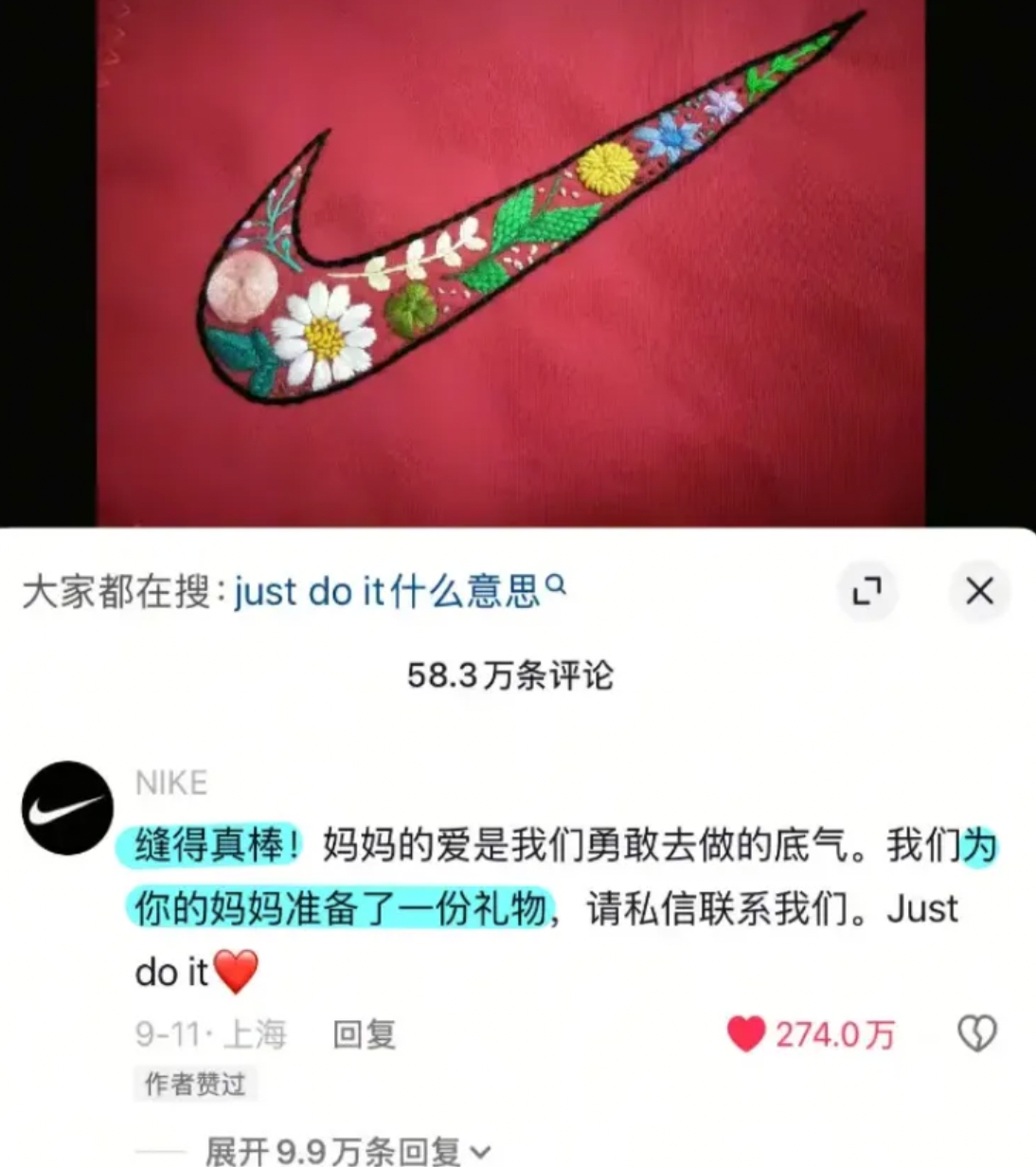
In September 2025, a Douyin user shared a story about a "Nike" backpack his mother had hand-sewn for him years ago when they couldn't afford a real one. Back then, he was ashamed; now, he realized it was a testament to her love. While many expected a corporate giant to protect its trademark with a "cease and desist," Nike did the opposite.
Nike’s official account commented: "Beautifully sewn! A mother’s love is the courage that lets us 'Just Do It'." They followed up by sending the mother and son genuine Nike gear and two heartfelt handwritten letters. This response turned a potential trademark issue into a national conversation about love and resilience. By aligning with the "hand-made with love" trend on Chinese social media, Nike proved that empathy is the most powerful tool in a brand's arsenal.
4. Mengniu x Nezha 2: Deep Content Co-creation
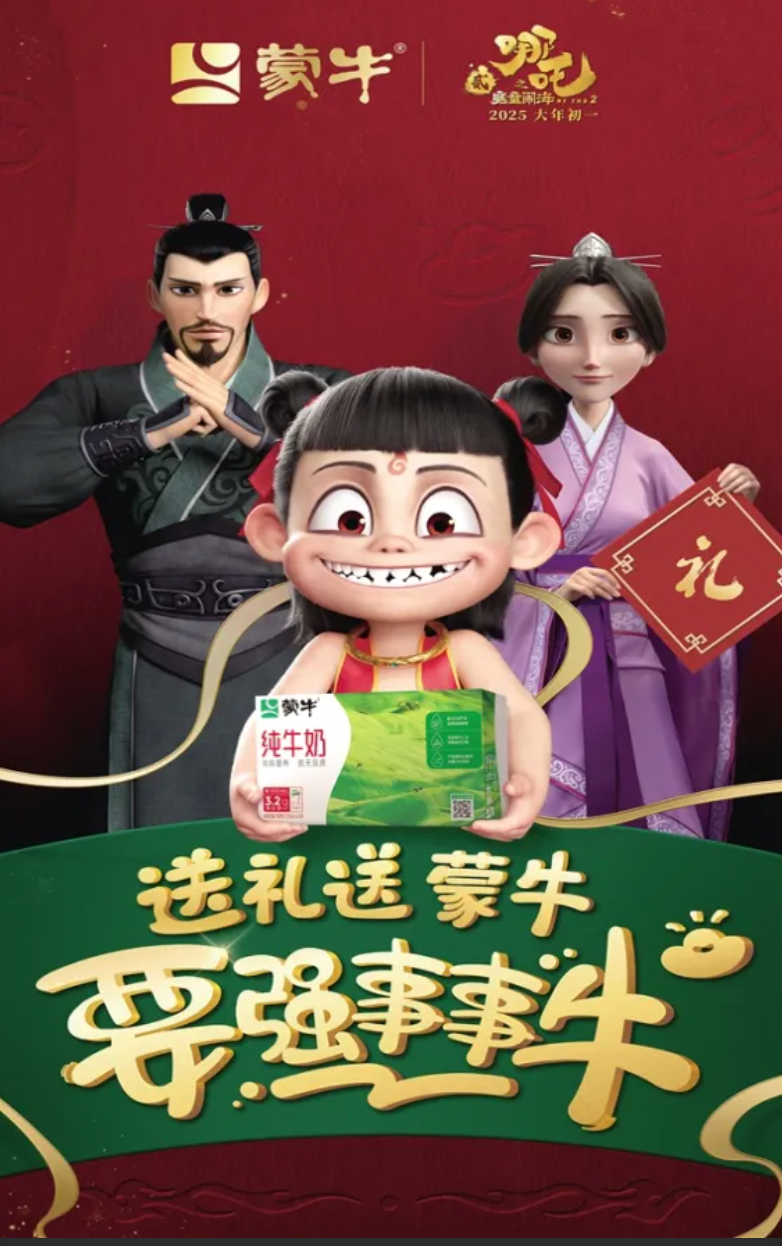
During the 2025 Lunar New Year, dairy giant Mengniu collaborated with the blockbuster animated film Nezha 2. They moved beyond simple logo placement by hiring the film's director, Jiaozi, to create three high-quality animated shorts that functioned as "spin-offs" of the movie.
The campaign succeeded because the brand’s motto, "Born to be Strong," perfectly matched Nezha’s "I am the master of my own fate" spirit. By providing theater-quality content rather than intrusive ads, Mengniu saw over 210 million views on Weibo and over 5 million RMB in sales on JD.com for the limited-edition products. This represents a shift in Chinese marketing toward "Co-branded Content" where the brand becomes a storyteller, not just a sponsor.
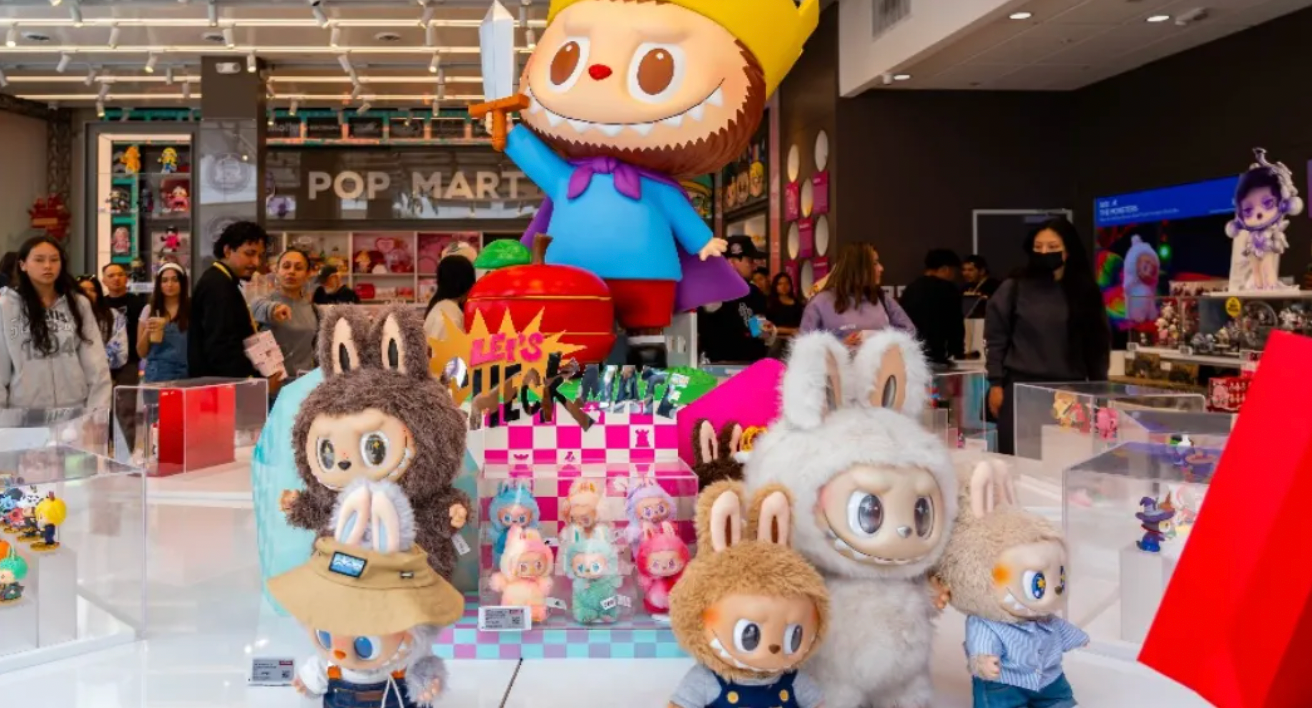
5.Labubu:TheGlobal "Ugly-Cute" Phenomenon
In 2025, Pop Mart’s Labubu became a global sensation. The strategy was a two-phase masterstroke: first, "Hunger Marketing" through limited drops and rare hidden editions (1:144 chance), which drove massive hype on TikTok and Rednote. Once the global demand peaked—partially fueled by celebrities like Lisa and Rihanna spontaneously showing off their collections—Pop Mart switched to a "Saturation Supply" strategy.
By flooding the market with restocks, they crushed the scalpers and reclaimed pricing power. The hashtag "No more fighting for Labubu" trended on Weibo, signaling that the brand had successfully transitioned from a niche collectible to a mainstream lifestyle icon. With overseas revenue growing by 475%, Labubu has provided a blueprint for how China-born IPs can dominate the global "Kidult" market through a mix of defect-aesthetics and sophisticated supply chain management.
Conclusion: The Roadmap for 2026
These final five cases highlight that the China market rewards brands that are brave enough to be human, creative enough to be different, and agile enough to co-create with their audience. Whether you are an IT giant or a boutique beauty brand, the lesson remains: Success in Chinese social media is earned through cultural resonance, not just ad spend. As we close this series, it’s clear that the future belongs to brands that can listen as well as they speak.
