

How Adidas Mastered the "Life Dialogue" to Reclaim China
The narrative of global sportswear giants in China has undergone a dramatic shift, highlighting the increasing complexity of Chinese marketing over the last few years. We’ve grown accustomed to seeing international heritage brands struggle to maintain their footing, losing significant market share to agile local competitors and eventually fading into the background. However, the German icon Adidas is currently rewriting that script. The brand is staging a textbook "V-shaped" recovery in the Greater China region, marking nine consecutive quarters of positive sales growth. From the global explosion of the Samba "Terrace" shoe to the viral success of dog tracksuits and jackets featuring traditional Chinese frog buttons, Adidas has firmly repositioned itself at the center of the Chinese consumer's cultural zeitgeist.
By deeply embedding itself within Rednote,a powerhouse of Chinese social media—Adidas has moved away from the traditional model of "one-way broadcasting" and toward a model of "life dialogue." This remarkable turnaround isn't just about a few lucky product drops. At its core, the resurgence is the result of a profound evolution in how Adidas communicates with its audience.
From Sellers to Solution Providers: Capturing the Nuances of Modern Life
The revitalization began with a realization: the modern Chinese consumer is no longer a monolithic entity easily swayed by a global logo. As Maggie, Senior VP of Brand for Adidas Greater China, observed, consumer needs have become hyper-fragmented. To win today, a brand cannot simply be a distant leader; it must become a "solution provider" for the specific realities of a user's life. This requires an almost clinical attention to the small details of daily existence.
Take, for instance, the rise of the "fur baby" economy. Adidas noticed a significant cultural shift among its core demographic—urban women aged 20 to 30. This generation might be delaying marriage or parenthood, but they are investing heavily in "refined pet ownership." On , the brand saw an endless stream of users posting OOTDs (Outfits of the Day) that included their dogs. Rather than dismissing this as a niche hobby, Adidas leaned in, launching a dedicated pet apparel line that allowed "Clover Girls" to wear matching outfits with their dogs. This wasn't a traditional sports campaign; it was a lifestyle intervention. By validating the emotional connection between owners and pets, Adidas seamlessly integrated itself into the high-fashion, pet-loving community, proving that it understood the consumer’s world beyond the treadmill.

Empowering the "Clover Girls": Decentralizing the Throne of Cool
Perhaps the boldest move in Adidas’ new playbook was the decision to hand the keys of the brand over to the users themselves. In an era where consumers are increasingly skeptical of hyper-polished celebrity endorsements, Adidas pivoted toward a decentralized marketing strategy. Through its "Angel Investor" initiative, the brand invited 1000 real "Clover Girls" to define the brand’s aesthetic. These weren't mega-influencers with millions of followers; they were everyday enthusiasts who lived and breathed fashion and street culture.
By stepping back and letting these women interpret products like the Samba shoe, Adidas unlocked a level of creativity that no internal marketing team could replicate. The community birthed a kaleidoscope of styles—from "Urban Nomad" and "Balletcore" to the "Thailand-vacation chic" trend that took social media by storm. This strategy provided immense emotional value. When the brand’s official account engaged directly with these creators, it transformed a simple purchase into a long-term partnership. These girls didn't just buy a shoe; they became part of the brand’s story. As they grew their own followings, their loyalty to Adidas remained, rooted in a genuine sense of shared growth rather than a transactional contract.

The Feedback Loop: Validating Brand Equity in Real-Time
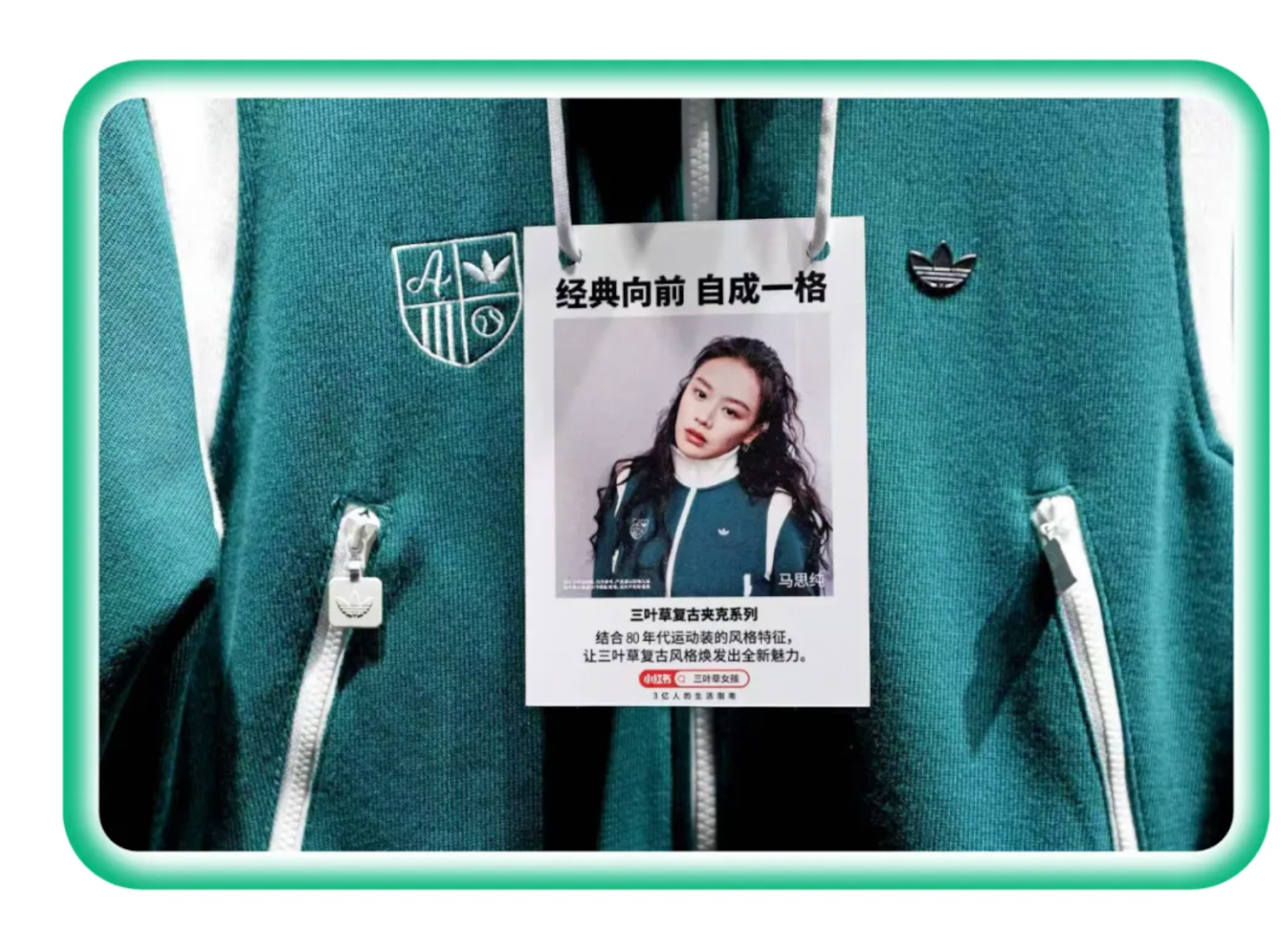
For Adidas, Rednote has become far more than a social media platform; it is a triple-threat ecosystem that serves as a sales driver, a brand equity vault, and a real-time laboratory for strategic validation. One of the most effective examples of this is the brand’s "Inspiration Tags" in physical stores. By placing QR codes on shoes that link to thousands of real-world styling notes on Rednote, Adidas effectively bridged the gap between online inspiration and offline conversion. It allowed shoppers to "copy the homework" of successful stylists in real-time, significantly lowering the barrier to purchase and boosting multi-channel sales.
Furthermore, the brand has revolutionized its decision-making process by treating community comments as high-stakes data. Instead of relying on traditional focus groups, the team regularly analyzes the sentiment and feedback in the Rednote comment sections. This allows them to verify if their marketing messages are actually "saying the right thing" to the market. This commitment to authenticity even extends to their professional performance lines. To promote the ADIZERO running series, Adidas bypassed flashy slogans and instead asked users to "post your old running shoes." There is no endorsement more powerful than a worn-out sole; it is a runner’s badge of honor and a testament to trust that no amount of advertising spend can buy.
Conclusion: Returning to Sport by Returning to Life
The success of Adidas in China is a testament to the power of local empowerment combined with a deep respect for interest-based communities. By giving the local team the autonomy to innovate and focusing on the authentic lifestyle interests of the Chinese consumer, Adidas has moved from being just a logo to becoming a meaningful part of a user’s identity. The brand’s journey proves that in 2026, growth isn't something you "harvest" from an audience; it’s something you grow together through sincere, life-centered dialogue. When a brand stops trying to lead the parade and starts walking alongside its community, sustained success becomes inevitable.
