

Chinese Marketing for Museums: How to Attract Visitors from China in 2026
A practical guide for overseas museums to become discoverable, visitable and worth recommending on RedNote, WeChat, Ctrip and Dazhong Dianping.
Quick answer. To attract Chinese visitors, an overseas museum needs more than a translated brochure. Make its Chinese name and distinctive collection easy to find on Xiaohongshu (RedNote); provide an authoritative, current Chinese-language visit guide through WeChat and its own site; audit its place and ticket information on Ctrip and Dazhong Dianping; remove friction around admission, directions and interpretation; and learn from real visitor questions and reviews. The right mix depends on whether the museum is free, ticketed, famous, or still unknown to the target traveler.
China's museum habit is substantial: the National Cultural Heritage Administration reported 7,188 registered museums and 1.56 billion museum visits in 2025. The China Tourism Academy put outbound travel at 148 million trips in 2025. These are different measures—not 148 million prospective visitors to your museum, and not unique individuals—but together they explain why cultural attractions should take this audience seriously.
The opportunity is not limited to the Louvre or the Met. A smaller museum can earn a place in a city itinerary if a traveler can quickly answer: Why this collection? How much time should I allow? Can I get there and understand it? Do I need a reservation? What, exactly, am I buying?
The Chinese museum-visit journey is a chain, not a single platform
Imagine a family planning two days in Madrid. A saved RedNote post makes a museum feel worth their limited time. They check the museum's official information in Chinese, compare recent reviews and location details on Dianping or Ctrip, then reserve an appropriate ticket or tour. After visiting, their own photos and review become someone else's starting point. A broken link anywhere in that chain wastes the earlier effort.
Inspiration — RedNote and relevant creators: show a specific object, story, exhibition or family route, with the city and Chinese museum name.
Trust — WeChat Official Account and the museum's Chinese visit page: keep hours, closures, admission, location, accessibility and contact routes current.
Reservation — official ticketing, Ctrip or an authorized partner: explain the exact product, time slot, eligibility, redemption and refund terms.
In-city decision — Dazhong Dianping and Ctrip place pages: check maps, photos, recent reviews and practical visitor questions.
Experience — on-site interpretation and service: make the visit understandable, welcoming and shareable within museum policy.
This is a planning model, not a claim that every Chinese traveler uses all four apps. Audit your destination, audience and existing listings before choosing spend. Lotus's broader channel-selection framework explains why each platform should have a distinct job.
1. RedNote: make the museum searchable before the trip
Xiaohongshu (小红书, often called RedNote) is especially useful when someone searches a city itinerary, a particular exhibition, a rainy-day plan or a family activity. A museum's feed should answer a real decision, not reproduce a press release. Test the Chinese name that travelers actually use, alongside the official name and city: for example, “Madrid art museums,” “one-hour museum route,” or “museum with children.” Search results and platform rules change, so review the live results rather than treating a keyword list as permanent.
Three starting formats work well: (1) a first-visit route with three highlights and realistic time needed; (2) an object-led story that gives a visitor something to notice in person; and (3) a practical guide with entrance, transport, reservation rules and a clearly dated exhibition. Credit the collection and respect photography, copyright and creator permissions. Commission locally relevant Chinese creators for substantive visits, disclose partnerships, and give them accurate facts without scripting their opinion. Then turn recurring comments—“Is the child ticket free?” or “Which entrance?”—into better official content.
RedNote is discovery, not a guaranteed booking engine. Its official Juguang advertising platform offers paid promotion, but media is more useful once the content and next step have been tested organically. A verified account's eligibility and linking options should be checked for the museum's entity and category before launch. Explore Lotus's RedNote work.
2. WeChat Official Account: become the reliable Chinese-language source
A WeChat Official Account can hold durable, shareable explanations: a “Plan your visit” article, exhibition updates, a Mandarin highlights route, family information and service notices. Tencent describes Official Accounts as a way for organizations to publish content and connect followers to services and websites. It does not mean a newly opened account will automatically be found by travelers. Give people a reason and route to reach it from RedNote, partners, QR codes, tickets and the museum site.
Start with a useful Chinese page before building a mini program. State the museum's accepted Chinese name, address in the local language, transport, entry point, opening hours with time zone, closures, whether general admission is free, paid exhibitions, timed reservations, accessibility, cloakroom and photography policy. Link to the official booking path. Assign an owner to update temporary exhibitions and holiday hours. An elegant mini program cannot repair stale visitor information.
Where WeChat ads fit. Tencent's marketing system includes inventory across Weixin Moments, Official Accounts, Search and Mini Programs. A museum could test a Chinese-language exhibition or seasonal itinerary creative with a defined audience and a working destination—such as a Mandarin guide or an authorized reservation page—and measure qualified visits, not only impressions. Format, account verification, targeting and overseas advertiser eligibility require a current platform check. Ads should amplify a coherent visitor journey, not send people to an English-only dead end. Tencent advertising overview; Lotus WeChat support.
3. Ctrip: separate the museum place page from the product for sale
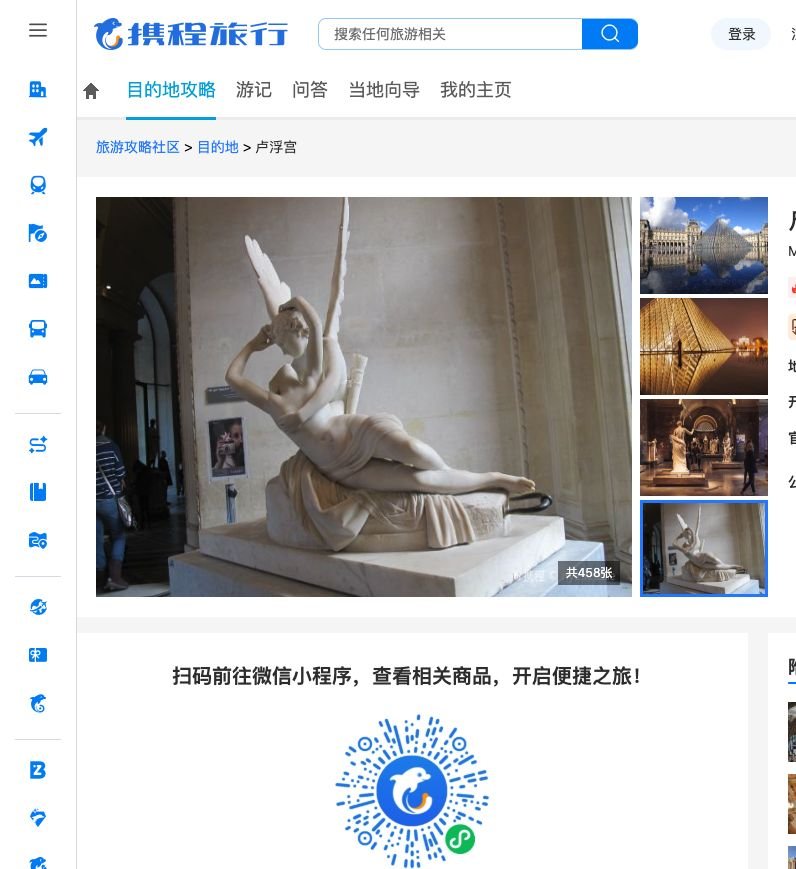
This is the distinction that matters most operationally. A museum may already have a Chinese attraction/place page on Ctrip with a name, address, opening information, photos, questions and reviews. That does not prove the museum itself operates a merchant account or that a displayed ticket is supplied by the museum. Ctrip's Louvre attraction page, for example, shows a Chinese description, practical information and visitor reviews. Ctrip also has a scenic attractions and activities cooperation route, while individual products can be supplied by partners.
A sensible application and operation sequence for an overseas museum:
Search the Chinese and local-language names in Ctrip's relevant city. Record duplicate place pages, category, map pin, entrance, official URL, hours, contact information, photos and recent questions. Use the page's correction channel or platform support where available; do not assume a place listing can be self-claimed in every market.
Decide what is actually bookable: standard admission, a paid temporary exhibition, a timed free reservation, a Mandarin tour, or a bundled city pass. A free museum should never let a paid third-party “entry ticket” imply that ordinary admission costs money. The British Museum, for example, offers free general admission while advising advance free booking and separately selling some exhibitions and events.
If distribution makes sense, discuss the current attraction/activity supplier route with Ctrip or an authorized reseller. Establish the museum's resale and trademark permissions, commercial terms, inventory connection, settlement, liability, customer support and refund responsibilities before listing a SKU. The Louvre's visitor rules explicitly prohibit ticket resale without prior express authorization; policies differ by museum.
Quality-check each Chinese product page as a visitor would: the included access, time-slot process, free-entry eligibility, child rules, voucher exchange versus direct scan, cancellation, language of the guide and what happens when the museum closes unexpectedly. Review every change in exhibition dates and inventory with the supplier. Monitor reviews and questions, and route service failures to the party able to fix them.
The commercial win is not “get on Ctrip” in the abstract. It is a truthful, low-friction route from research to the correct admission or experience. Do not copy an old supplier fee schedule from an unrelated Ctrip business line; terms are negotiated for the specific product and partner.
Live platform example: Ctrip's Louvre place page shows a Chinese name, reviews and practical visit fields.
4. Dazhong Dianping: audit local discovery and the overseas ticket layer
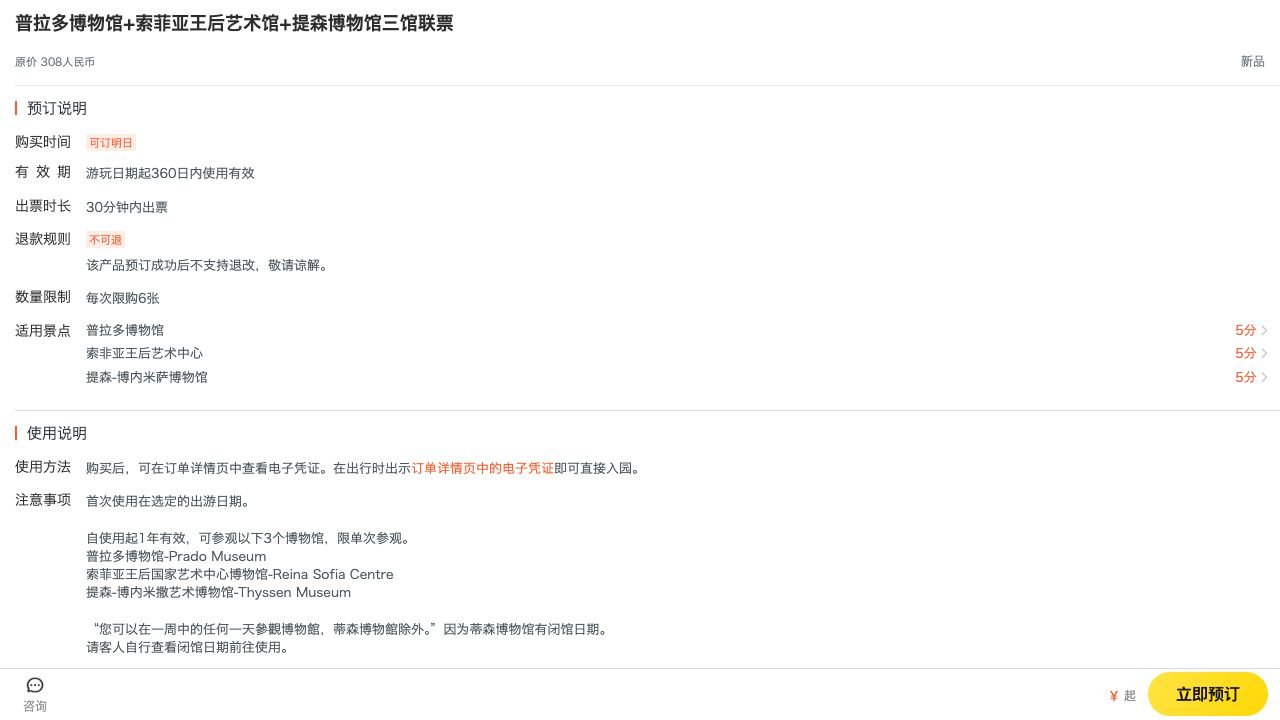
Dazhong Dianping (大众点评) is not only a restaurant app. Meituan's own technical account says its overseas city sections include attractions, tickets and local activities, and its overseas transaction products cover attraction tickets. A public Dianping/Meituan ticket page for Madrid's three-museum pass illustrates the structure: named museums, validity, redemption instructions, refund terms, reviews and a separately named supplier. It is an example of platform availability, not a recommendation to buy that particular product; travelers should check each museum's current official rules. Meituan's overseas-commerce explanation.
For a museum, first look up its location in the destination city. Are the map pin, Chinese name, category, opening days and photos correct? What do recent reviews say about queues, wayfinding and language? Is a third-party ticket attached, and is it accurate and authorized? A museum can be valuable to a traveler on Dianping even if it never sells a ticket there: the location page and credible reviews help make the in-city decision.
If merchant control or ticketing is needed, ask Meituan/Dianping about the current eligibility for the specific overseas location, entity and category. Meituan's attraction-ticket cooperation page describes a business inquiry and follow-up process, plus information display, reservations and review management across Meituan and Dianping; it does not establish that every foreign museum can simply self-register. An authorized activity supplier may be the practical ticket route. Monitor and respond to genuine feedback in natural Chinese, fix recurring problems, and never buy reviews. Lotus's Dianping service approach starts with the location and review audit.
Live platform example: Dianping's overseas museum-pass detail page shows redemption and refund terms, with a supplier distinct from the museums.
Make the actual visit live up to the content
The best channel plan cannot compensate for an incomprehensible visit. Prioritize a concise Mandarin welcome page and map, a tested audio or written route for a manageable set of highlights, clear entrance and ticket instructions, and staff guidance for common questions. Translate for understanding, not word for word. A natural Chinese explanation of a collection's provenance, artistic technique or connection with world history is more valuable than a generic “must-see photo spot.” If objects with Chinese origins are involved, treat provenance and differing perspectives with curatorial care, not as a marketing gimmick.
Photo opportunities can help visitors remember and share, within conservation, rights and visitor-privacy rules. Mark where photography is welcome and where it is prohibited; do not encourage flash or unsafe crowding. Make family routes realistic, not an exhausting list of every gallery. Check whether the payment methods you advertise actually work at the ticket desk, shop and café; do not promise WeChat Pay or Alipay merely because they are familiar in China.
Earlier museum-marketing case studies remain useful, but they are not a current benchmark. Museums including MoMA, the Rijksmuseum and the Thyssen-Bornemisza have shown how Mandarin maps, audio guides, dependable Wi-Fi and culturally relevant interpretation can reduce friction and make a visit more rewarding for Chinese guests. However, historical visitor numbers and platform statistics should not be used to build a 2026 business case. The lasting lesson is to connect before-visit discovery with during-visit usefulness.
A realistic first 90 days
Days 1–30: audit and repair. Search the museum's Chinese names across RedNote, Ctrip, Dianping and WeChat. Document current results, duplicate or inaccurate listings, customer questions and the true ticket route. Agree on a Chinese naming convention and an owner for changing visitor facts. Publish a concise Chinese “Plan your visit” page and check it on a phone from China if feasible.
Days 31–60: prove the story. Publish a small series of object-led and practical RedNote notes; create or refresh the WeChat Official Account's evergreen visit guide; test a Mandarin highlights route in the museum. Seek creator visits only where the exhibition, permissions and service are ready. Correct the Ctrip and Dianping information through available channels and assess supplier applications case by case.
Days 61–90: test distribution and learn. If the booking path is sound, try a limited creator or paid campaign around one exhibition or travel window. Use trackable links or partner codes where the platform permits, compare Chinese-language page visits and ticket enquiries with prior periods, and read the substance of visitor feedback. Improve what repeatedly blocks a visit before increasing the budget.
Measure search visibility for the museum's Chinese names; saves and qualified questions on RedNote; visits to the official Chinese guide; referral and booking-path clicks; correctly attributed ticket or tour sales where available; and recurring review themes. None alone proves incremental attendance. Avoid pretending that a last-click report captures a journey spanning four apps, word of mouth and a walk-in visit. Lotus's travel-marketing measurement guide offers a fuller framework.
Frequently asked questions
Does a free museum need Ctrip or Dianping?
It may still need accurate place information and reviews. A ticket product is optional. Clearly distinguish free general admission from paid exhibitions, guided tours, reservations and third-party bundles.
Should we build a WeChat mini program immediately?
Usually not. Start with reliable Chinese visit information and a working booking route. Build a mini program only if a defined service—ticketing, an in-gallery route or repeat visitor support—justifies the maintenance and eligibility requirements.
Can a foreign museum directly open and verify every account?
No universal route exists. Platform, jurisdiction, legal entity, category, documentation and proposed functionality all matter. Verify current requirements with each platform or partner before committing a launch date.
Do we need to translate every label?
No. Begin with the visit essentials and a well-edited route through a small number of important works. Test the route with Chinese readers and visitors, then expand where their questions show a real need.
What should we do first with a limited budget?
Fix incorrect hours, entrance and ticket information; make one clear Chinese-language visit guide; and publish a few genuinely useful RedNote stories. Do not spend on ads until a visitor can confidently complete the next step.
Why Lotus approaches museums from inside the audience
Our bilingual team is based in China and lives with these apps in daily life. We use Chinese platforms as people planning, discussing and sharing experiences—not only as media buyers looking at dashboards. We also share the urge to explore the world. That makes us naturally curious about the object, room or story that could make a Chinese traveler say, “I want to see this for myself.” Passion is useful, but it must be paired with a museum's curatorial accuracy, operational ownership and honest measurement.
Lotus can audit the Chinese discovery and booking journey, shape culturally resonant content, coordinate verified accounts and creators, assess WeChat ads, and help keep RedNote, WeChat and relevant travel listings in sync. We will tell you when a platform or paid feature is not yet the right investment. Discuss your museum's China visitor journey with Lotus.
