

What Sephora's China Strategy Tells International Brands About Winning in Chinese Retail
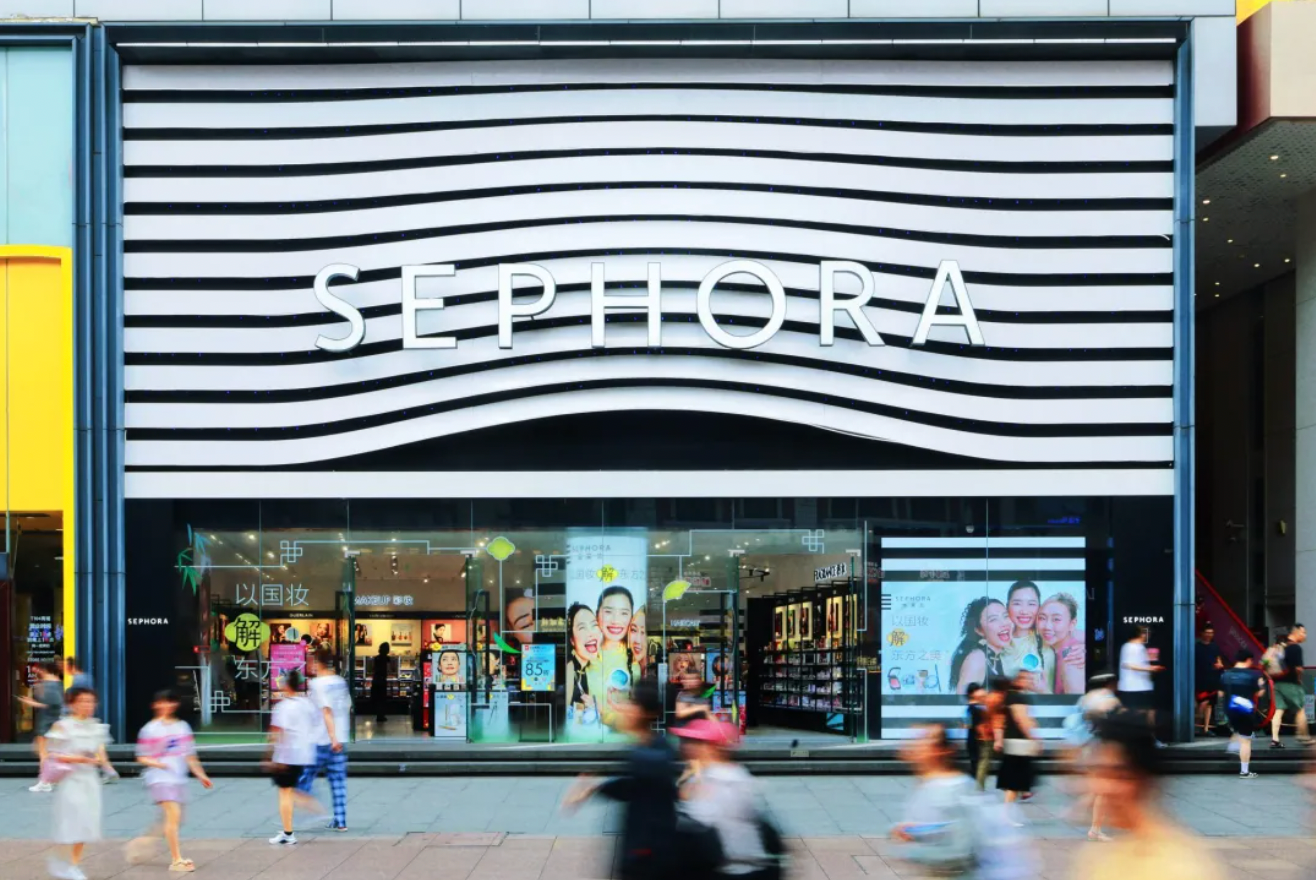
When Sephora's flagship store in Shanghai recently completed a major renovation, its global CEO Guillaume Motte and China General Manager Ding Xia attended together — and the first thing visitors saw upon entering wasn't a luxury brand display. It was a curated trend zone spotlighting Chinese beauty brands like Mao Geping, JOOCYEE, and Red Chamber. That detail alone says something important about how Sephora is approaching China, and what international brands can learn from it.

Sephora's global performance has been strong — nearly $5 billion in revenue growth over three years, 22 consecutive quarters of positive growth. In China specifically, in-store traffic has grown double digits for 21 consecutive months since Q4 2024. At a time when physical retail is under pressure globally, these numbers are worth paying attention to. The question worth asking isn't just "how is Sephora doing it?" but "what does this mean for international brands trying to build something real in the Chinese market?"
China Is Still the Market That Matters Most
When asked which consumer market would become "the next China," Guillaume Motte didn't hesitate: "The next China is China." This isn't just optimism — it reflects a very specific reading of what the market offers. As the world's second-largest beauty market, China provides scale. As a hotbed of domestic brand innovation, it provides a fresh perspective for global assortment decisions. And as a leader in digital ecosystems and AI application, it provides a model for how retail can operate more intelligently.
A telling example is Sephora China's "Online Beauty Advisor" system, built on WeChat Work, through which over 3,000 beauty consultants maintain one-on-one connections with more than 5 million active members. Guillaume Motte has noted that this kind of private-domain relationship management is something Sephora sees potential in exporting to markets in Europe and North America. China isn't just receiving best practices — it's generating them. For international brands building a China marketing strategy, this shift in narrative matters: China is no longer a market you adapt to, it's a market you learn from.
From Stocking Big Names to Curating Real Value
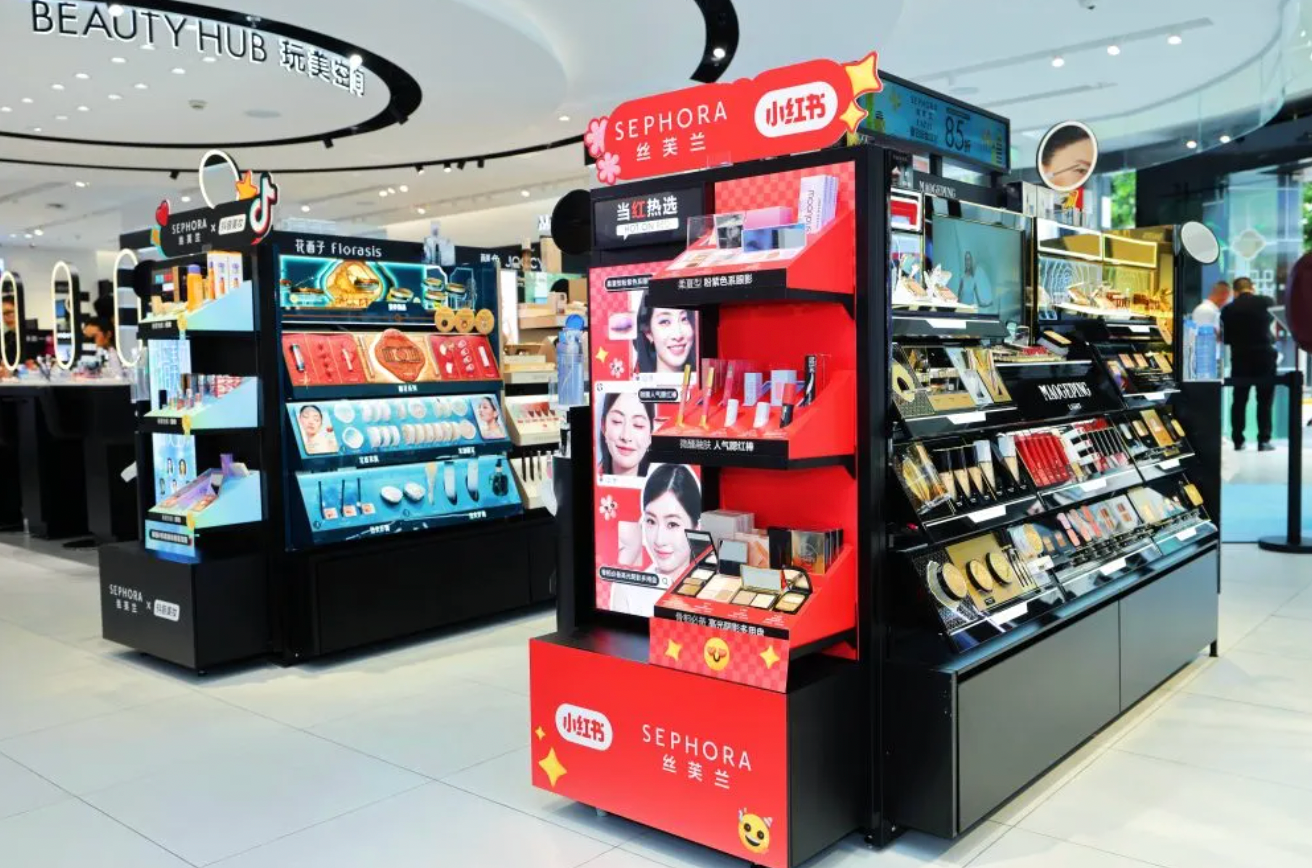
Sephora China now carries 26 domestic Chinese beauty brands across makeup, fragrance, and skincare, at a range of price points. The industry response was initially skeptical — does adding local brands signal a dilution of positioning? Ding Xia addressed this directly: Sephora's success across 30-plus countries has never been built on assembling luxury labels. It has been built on selecting the most relevant local brands through a global lens and building something together with them over the long term.
Guillaume Motte pointed to Korea as a parallel — with 30,000 beauty brands in the market, Sephora chose to partner with local retailer Olive Young precisely because of its expertise in curating the best from an overwhelming field. The same logic applies in China. And the selection criteria Ding Xia describes are instructive for any brand thinking about how to position itself as a partner in this market: Does the brand have a genuine, sustainable consumer base, or is it riding a temporary wave? Does it have real R&D and iteration capabilities? Is it committed to product quality? And most importantly — is the founder building a business, or building a brand? "I've met every founder of every Chinese beauty brand we carry," Ding Xia said. "We need to be confident in a brand's long-term trajectory before we can co-create with it."
That phrase — co-create — runs through Sephora's approach. Internally, the team describes it as getting "in the kitchen together," meaning Sephora feeds consumer data and pain-point insights back to brands and helps them develop products that actually solve real problems. The results have validated the approach: most domestic brands exceeded sales expectations within about six months of joining the platform. A particularly telling shopper behavior has also emerged — consumers buying a Dior lipstick alongside a local eyebrow pencil in the same basket. This blended cart suggests Chinese consumers are no longer making decisions purely by price tier; they're combining products based on specific needs. For international brands, this is an invitation rather than a threat.
Why People Still Choose to Come In-Store
In a market with the world's most advanced e-commerce infrastructure, the case for physical retail has to be genuinely compelling. Sephora's answer comes down to three things: experience, locality, and connection.
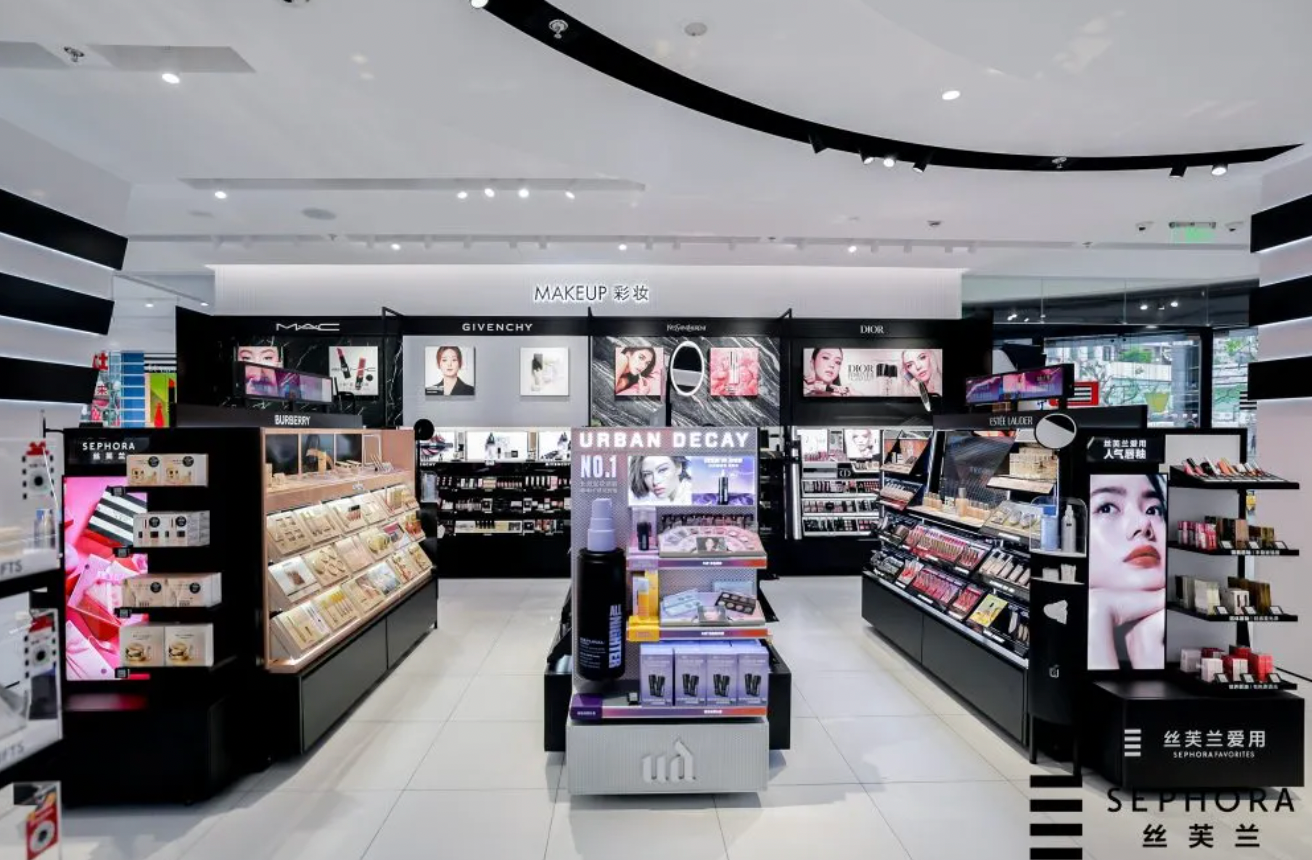
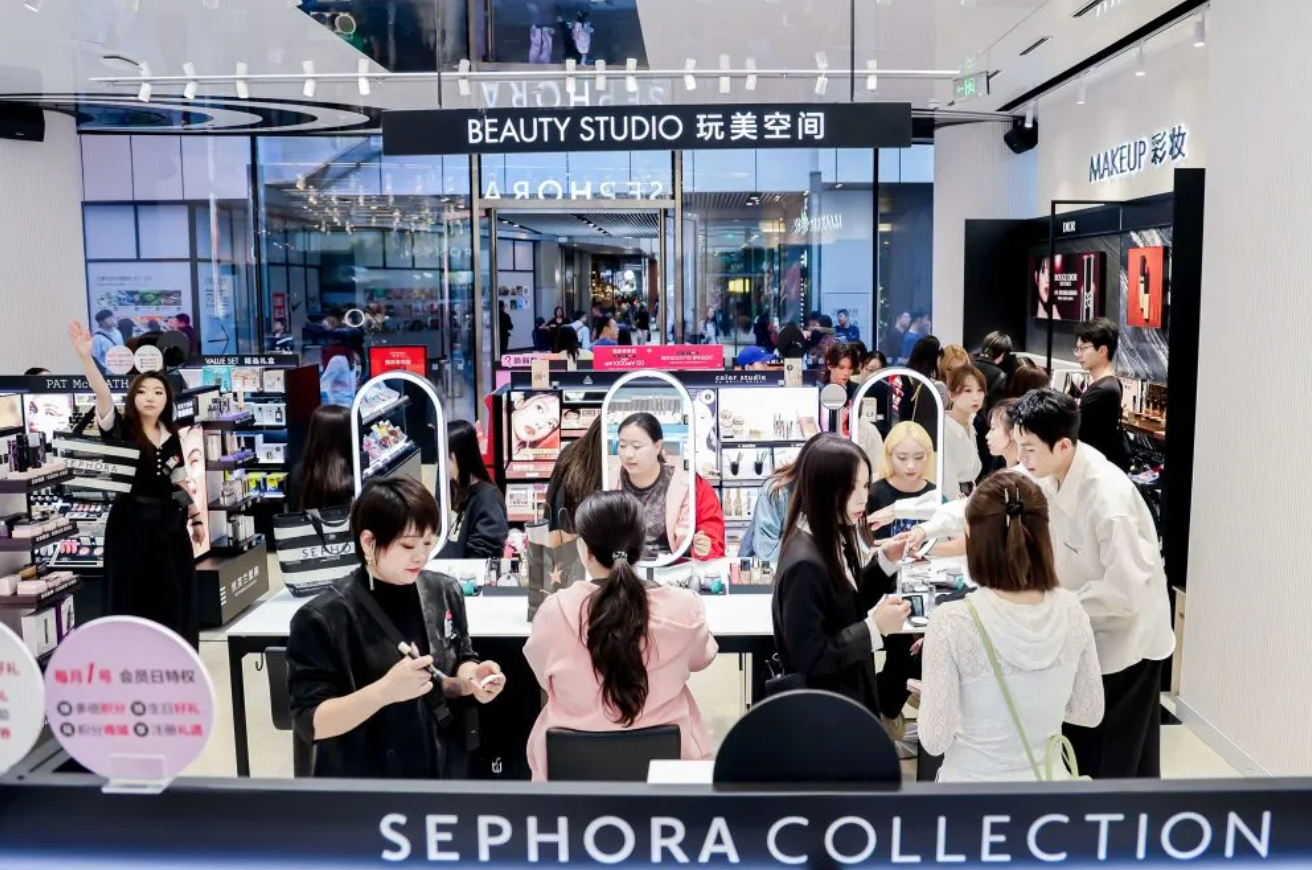
The renovated Shanghai flagship on Xiangyanglu breaks from conventional brand-by-brand display logic. Instead, beauty advisors curate combinations based on current trends — bundled "bestseller sets" that lower the trial cost for consumers. The second floor houses a slow-experience space blending Shanghai cultural references with rotating brand collaborations, giving visitors a reason to come back rather than just browse once and leave.
The localization has had an unexpected side effect: international visitors now make up 35% of the store's traffic. Chinese beauty brands like Florasis — with their distinctively Chinese aesthetic packaging — have become some of the most popular purchases among tourists. This mirrors what happens at Sephora's Champs-Élysées location, where shoppers seek out distinctly French beauty. In Shanghai, they're seeking distinctly Chinese beauty. For international brands setting up retail presence in China, this points to a genuine opportunity: lean into what makes your brand's local context meaningful, rather than flattening it into a generic global format.
Across its more than 320 stores in China, Sephora has segmented locations into four categories — flagship, campus, community, and CBD — each with different brand mixes and service priorities. Campus stores skew toward value-conscious, niche brands. CBD stores emphasize premium services. Covering 104 cities across tier-one through tier-four markets, this differentiated approach maintains sensitivity to local consumer needs without losing coherence at the brand level.
Private Connections and Community at Scale
Physical experience alone doesn't close the loop — digital connection does. Sephora's WeChat Work-based beauty advisor system allows personalized recommendations based on detailed member profiles. Guillaume Motte has been clear that this kind of fine-grained, private-domain engagement is a genuine competitive advantage that the Chinese market pioneered, and one that Sephora is actively considering replicating in Western markets. For international brands managing Chinese social media presence, this model is worth studying — not as a tactic, but as a service philosophy: meet consumers where they are, with information that's actually relevant to them.
The community energy doesn't only live on screens, though. SEPHORiA, Sephora's annual beauty event, has grown into what Guillaume Motte calls a "cultural ritual" for core members. With nearly 5,000 attendees, it's no longer just a product showcase — it's a gathering where shared enthusiasm for beauty creates a sense of belonging that algorithm-driven recommendations simply cannot replicate. "If the membership program were purely transactional, we wouldn't have 80 million members globally," Guillaume Motte said. "What we're building is an emotional connection rooted in a genuine passion for beauty." From daily one-on-one advisor conversations to the annual collective energy of SEPHORiA, Sephora is building both breadth and depth into its community network simultaneously.
Four Principles International Brands Should Take Away
At its core, what Sephora is doing in China is answering a question that every international brand operating in this market needs to answer for itself: when shopping online is convenient, why would a consumer bother coming in?
The answer, as we see it, comes down to four things. Curation creates trust — in a world of information overload, the ability to filter and select becomes a form of endorsement. Experience activates the advantages that physical space naturally has over a screen. Co-creation builds partnerships that go further than any single brand could alone. And connection — the kind built through consistent, human, personalized touchpoints — creates loyalty that outlasts any promotional cycle.
For international brands thinking about China, the lesson extends beyond retail. China's market is not only large — it is generative. It is producing innovations in digital engagement, brand-community relationships, and retail experience that are influencing how Sephora operates globally. Engaging seriously with Chinese marketing means engaging with a market that is actively shaping what modern brand-building looks like. As Guillaume Motte put it: when he says the next China is China, he means not just the scale of the opportunity, but the quality of the learning it offers. For brands that approach it with genuine curiosity and a commitment to local co-creation, that learning can travel well beyond the market itself.
Interested in exploring bespoke marketing tips and localized strategies for the Chinese market? Feel free to reach out to us!
